Introduction: Google’s Project Suncatcher has taken a striking step toward computing beyond Earth: a satellite carrying a data-center-class TPU has run Google’s open Gemma 4 model in orbit and downlinked a haiku over Svalbard, according to reports on October 31, 2026. It is an early test, not a finished product, but it asks a big question: if AI can run in space, where else can it go?
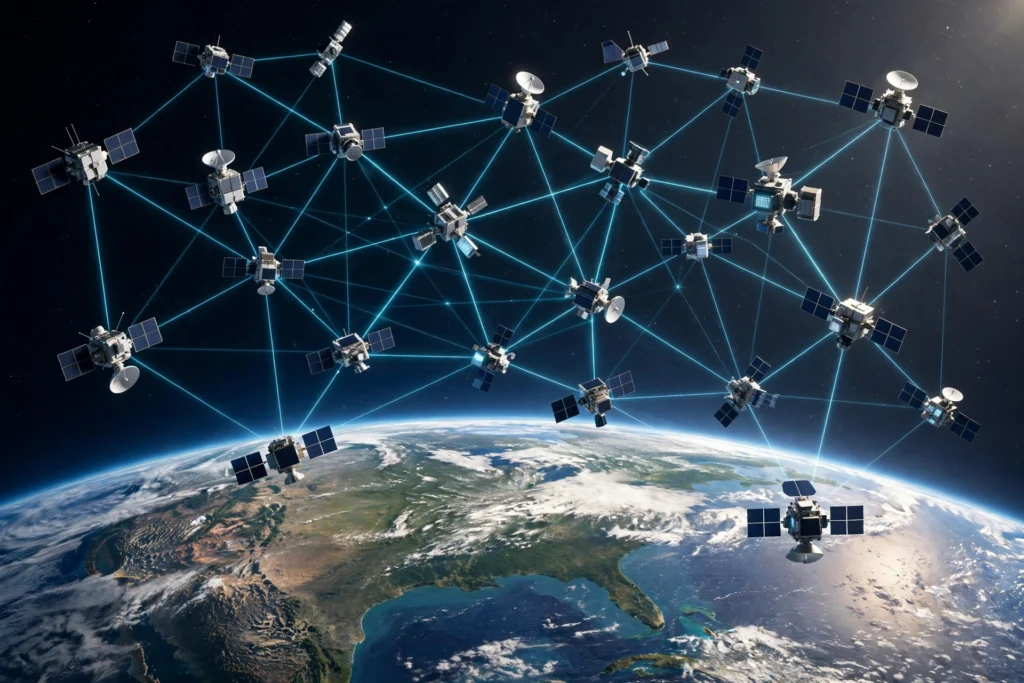
What Project Suncatcher Actually Did
In this test, the point was not just to put a chip in orbit. It was to show that a powerful AI accelerator, the kind normally cooled and powered inside a warehouse-sized data center, can operate on a satellite and produce a real result. Running the open Gemma 4 model and returning a short piece of text — a haiku — is a deliberately simple proof: the model ran, the system survived the pass, and the output came back down to Earth. The project still faces thermal and radiation testing, which are the hard parts of space computing. Heat has nowhere easy to go in a vacuum, and cosmic radiation can flip bits and damage hardware over time.
Why Run AI in Space at All?
Satellites already collect enormous amounts of data — images of Earth, weather patterns, signals, and observations of the environment. Today much of that data must be beamed down before it can be analyzed, which takes bandwidth, time, and ground stations. Running AI on board could let a satellite filter, summarize, or flag what matters before sending anything down. A wildfire detection system, for example, could spot smoke in an image and send an alert in minutes instead of waiting for a full download. The same idea applies to disaster monitoring, agriculture, ocean tracking, and scientific observation.
The Challenges Are Real
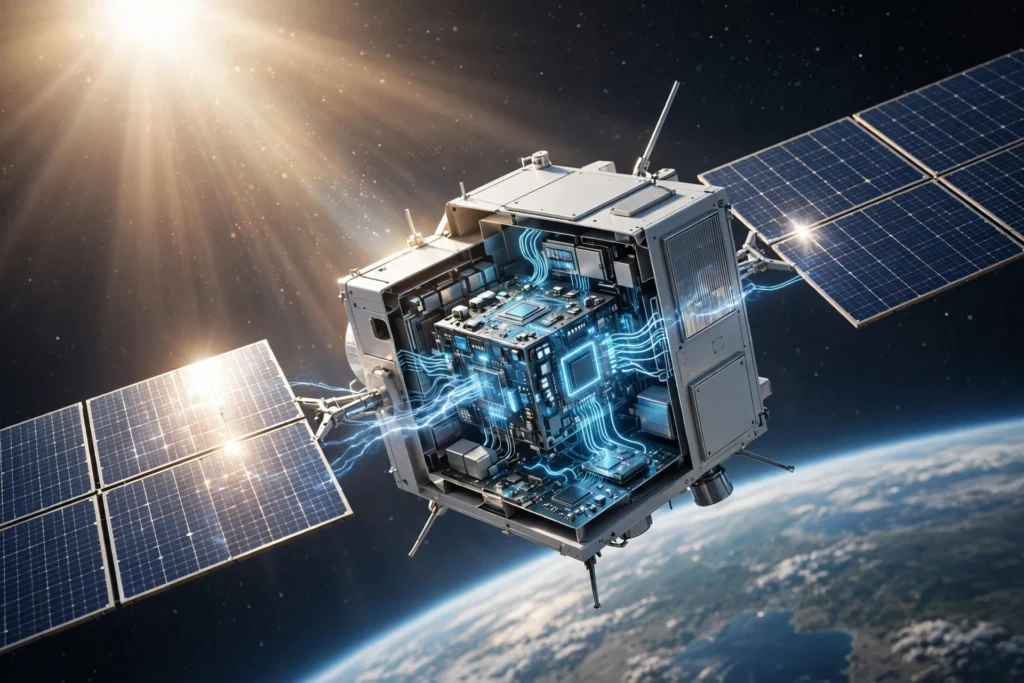
Space is unforgiving for modern chips. Data-center TPUs are designed for stable power, active cooling, and easy replacement — none of which exist in orbit. Engineers must manage heat without air, protect electronics from radiation, and work within strict power budgets from solar panels and batteries. Software must also be resilient: if a model crashes or a process hangs, there is no technician to reboot it by hand. That is why early milestones like Suncatcher’s haiku matter more as engineering proof than as a finished service.
What This Could Mean for Everyday Tech
Even if you never think about satellites, orbital AI could change the tools you use. Faster Earth observation could improve weather forecasts, crop monitoring, and emergency response. It could also push chip design toward more efficient, rugged hardware that eventually benefits phones, laptops, and edge devices. And it hints at a future where computing is less tied to one place: the same model family that runs in a data center or on a phone could, one day, run wherever the data is collected — including hundreds of kilometers above Earth.
What to Watch Next
The key tests ahead are endurance and reliability: how the hardware handles heat cycles, radiation exposure, and long missions, and whether larger models can run efficiently in orbit. Watch for follow-up results on thermal and radiation performance, and for any plans to use orbital AI for real Earth-observation tasks rather than demonstrations. Suncatcher is a first step, but first steps in space computing have a habit of becoming infrastructure.
Conclusion: Project Suncatcher does not mean your next chatbot will live on a satellite. It does mean the boundary between cloud computing and space computing just got thinner. If AI can run in orbit — and keep running — the next decade of computing may be less about where the data center is, and more about putting intelligence as close to the data as possible, even if that data is collected from space.