Modern AI benchmarks mostly ask one question: how smart can a model get? Can it solve graduate-level math, write production code, reason through a physics problem? On Monday, November 24, 2026, Google DeepMind launched a benchmark that asks the opposite question: can a model get the easy stuff right — every single time? It is called Humanity’s First Exam, or HFE, and it is now live on Kaggle with a public leaderboard and a technical report behind it.
The premise is simple and a little uncomfortable. The most advanced models in the world can ace hard problems and then stumble on something a child would not miss — miscounting objects in a photo, misreading a direction, or giving a different answer to the same question asked twice. HFE is built to catch exactly that. As DeepMind puts it in Google DeepMind’s announcement, the test measures whether models can consistently solve straightforward tasks, and slight variations of them, every single time — not whether they can solve a hard task once.
What Humanity’s First Exam Actually Tests
HFE is a set of 544 elementary text and image prompts spread across 20 foundational capabilities — the everyday skills of reading, counting, comparing, following directions and describing what is in a picture. The prompts are organised into 136 families. Each family starts with one seed question and adds three controlled variants that keep the underlying task the same while changing the entities, the clause order or visual attributes. A model does not pass a family by answering one prompt correctly. It has to answer all four, repeatedly.
That repetition is the heart of the design. The report’s headline metric, family pass^4, estimates the probability that all 16 sampled attempts across a family’s four prompts come back correct. A softer metric, family pass@4, asks only whether at least one attempt succeeds. The gap between the two is the whole story of the benchmark: the difference between a model that is usually right and one you can actually rely on.
Not all of the test is public. Only 112 prompts in 28 families are released under a CC-BY-4.0 licence; the other 432 prompts in 108 families stay private to limit contamination and overfitting. The Kaggle benchmark runs in an isolated evaluation environment with no public internet access and carries a 16-model leaderboard. To keep the dataset fresh, Google is running a three-week Kaggle competition through December 15, inviting the community to submit everyday questions that today’s models still get wrong.
One public example shows the flavour. A prompt asks the model to list the colour of the third letter of each word in a neon sign, in order, separated by semicolons. The answer is green; yellow; white; blue; blue. Nothing about it requires a PhD. It requires paying attention — four times in a row.
The Reliability Gap: Right Once Is Not Right Every Time
The technical report evaluated 18 frontier and fast-tier models, and the results make the case for the benchmark better than any manifesto. GPT-6.2 Astra leads with a 92.4% family pass^4 score, followed by GPT-6.2 Sol at 86.9% and Gemini 4 Neon at 85.8%. Yet all three reach 100% on family pass@4 — given four tries, each of them gets every family right at least once. The report calls the difference the Family Reliability Gap: 7.6 percentage points for Astra, 13.1 for Sol and 14.2 for Neon.
In other words, the best models in the world know the answers. They just do not give them every time. That gap is invisible on a conventional benchmark, where one correct sample is all it takes to score a point. HFE makes it the headline number.
The failures are also narrower than you might expect. Among the top 12 models, 61% to 85% of the families with any failed rollout had just one problematic prompt, while the other three prompts in the family were solved on every run. These are not models that are broadly confused. They are models that trip on one variation of a task they otherwise handle cleanly — the kind of flakiness that is hardest to catch in testing and most annoying in production.
That matters more now than it did a year ago, because models are no longer just answering questions. Anthropic’s Claude Ship lets an AI review, fix and approve pull requests, and agents are operating desktops directly and fixing data pipelines on their own. An agent that is right 96% of the time but wrong on a random 4% of identical tasks is an agent you cannot hand the keys to.
Where the Best Models Still Fail: Seeing, Not Thinking
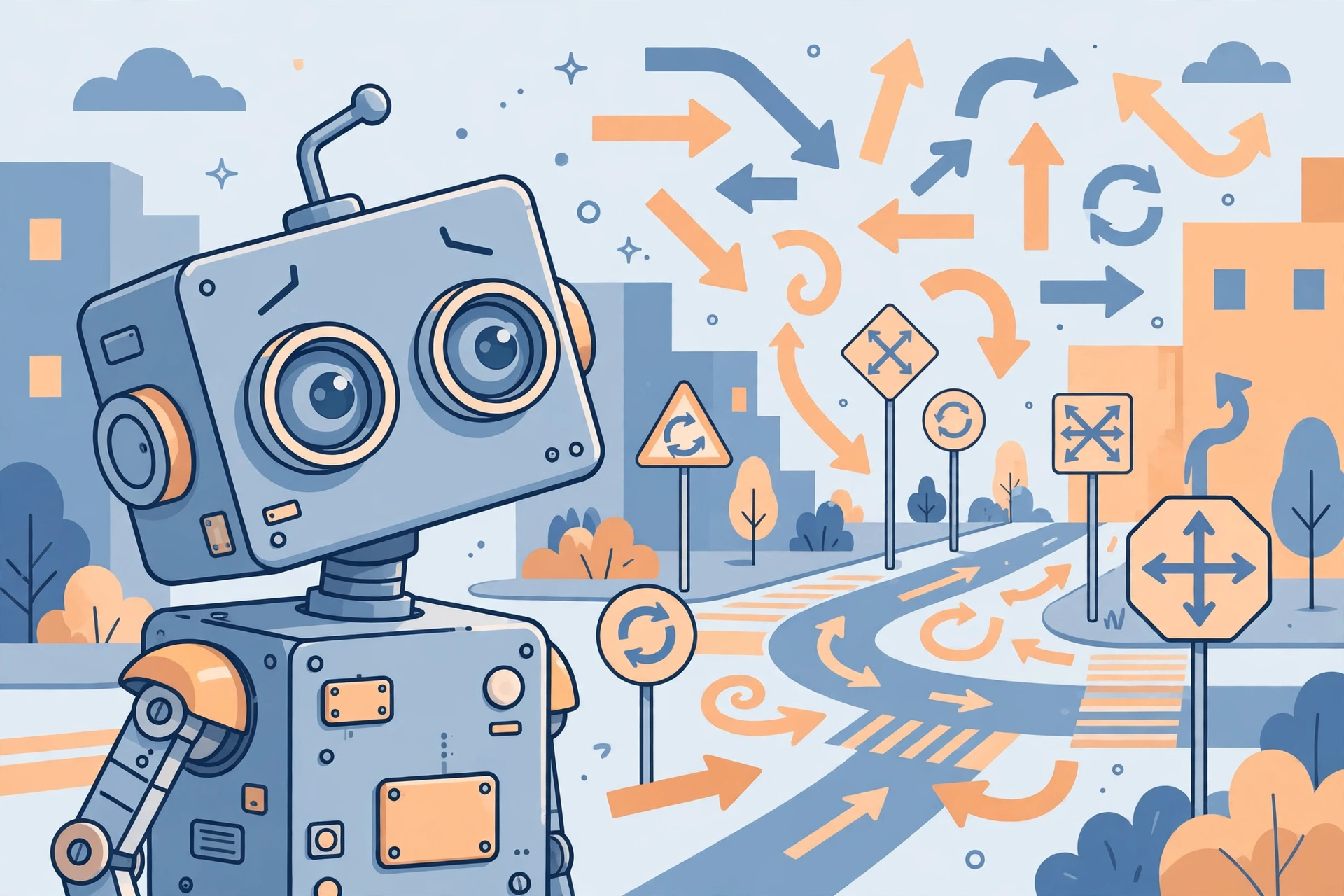
The failure analysis points at one culprit above all others: vision. According to Unite.AI’s analysis of the report, 73% of wrong-answer rollouts trace back to visual perception — including 31% involving position, direction or paths in images and 23% involving object counting. Among the top nine models, family pass^4 ranged from 83% to 97% on text-only families but fell to 64% to 89% on multimodal families.
The pattern is consistent: the models are strong at reasoning about what they have understood, and weak at seeing the thing in the first place. Counting objects, telling left from right, following a path through a diagram — these are the tasks that sink scores, not algebra or logic. It is a useful corrective to the idea that the remaining frontier is pure reasoning. A large share of what still breaks is perception, the part of the pipeline that feels solved because image recognition demos look so polished.
The human baseline underlines how elementary the tasks are meant to be. The researchers started with 315 complete five-prompt families and kept only those whose seed question was solved by at least three of four independent human raters, who could not use LLMs, web search, calculators, code or writing assistants. Single-rater human accuracy on the 136 retained seeds was 90.8% — humans are not perfect at these tasks either, but their errors are not the same kind.
More Thinking Helps Math — but Barely Helps Vision
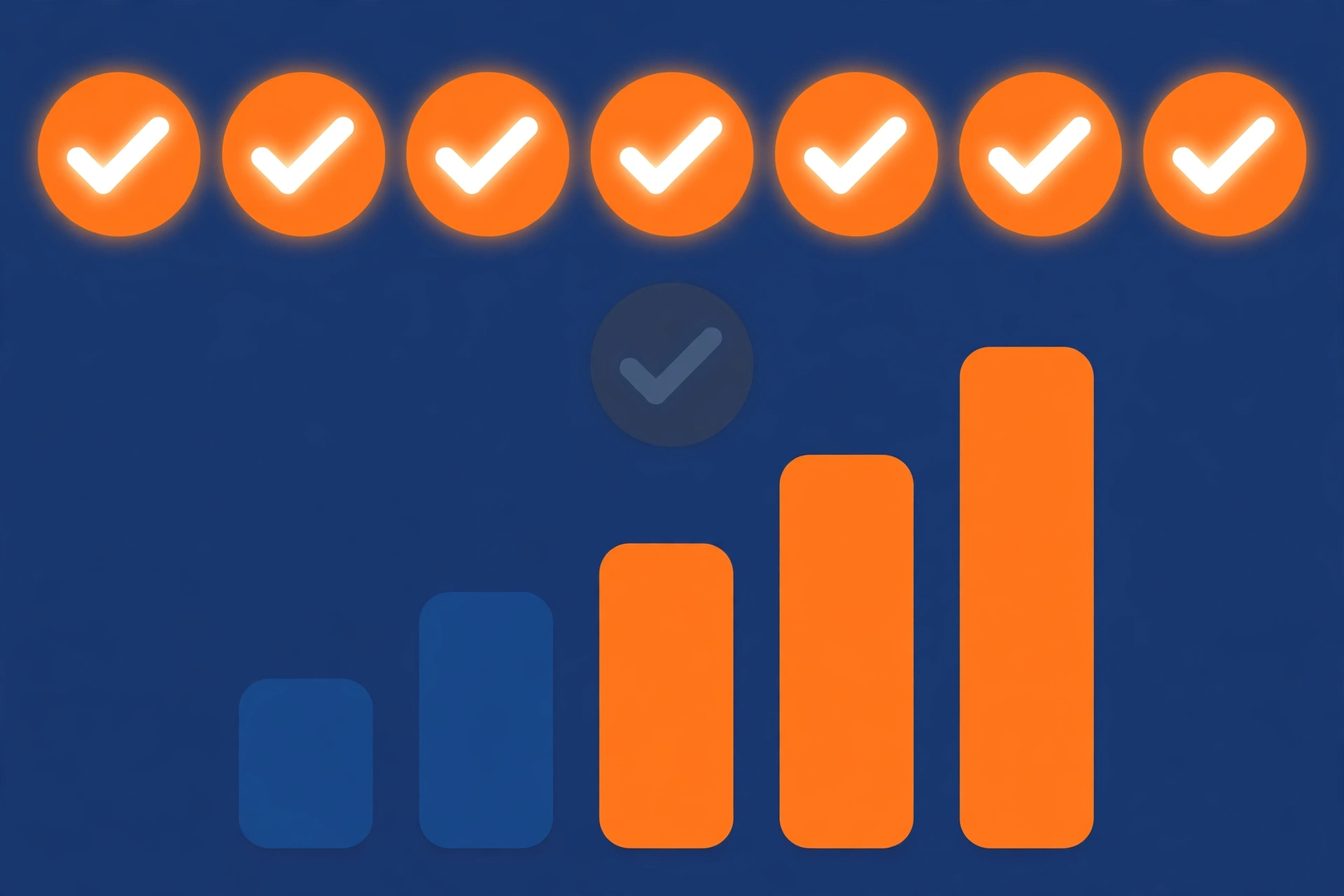
One experiment in the report tests the most obvious fix: give the model more time to think. Moving Gemini 4 Carbon from low to high reasoning effort raised its family pass^4 by 17.4 percentage points overall — a large gain. But the gains were uneven. Math and algorithmic tasks improved by 42.4 points, while vision tasks improved by only 3.1 points.
That split tells you where the bottleneck lives. Extra reasoning fixes reasoning slips. It barely touches perception errors, because a model that miscounts the objects in an image on the first pass will usually miscount them again after thinking harder about the wrong count. For teams building on these models, the implication is direct: if your use case involves images — reading screenshots, checking diagrams, counting items — more thinking time is not the lever you think it is. Better visual grounding is.
This is the same lesson the agent-infrastructure world is learning from the other direction. Google’s Agent Compute Engine puts every agent in its own hardware-isolated microVM because agents act on what they perceive, and Gemini Computer Use now operates a Mac desktop directly. An agent that misreads a screen and then acts on the misreading is worse than a chatbot that misreads a screen and merely says the wrong thing. Reliability on easy tasks is the floor the whole agent stack stands on.
What HFE Means for Anyone Building on AI
Humanity’s First Exam will not replace capability benchmarks, and DeepMind does not pretend otherwise. The authors caution that the tasks were adversarially selected to expose model blind spots rather than sampled uniformly from everyday queries, and they list synthetic imagery, reliance on one Gemini autorater family and seed-only human testing as further limitations. It is a stress test, not a representative sample of daily use.
But stress tests are exactly what production needs. When Databricks Genie ZeroOps is fixing data pipelines on its own and Apple’s Siri AI rollout is bringing agents into Apple’s apps, the question that decides whether a system ships is not “how smart is the model at its best?” It is “how often does it get the easy thing wrong, and can I predict when?” HFE gives that question a number, a leaderboard and a dataset that will keep evolving through the community competition.
The deeper shift is cultural. For years the AI race was measured in ceilings — the hardest problem solved, the highest score on the toughest test. HFE measures the floor. A model that scores 92% on consistency is not the smartest model in the world, but it may be the most trustworthy one to build on. And in a year when AI is moving from demos into daily work, simple and reliable beats smart and shaky.
Sources: Google DeepMind’s announcement, Unite.AI’s analysis and RR Tech Pulse on the Humanity’s First Exam launch.