
AI agents are no longer just answering questions. They browse the web, run code, call tools, move files and orchestrate workflows — often on instructions nobody reviewed in advance. That makes the place where an agent runs as important as the model doing the thinking. Google’s answer is Agent Compute Engine, a purpose-built cloud service announced on October 22, 2026, at AGNTCon + MCPCon that gives every AI agent its own hardware-isolated computer to work in. It already powers Gemini as an agent for work tasks, and Google says it will open in preview in the coming months.
The idea is simple to state and hard to build: stop treating an agent like a chatbot with a shell, and start treating it like untrusted code that needs its own machine.
Why AI Agents Need Their Own Computer
A traditional chatbot cannot do much damage. An agent can. It executes code the model generated, opens web pages, downloads files and calls APIs with real permissions — and a prompt injection hidden in a web page or a document can steer it toward actions its user never asked for. Put that agent in a shared container on a shared kernel, next to live cloud credentials, and one bad instruction can become a breach.
That risk is exactly what the industry has been circling all year. Agents are moving onto the desktop, with Gemini Computer Use now able to operate a Mac, and into data platforms, with Databricks Genie ZeroOps fixing pipelines on its own. The more capable agents get, the less acceptable it is to run them in the same kind of sandbox we use for a web app. Google’s position is that agent infrastructure has to assume the code inside the sandbox may be hostile — and design from there.
How the MicroVM Sandbox Works

Agent Compute Engine gives each agent session its own dedicated, single-tenant microVM — a small virtual machine with its own guest kernel and its own root access, separated by a hardware-isolated Cloud Hypervisor boundary. Google runs the service on its Titanium offload infrastructure processing units, which it describes as silicon-rooted defense-in-depth built for untrusted AI agents.
The design is tuned to how agents actually behave. Agent sessions start, pause and resume constantly, and Google says most sessions are idle most of the time — waiting on the model to think, or on a human to respond. So the microVMs boot rapidly, share memory through copy-on-write over a single operating system template, and pause when idle through fast checkpoint and restore. When an agent finishes a tool call and enters the thinking phase of its loop, the microVM signals that it is idle and the host moves it to an idle state, then resumes it from a snapshot when work returns. Google says the approach lets it pack thousands of microVMs onto a single host, combining the separation of virtual machines with the density usually associated with containers.
Inside Google, the service already runs four kinds of workload: consumer and enterprise agent tools, software engineering workspaces, large-scale model evaluation and reinforcement learning, and sandbox environments for internal services. Google also says its Antigravity coding agent uses the snapshot-and-fork primitives to make long-horizon software engineering feel effortless.
The Golden Rule: No Secrets Inside the Sandbox
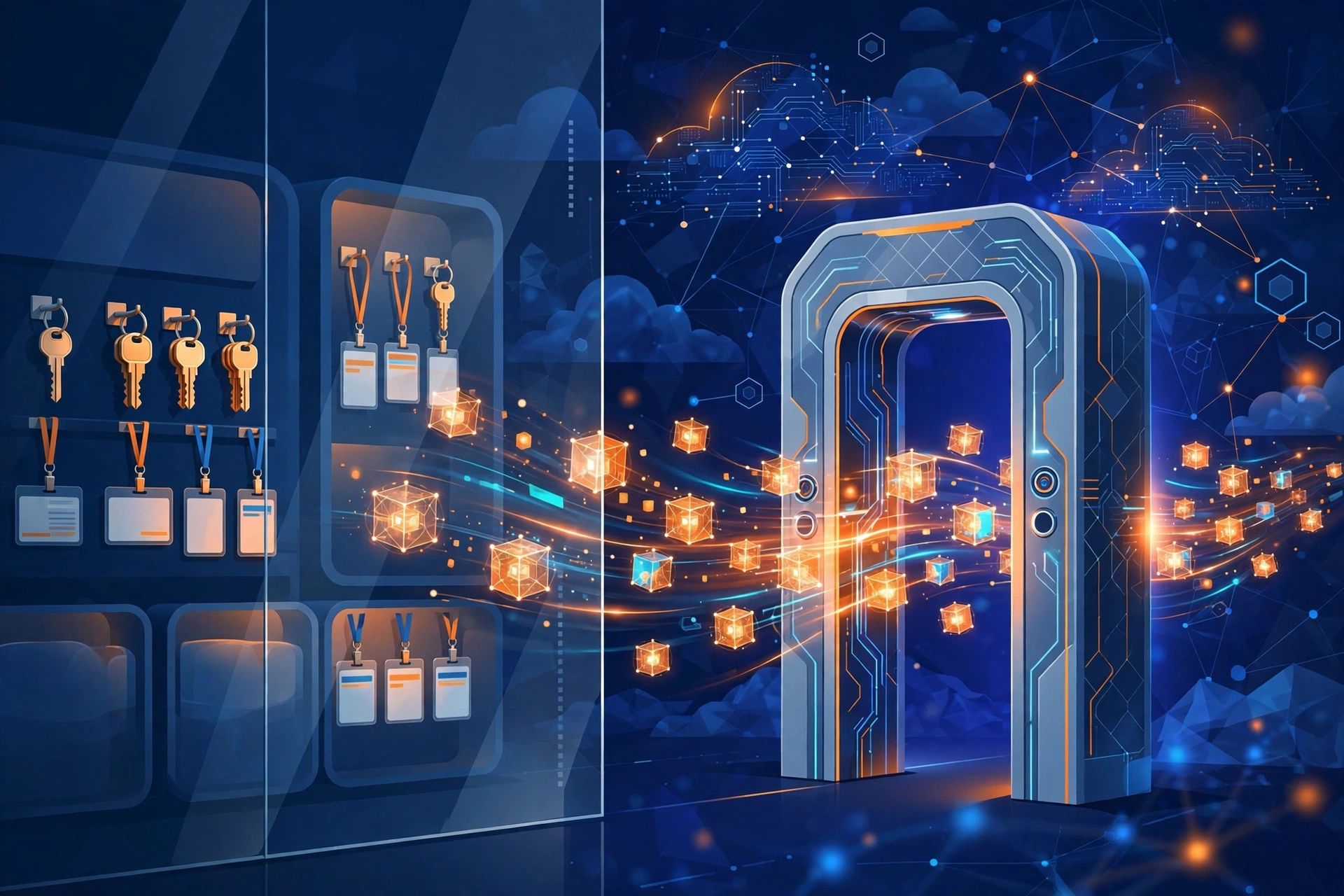
Isolation is only half the design. The other half is a rule Google states plainly: the microVM holds nothing worth stealing. There are no persistent secrets, no OAuth refresh tokens and no cloud service account keys inside the sandbox, and the microVM cannot reach a cloud instance metadata server at all.
The network is built the same way. A microVM has no standard network interface, no default gateway and no direct access to a virtual private cloud. All traffic crosses a virtio-vsock boundary to a local proxy and then out to an external gateway. Each microVM carries its own cryptographically verified identity and only short-lived credentials, and the Agent Gateway checks the agent’s identity and policy before injecting the real backend credentials into outbound requests — at egress, outside the microVM. An agent that gets compromised can use a permission without ever reading the secret behind it, and a hostile instruction has no lateral route to the project’s assets, because there is no route.
That is the difference between a sandbox and a cage. A sandbox that still holds the keys is just a room with a locked door and the keys on the table.
Governance That Follows Agents Anywhere
Agent Compute Engine arrives with a governance layer meant to follow agents wherever they run, not just inside Google Cloud. Agent Gateway acts as the traffic controller between clients and agents, carrying policies for sensitive data protection, agent attack protection and semantic governance. Agent Registry is the central source of truth for which agents, tools, MCP servers, skills, models and endpoints are approved. Agent Identity gives each agent a unique SPIFFE-based identifier used for authentication, authorization and audit.
Google says that governance will extend to agents running on other clouds, on-premises clusters and managed devices — including coding agents such as Claude Code. For teams that want to run the runtime themselves, there is Agent Substrate, an open-source execution runtime for Kubernetes announced on September 15, 2026, that brings the same agent-first design using gVisor or microVMs and works with any agent framework. Google has said it is donating Agent Substrate and gVisor to the Cloud Native Computing Foundation, along with OpenRL.
The message is that isolation and governance are a package. A fast microVM without policy is just a faster way to run an untrusted agent; policy without isolation is a rule the agent can walk around.
What It Means for Builders Right Now
Agent Compute Engine is announced, not available. Google has published no price, no regions, no API surface and no firm preview date — only that the preview arrives in the coming months. That makes this a design to study rather than a service to buy today, and the study is worth doing now, because the pattern it describes is already becoming the standard for agent runtimes.
Three things from the design translate directly to any team running agents today. First, give each agent session its own boundary stronger than a shared container kernel — a microVM, a sandboxed runtime class, or a dedicated pod. Second, keep credentials outside the guest: let the agent use an identity it can never read, and inject secrets only at the point where requests leave. Third, log every action to a sink the agent cannot touch, tied to that identity, so an incident can be reconstructed after the fact.
Teams that have standardized on Kubernetes can start with Agent Substrate on Google Kubernetes Engine, which packages the same ideas in an open runtime. And the urgency is real: the same week agents gained computer use on the Mac and shared workspaces in ChatGPT Space, the nginx2root flaw showed how quickly an unpatched runtime can become an unauthenticated remote-code-execution hole. Agents amplify both sides of that equation.
The Bigger Picture: Infrastructure Is Catching Up to the Agent
Google underlined the point on November 17, 2026, with a blog post explaining how Gemini’s defense-in-depth approach works. Agent Compute Engine is the first layer — where the agent runs — and it sits alongside multi-stage prompt-injection defenses, a Policy Guardian, an Action Safety Agent, user takeover controls and continuous vulnerability research and testing. The post walks through an agent investigating a surprise utility bill: it opens the portal, downloads past statements and runs the analysis, all inside a hardware-isolated microVM.
That layering is the real story. For most of 2026 the agent race was about capability — bigger models, longer horizons, more tools. The last two months have been about the floor underneath it: Microsoft’s Aion Instruct putting a small model inside the browser, Databricks Genie ZeroOps putting an agent on call for broken pipelines, and now Google putting every agent in its own computer. Capability gets the headlines. Infrastructure decides whether enterprises can actually let agents touch production.
Agent Compute Engine will be judged on the details Google has not published yet — price, regions, boot times, the preview date. But the direction is already clear, and it is the direction the whole field is moving in: agents that can act need computers of their own, with nothing inside worth stealing.
Sources: Google Cloud’s announcement, Google’s defense-in-depth blog, and Virtualization Review’s report on Agent Compute Engine.