
The solar system still has plenty of secrets waiting to be discovered.
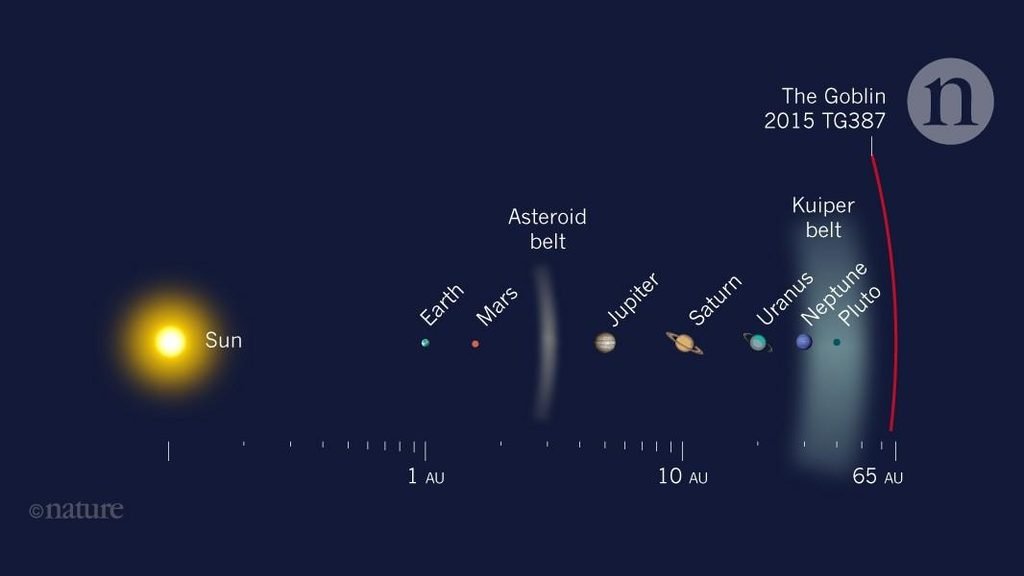
For generations, astronomers have studied the planets, moons, asteroids, and distant objects orbiting our Sun. Yet the region beyond Neptune remains one of the most fascinating places in our cosmic neighborhood.
Now, astronomers have identified a new dwarf planet candidate beyond Pluto, adding another intriguing object to the growing list of distant worlds.
The object, provisionally designated 2026 ED138, was discovered using observations from the NSF–DOE Vera C. Rubin Observatory.
The discovery is attracting attention because ED138 could become one of the largest dwarf planets known in the outer solar system if follow-up observations confirm its nature.
What Is 2026 ED138?
2026 ED138 is a large object located beyond the orbit of Pluto.
It belongs to the broader population of distant solar system objects known as trans-Neptunian objects, or TNOs.
These objects orbit the Sun beyond Neptune and include some of the most scientifically interesting bodies in our solar system.
Scientists have identified ED138 as a dwarf planet candidate. That means it may meet the criteria for a dwarf planet, but further observations are needed to establish its characteristics.
Unlike the eight major planets, dwarf planets have not cleared their orbital neighborhoods of other objects.
Why Is the Discovery Important?
The outer solar system is difficult to study.
Objects in this region are incredibly distant, faint, and slow-moving. They receive very little sunlight, making them challenging to detect using conventional astronomical observations.
The discovery of ED138 demonstrates how modern observatories are improving our ability to identify objects that were previously difficult to observe.
The Vera C. Rubin Observatory is designed to repeatedly survey large portions of the sky.
Its powerful camera and advanced data-processing systems allow astronomers to identify subtle changes in the positions of distant objects.
That capability is particularly valuable when searching for objects that move slowly against a background of stars.
Could ED138 Become One of the Largest Dwarf Planets?
Scientists have described ED138 as a potentially large dwarf planet candidate.
However, its final classification depends on additional observations.
Astronomers need to better understand its size, orbit, and physical characteristics. Establishing whether the object is sufficiently massive to become nearly spherical under its own gravity is also important.
For now, it is more accurate to call ED138 a dwarf planet candidate rather than a confirmed new dwarf planet.
How Many Dwarf Planets Are There?
The five widely recognized dwarf planets are:
- Ceres
- Pluto
- Eris
- Haumea
- Makemake
Other distant objects have been proposed as dwarf planet candidates.
The number of potential dwarf planets could increase as astronomers discover more objects in the Kuiper Belt and other distant regions of the solar system.
Why Was This Object Not Discovered Earlier?
The answer is partly related to distance and visibility.
The region beyond Neptune is filled with distant objects, but many are extremely faint.
ED138 was identified in a crowded region of the sky near the plane of the Milky Way, where countless stars make the search more challenging.
Advanced astronomical surveys can compare observations taken at different times and identify objects that move relative to the background stars.
This is one reason why modern observatories are expected to uncover many more distant solar system objects.
What Happens Next?
Astronomers will continue studying ED138 using follow-up observations.
These observations may help establish:
- Its orbit around the Sun
- Its approximate size
- Its physical characteristics
- Whether it meets the criteria for a dwarf planet
The discovery is also a reminder that the solar system is much larger and more complex than the familiar diagram of eight planets suggests.
Frequently Asked Questions
Is 2026 ED138 a confirmed dwarf planet?
It has been identified as a dwarf planet candidate. Further observations are needed to confirm its classification.
Is ED138 beyond Pluto?
Yes. It is a distant object orbiting the Sun beyond Pluto’s orbit.
Who discovered ED138?
It was identified using observations from the NSF–DOE Vera C. Rubin Observatory.
Could there be more dwarf planets beyond Pluto?
Yes. Astronomers continue to discover distant objects that may qualify as dwarf planets.
Conclusion
The discovery of 2026 ED138 shows that our solar system still has surprises waiting to be uncovered.
As astronomical technology improves, scientists may discover more distant worlds that help explain how the solar system formed and evolved.
Pluto may no longer be the only distant world capturing public attention. The next generation of dwarf planet discoveries could reshape our understanding of the outer solar system.
Sources: Vera C. Rubin Observatory – First Dwarf Planet Candidate and National Science Foundation – New Dwarf Planet Candidate