Linux powers a significant portion of the world’s digital infrastructure.
From cloud platforms and enterprise servers to containers and networking systems, Linux plays a critical role in keeping modern technology running.
That is why newly reported Linux kernel vulnerabilities deserve attention from system administrators, cybersecurity teams, and cloud engineers.
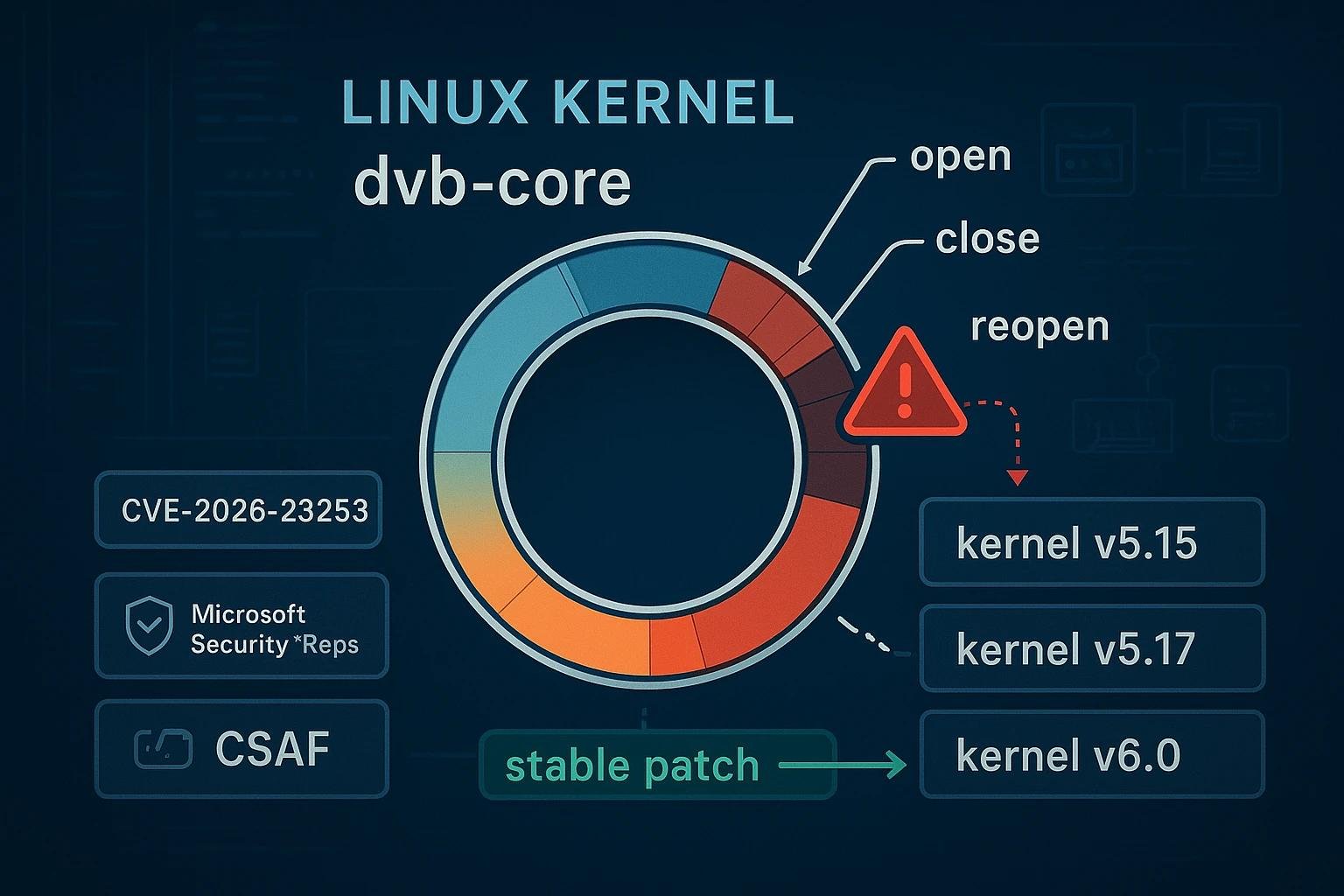
A vulnerability identified as CVE-2026-98432 has been reported in the Linux kernel’s IPv4 networking subsystem. The issue involves a race condition that may cause a use-after-free vulnerability during certain TCP connection operations.
For organizations operating Linux-based infrastructure, understanding the issue is important for assessing exposure and planning appropriate security measures.
What Is CVE-2026-98432?
CVE-2026-98432 concerns a potential memory-management problem in the Linux kernel.
According to Red Hat’s security advisory, the vulnerability involves concurrent processing of retransmitted TCP connection requests or socket migrations.
Under specific conditions, socket options may be freed while another operation is still using them.
This creates a use-after-free condition.
A use-after-free vulnerability occurs when software continues accessing a memory object after that memory has been released.
Depending on the circumstances, this type of vulnerability may lead to application instability, system crashes, or other security consequences.
How Does the Vulnerability Work?
The issue involves a race condition.
A race condition occurs when multiple operations happen concurrently and the final outcome depends on the timing of those operations.
In this case, the Linux kernel may process TCP requests in a way that allows one operation to release memory while another operation is still accessing it.
A remote attacker who can reach an affected TCP service may attempt to trigger the condition through specially timed network requests.
However, successful exploitation depends on specific technical circumstances.
The practical impact and severity can differ across Linux distributions and kernel configurations.
Is CVE-2026-98432 a Critical Vulnerability?
Security ratings currently require careful interpretation.
Red Hat’s advisory describes the issue as moderate severity, with a CVSS 3.1 score of 5.9.
Other vulnerability scoring information associated with the CVE record has reported a significantly higher score.
This difference matters.
A vulnerability’s risk depends on factors such as:
- The affected software version
- The complexity of exploitation
- Whether the vulnerable service is exposed to the internet
- The system’s configuration
- The potential impact on confidentiality, integrity, and availability
Organizations should prioritize the security assessment provided by their Linux vendor rather than relying on a single headline or score.
Which Systems Could Be Affected?
Red Hat has identified affected kernel packages in several supported products, including:
- Red Hat Enterprise Linux 8
- Red Hat Enterprise Linux 9
- Red Hat Enterprise Linux 10
- Certain OpenShift Container Platform nodes
The advisory also identifies relevant Red Hat product variants.
Other Linux distributions may have different exposure depending on their kernel versions, patches, and configuration.
Ubuntu, Debian, Amazon Linux, SUSE, and other distributions should be assessed using their own security advisories.
A CVE affecting the Linux kernel does not automatically mean every Linux server is vulnerable.
What Should System Administrators Do?
Security teams should take a structured approach.
1. Identify affected systems
Inventory Linux servers, virtual machines, containers, and network-facing services.
Check the kernel versions and vendor package information.
2. Review vendor advisories
Use the official security advisory for the specific distribution.
Do not assume that a generic kernel version comparison is sufficient because vendors may backport security patches.
3. Evaluate network exposure
Identify systems that accept TCP connections from untrusted networks.
Internet-facing systems may require closer examination.
4. Monitor security updates
Install vendor-approved updates when available and validated for the relevant environment.
If a fix is not yet available, follow the vendor’s recommended risk-management guidance.
5. Document the security assessment
Record affected assets, exposure, mitigation status, business impact, and planned remediation.
This is particularly important for regulated environments and organizations with formal vulnerability-management processes.
What Does This Mean for Cloud and DevOps Teams?
The Linux kernel is a foundational component of many cloud environments.
A vulnerability in the kernel can affect virtual machines, container hosts, and other infrastructure components.
Cloud engineers should remember that containers share the host kernel. Updating an application container alone does not necessarily resolve a host-kernel vulnerability.
Security teams should coordinate with infrastructure owners and cloud providers to determine the appropriate remediation approach.
Frequently Asked Questions
What is CVE-2026-98432?
It is a reported Linux kernel vulnerability involving a race condition and potential use-after-free in IPv4 TCP networking.
Can it be exploited remotely?
The reported vulnerability may be triggered through specially timed network requests under specific conditions. Actual exploitability depends on the affected system and configuration.
Is every Linux distribution affected?
No. Exposure depends on the kernel implementation, distribution, version, and available security patches.
What is the recommended fix?
Follow the relevant Linux vendor’s official security advisory and install approved updates when available.
Conclusion
CVE-2026-98432 highlights the importance of maintaining secure Linux infrastructure.
Even a relatively small memory-management issue can become significant when it affects a core networking component.
For system administrators and cybersecurity professionals, the best response is to verify exposure, monitor vendor updates, and prioritize remediation based on the actual risk to the environment.
Security disclaimer: This article is informational and is not a substitute for the official security advisory from your Linux vendor. Vulnerability status and remediation guidance may change as vendors publish updates.
Sources: Red Hat Security Advisory – CVE-2026-98432 and Rescana – Linux Kernel CVE-2026-98432