AI agents are no longer a demo on a developer’s laptop. Coding assistants, desktop helpers and autonomous workflows now read files, call tools, move data and spend money on behalf of the people who run them — and when one of them goes wrong, it can go wrong at machine speed. Microsoft, CrowdStrike and SentinelOne have all answered with endpoint products that promise to watch, govern and stop rogue agents. But the three offers are not the same thing, and their availability labels hide important differences.
CrowdStrike’s Falcon Guardian has been generally available since September 2026. SentinelOne’s Singularity Agentic Detection and Response (ADR) launched in early access on October 21, 2026. Microsoft’s local agent discovery is generally available in supported scenarios, while its runtime protection is still in public preview. The question for any security team is not which vendor shipped first. It is what each product actually discovers, inspects, blocks — and what it cannot do yet.
Microsoft Defender: inventory is not enforcement
Microsoft’s strongest card is discovery. Local AI agent discovery in Defender for Endpoint became generally available in October 2026, covering more than 50 supported local AI agents and the Model Context Protocol (MCP) servers they use, on Windows and macOS. Supported agents include coding tools, desktop assistants and IDE extensions, and discovered agents show up in the AI agent inventory, the exposure map and advanced hunting.
The version requirements are specific: Windows needs Defender Antivirus platform 4.18.26090.9 or later, and macOS needs Defender for Endpoint 101.26072.0017 or later. Discovery in Windows Subsystem for Linux (WSL) remains in preview, and WSL coverage should not be read as native Linux endpoint coverage. Microsoft’s own support matrix is explicit that only listed agent-and-scenario combinations are documented as supported — a familiar product name is not enough.
Discovery also has prerequisites that catch teams out. It requires a commercial-cloud environment, Defender for Endpoint Plan 2, onboarded devices and supported versions. MCP server configuration discovery still needs antivirus in active mode with real-time protection. And an inventory entry is not proof of use: Microsoft notes that a running agent process can create an entry without a prompt being submitted, while installing an agent does not guarantee an immediate entry. Treat the inventory as evidence of discovered software, not as a complete usage ledger.
Licensing splits visibility from risk assessment, too. Plan 2 provides the inventory and hunting access; the associated agent risk levels, indicators and recommendations need Microsoft 365 E7 or Microsoft Agent 365 alongside Plan 2. Do not assume an existing endpoint subscription unlocks every agent-security screen.
Microsoft Defender runtime protection: useful, but still preview
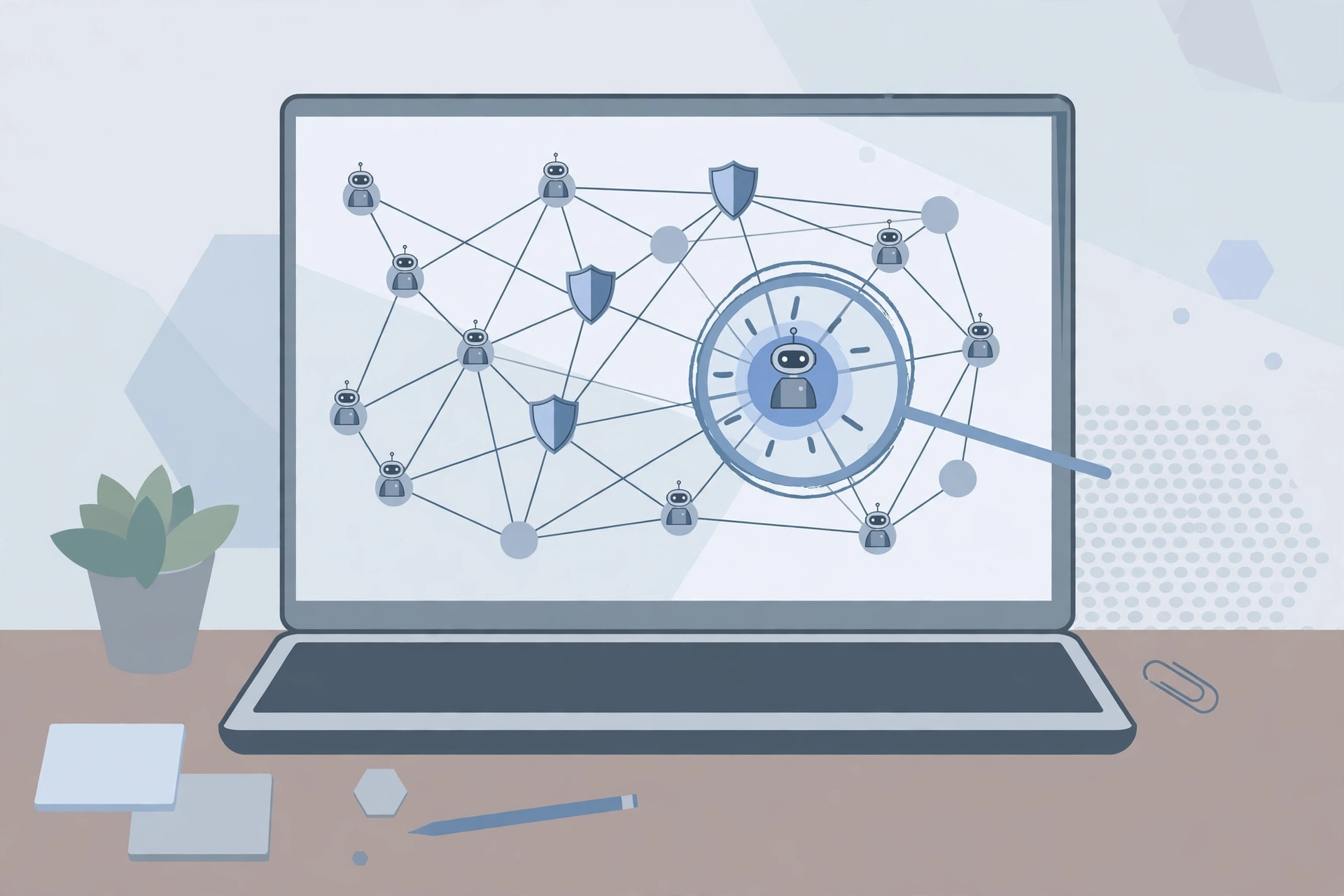
Discovery is only half the story. Defender’s runtime protection for local AI agents on Windows is in public preview. It inspects the agent loop — user prompts, tool calls and tool responses — and can block risky activity before it executes, aiming to stop prompt injection and unsafe agent actions at the device level. A second method, network inspection, examines covered agent-to-model traffic. Microsoft specifically excludes certificate-pinned connections and HTTP/3 from network inspection support.
Two documented preview issues deserve a prominent place in any pilot runbook. First, an alert can claim an action was blocked even when the device is configured for Audit, which allows the action. Second, Claude Code can continue processing a tool response despite a reported post-tool-response block. Microsoft identifies that as an enforcement limitation, not a wording problem. Post-tool inspection also cannot undo actions a tool has already completed. The practical lesson: verify the actual result, not just the alert title. A dashboard saying “blocked” is evidence to investigate, not a victory lap.
For a bounded Windows pilot, Microsoft’s setup documentation supports a careful sequence: start with an onboarded, supported Windows test device with an eligible licence, current Defender updates, active antivirus and real-time protection; verify the security intelligence version is 1.451.224.0 or later; enable the inspection methods in audit mode first; then verify the effective settings before relaunching the agent. The documented values are 0 for Disabled, 1 for Block and 2 for Audit, and Microsoft recommends reviewing detections for one to two weeks before expanding enforcement. Define pilot success before starting: the intended setting is effective, representative workflows still work, detections reach the responsible team, and investigators can tell an alert apart from a prevented action.
CrowdStrike Falcon Guardian: GA protection, but inspect the control point
CrowdStrike has the clearest vendor-confirmed generally-available position of the three. Falcon Guardian, introduced on September 1, 2026 as AI detection and response anchored at the endpoint, has been generally available since then. Its argument is that agent security needs context about both instructions and execution, not governance alone — and it combines agent-level controls, endpoint network inspection and endpoint activity through a single Falcon sensor.
The headline addition came on November 3, 2026, at Fal.Con Europe in Barcelona: an AI Kill Switch inside Falcon Guardian. An authorised administrator can terminate a running agent, block it from relaunching across the organisation, cut its enterprise network access, and have every step logged. But the control point matters. The kill switch operates first at the AI gateway, with endpoint termination described as arriving soon. Interrupting an agent’s gateway access is not the same as terminating its local process, and an agent doing substantial local work may keep running even after the gateway cuts it off.
Agent-level hooks enforce policy inside six widely used agent platforms: Claude Code, OpenAI Codex, GitHub Copilot, Microsoft 365 Copilot, OpenCode and Cursor. The Falcon AI Gateway, which routes AI traffic through a central point to inspect prompts and responses and enforce policy across managed and unmanaged devices, is generally available and included with Guardian. CrowdStrike also announced agreements to acquire Fiddler AI and Dreadnode alongside the kill switch, aiming to add agent observability and AI safety to the platform.
Pricing needs the same care as the feature list. Guardian entitlement is calculated from licensed endpoints multiplied by four million tokens per endpoint per month, measured at account level. “Licensed by endpoint” does not tell the whole capacity story: ask the vendor to model that allowance against representative workloads, because a developer workstation running frequent automated tasks will burn tokens far faster than a laptop that occasionally opens an assistant.

SentinelOne Singularity ADR: early access, plus a separate autonomous SOC
SentinelOne unveiled Singularity Agentic Detection and Response at OneCon 2026 on October 21, 2026, and it is available in early access. ADR discovers AI agents, enforces what agents are allowed to do, monitors agent behaviour in depth, and detects and stops unintended and malicious activity in real time. The company positions it across endpoints, cloud workloads and the broader enterprise, built on the Singularity Platform, and says it can stop one agent mid-action while the rest of a workflow keeps running.
That is a concrete product event, but early access is not a complete support matrix, a universal production entitlement or independently measured detection performance. Early-access buyers should get written confirmation of supported agents, deployment requirements, response actions and support arrangements before committing.
Do not confuse ADR with the second product SentinelOne announced the same day: Singularity ASOC, the Autonomous Security Operations Center. ASOC combines Purple Agentic Investigation, AI SIEM, Hyperautomation, AI Data Pipelines and case management, with practitioners defining the limits of automated activity. ADR protects against agent-related threats; ASOC concerns how the security operation itself investigates and responds. They are two separate evaluation tracks: first, can ADR constrain the agents employees use? Second, what authority would you delegate to agents operating inside your own SOC? Require separate acceptance criteria rather than letting one demonstration stand in for both.
How to compare the three without buying the brochure
A defensible evaluation starts with workflows, not a vendor leaderboard. The framework below is an operational assessment method, not a claim that the products have passed these tests.
1. Build an agent-by-environment inventory. List the exact agent, version, operating system, execution location and connected tools. Separate desktop applications, command-line agents, IDE extensions and WSL workloads. Record which accounts they run under and what sensitive resources those accounts can reach. For Defender specifically, the support matrix warns that unlisted combinations are not documented as supported.
2. Separate four acceptance questions. For each workflow, ask: Discovery — does the platform identify the agent and its configuration? Detection — does it recognise the test condition? Enforcement — does the intended action actually stop? Investigation — can an analyst explain the event and its outcome? Keep the results separate. A discovered agent can remain unprotected, and a generated alert can coexist with a completed action.
3. Test ordinary work alongside safe security demonstrations. Include routine development, approved tool use and expected network access. Record false positives, interruptions and recovery steps. Use isolated test devices and non-sensitive data; a security pilot should not need production credentials to prove its point. Require evidence of both successful prevention and successful legitimate work — otherwise the easiest product to “win” is the one that stops everyone from doing anything.
4. Price the actual capability. Request separate line items for endpoint protection, agent-security functionality, investigation services and consumption allowances. For Microsoft, verify posture entitlements separately from inventory. For CrowdStrike, include Guardian’s token allowance. For SentinelOne, establish exactly what early access includes and what commercial terms apply afterwards.
5. Make any migration a separate decision. Do not replace an endpoint platform merely to try an agent-security feature. First determine whether the pilot can satisfy its prerequisites within the current architecture. That matters particularly for Defender, whose runtime setup requires active antivirus and real-time protection — a generic plan to leave Defender passive alongside another product does not satisfy those requirements.
The practical verdict
As of November 15, 2026, the three vendors sit in different places. CrowdStrike has the clearest generally-available position for its named agent-security offering, with the caveat that its kill switch currently enforces at the gateway while endpoint termination is still to come. Microsoft combines generally available discovery scenarios with preview runtime enforcement and unusually consequential documented caveats — an audit-mode alert that says “blocked” is the one to remember. SentinelOne offers an early-access agent-defence product alongside a separate autonomous-SOC initiative that deserves its own evaluation.
None of those distinctions is a detection championship. They establish availability and design boundaries, and the only way to turn them into a buying decision is a narrowly scoped, measurable pilot: verify entitlements, map exact agent support, confirm effective settings, and observe what actually happens when enforcement triggers. Choose the platform that demonstrates the required outcome in your environment — not the one whose launch announcement contains the most confident verbs. For the wider picture, see our guide to the cybersecurity threats to watch in 2026.
The stakes are rising fast. AI agents are gaining access to more systems, and the disclosure clock for the vulnerabilities they expose is shrinking — Google Project Zero will publish bug details just 30 days after reporting by 2028, down from a 120-day maximum today. November has already shown how fast flaws move: a critical Apache flaw in HTTP Server forced an emergency patch to version 2.4.71. Keep the basics covered too — install updates promptly on every device, since an unpatched endpoint gives a rogue agent an easier foothold. The teams that will cope best are the ones that can already see every agent running on their endpoints and prove, not just claim, that a rogue one can be stopped.
Frequently asked questions
Which AI agent security product is generally available right now?
CrowdStrike Falcon Guardian has been generally available since September 2026. Microsoft’s local agent discovery is generally available in supported scenarios, but its runtime protection is in public preview. SentinelOne Singularity ADR is in early access as of October 21, 2026.
What is the difference between AI agent discovery and runtime protection?
Discovery finds and inventories the agents and MCP servers running on a device. Runtime protection inspects what an agent does — its prompts, tool calls and responses — and can block risky actions before they execute. A discovered agent is not automatically a protected one.
What is CrowdStrike’s AI Kill Switch?
It is a human-triggered control in Falcon Guardian, announced November 3, 2026, that terminates a rogue agent, blocks it from relaunching and cuts its network access. Gateway enforcement is available now; endpoint termination is described as coming soon.
What is the difference between SentinelOne ADR and ASOC?
ADR discovers, governs and stops AI agents. ASOC is an autonomous security operations offering that investigates and responds to alerts using agentic AI. They are separate products announced on the same day and need separate evaluations.
How should I start evaluating AI agent security?
Start with an inventory of the agents actually running in your environment, then run a narrow pilot on test devices with audit mode first, measuring both blocked attacks and uninterrupted legitimate work before enabling enforcement.