Creativity is often seen as a rare talent—something only artists, writers, or designers possess. In reality, creativity is a skill that anyone can develop with the right habits and mindset. Whether you’re an entrepreneur, student, content creator, or professional, learning how to unlock your creative potential can dramatically improve your productivity, problem-solving abilities, and overall success.
In a fast-paced digital world where innovation drives progress, cultivating creativity isn’t optional—it’s essential. The good news is that creativity can be strengthened through daily habits. Below are five powerful habits that can help you unlock your creative potential and achieve greater success. If you want a sense of how quickly things are changing, read how artificial intelligence is transforming our world — and remember that new tools reward people who can think creatively about them.
Think of creativity as a muscle, not a gift you either have or you do not. Like any muscle, it gets stronger with regular, deliberate use and weaker when it is ignored. Psychology Today’s overview of creativity makes the same point: creativity is about discovering new ideas, connections and solutions, and almost everyone possesses some measure of it. The five habits below give that muscle a simple daily workout.
1. Make Time for Curiosity
Curiosity is the foundation of creativity. Creative thinkers constantly ask questions, explore new ideas, and challenge conventional thinking. Instead of accepting things at face value, they dig deeper to understand how things work.
To develop curiosity:
- Read books or articles outside your usual interests
- Explore new hobbies or skills
- Ask questions during conversations or meetings
- Observe the world around you more closely
The more curious you become, the more ideas your brain generates. Curiosity opens the door to innovation and fresh perspectives. Give it a practical outlet: pick one unfamiliar topic each week and spend thirty minutes learning about it. These websites to learn new skills online are a good place to start, and many of them are free.
2. Build a Daily Idea Habit
Creativity grows when you practice it regularly. One effective method is building a daily idea habit—training your brain to generate ideas every day.

For example, try writing down:
- 10 new ideas for a business
- 10 blog topics
- 10 ways to improve your daily routine
- 10 solutions to a common problem
Most ideas may seem ordinary at first, but this habit strengthens your creative muscles over time. Eventually, brilliant ideas start to emerge naturally. Keep the list in one notebook or app, and review it at the end of each week — you will be surprised how often a “bad” idea from Monday becomes the seed of a good one by Friday. The principle is the same one James Clear describes in Atomic Habits: small actions, repeated daily, compound into remarkable results.
3. Create a Productive Environment
Your environment has a powerful influence on creativity. A cluttered or distracting workspace can limit your ability to think clearly and generate ideas.
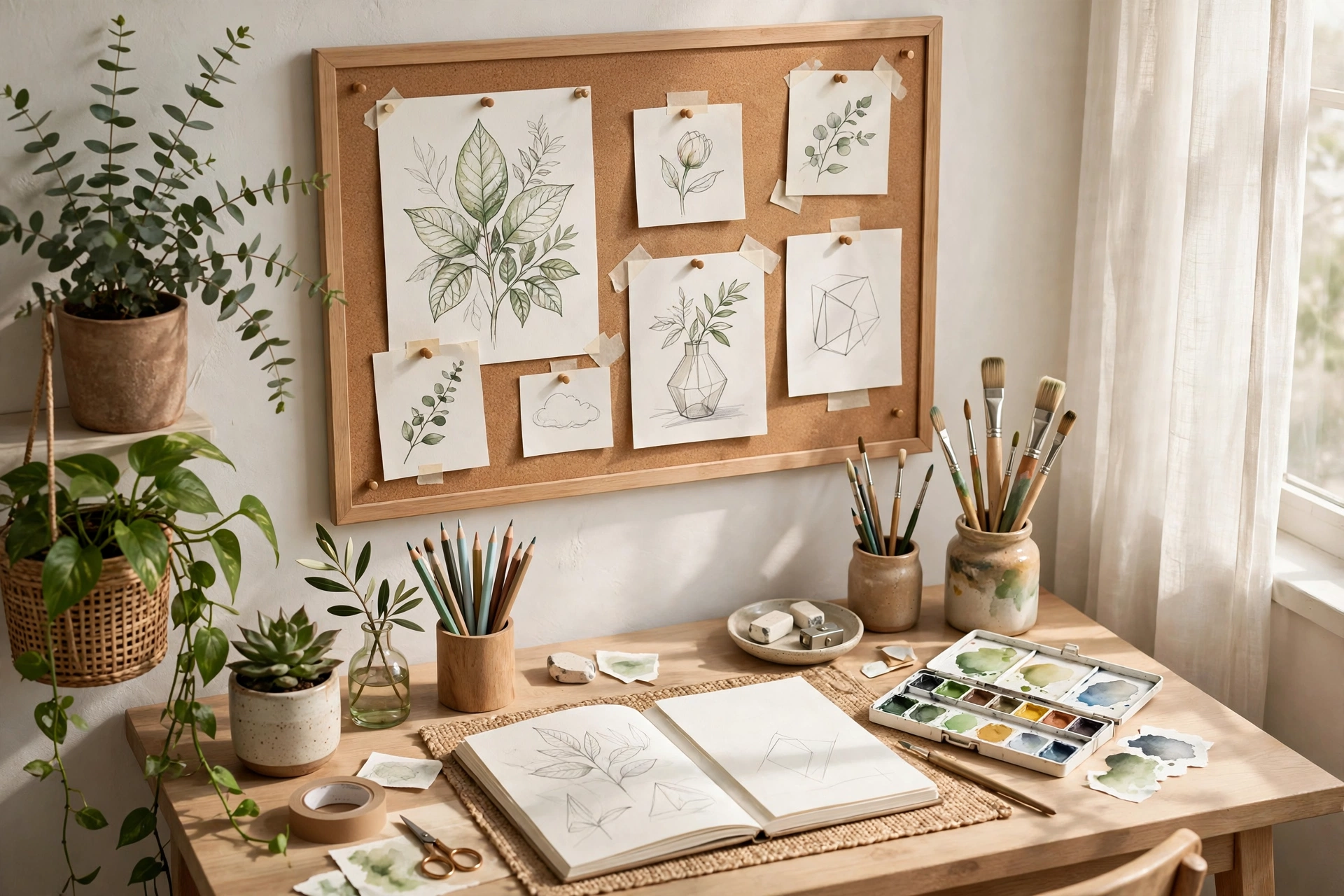
To create a creativity-friendly environment:
- Keep your workspace organized
- Add plants or natural light if possible
- Reduce digital distractions
- Use music or ambient sounds to boost focus
Whether you work from home or in an office, try creating a dedicated area that sparks inspiration and helps you enter a creative mindset. Small changes help more than a full redesign: clear one surface before you start, put your phone in another room for the first hour, and keep the tools you actually use within reach. When the space signals “this is where I create,” starting becomes easier.
4. Embrace Failure as Part of Growth
Many people hesitate to express creative ideas because they fear failure or judgment. However, failure is an essential part of the creative process. Every great innovator has faced setbacks before achieving success.
Instead of seeing failure as a dead end, treat it as feedback. Analyze what went wrong, learn from it, and apply those lessons to your next attempt. This mindset helps you take creative risks without being paralyzed by perfectionism.
Make failure less costly by testing ideas small and early: share a draft, try a pilot version, or ask one trusted person for honest feedback before you invest heavily. The real-life stories in 10 real-life stories that prove it is never too late to start again show the same pattern — setbacks were not the end of the story, they were the point where people learned what to do differently.
5. Practice Reflection and Inspiration
Creativity also grows from reflection. Taking time to pause, review your work, and think about your experiences can lead to new ideas and better decisions.
Try these reflection practices:
- Journal your thoughts daily
- Review your creative work and identify strengths
- Seek inspiration from books, podcasts, art, or nature
- Take quiet walks to let ideas develop naturally
When you reflect regularly, you become more self-aware and more open to creative solutions. Ten quiet minutes at the end of the day is enough: note one thing that worked, one thing that did not, and one idea to try tomorrow. For a different angle on where ideas come from, watch Elizabeth Gilbert’s TED talk on your elusive creative genius — it is a useful reminder not to put all the pressure for originality on yourself.
Important Thoughts
Creativity is not a mysterious gift reserved for a lucky few. It is a skill that can be developed by anyone willing to practice the right habits. By making time for curiosity, building a daily idea habit, creating a productive environment, embracing failure, and practicing reflection, you can unlock your creative potential and achieve success in every area of life.
Start small and stay consistent. You do not need a perfect routine, a new workspace or a big breakthrough today — you need one curious question, ten rough ideas and a few quiet minutes to reflect. Repeat that tomorrow, and the next day, and you will build the habit that makes creativity feel less like luck and more like a skill you own. Start today and watch your creativity grow.