
Sometimes, life doesn’t give us a fresh start when we expect it. It gives us one when we are finally ready to try again.
Have you ever looked at your life and wondered, “What if I had made a different choice? What if I had started earlier? Is it too late for me now?”
Maybe you spent years building a career that no longer makes you happy. Perhaps a business failed, a relationship ended, or a dream you once held close slowly disappeared beneath the responsibilities of everyday life.
And sometimes, the hardest part isn’t the failure itself. It’s watching other people move forward while you feel stuck in the same place.
We live in a world that celebrates young achievers, overnight success, and people who seem to have everything figured out by the time they turn thirty. But real life doesn’t always follow a neat timeline.
Some people discover their purpose in their twenties. Others find it in their forties, fifties, or even later.
The truth is that starting again doesn’t mean your previous years were wasted. It means you’re choosing to use what you’ve learned to build something different.
These ten real-life stories remind us that a difficult beginning, a painful setback, or a late start doesn’t have to define the rest of our lives.
Note: These are stories of real, publicly known individuals, retold in an accessible, human-centered style. Their journeys are based on documented biographical accounts, with some narrative details simplified for readability.
1. Colonel Harland Sanders: The Man Who Refused to Give Up
Lesson: Rejection is not always the end. Sometimes, it’s simply another step toward success.
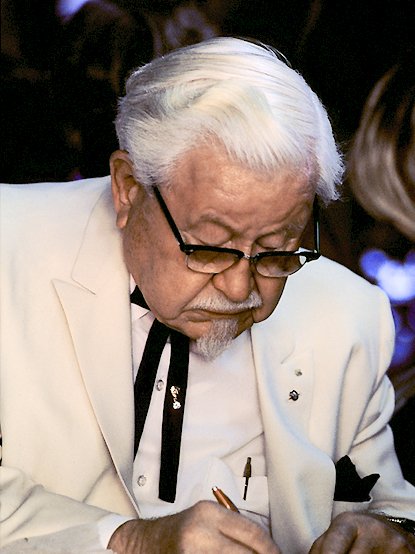
Imagine spending most of your life working different jobs, trying to earn a living, and searching for an idea that might finally work.
Now imagine reaching your sixties and realizing that you still haven’t achieved the success you hoped for.
That was the situation facing Colonel Harland Sanders, the man who became the face of Kentucky Fried Chicken, better known as KFC.
Sanders had worked in several occupations before developing his fried chicken business. He built a restaurant business in Kentucky, but a major highway change reduced traffic to his restaurant, forcing him to sell it.
For many people, losing a business at that stage of life would have been the final blow.
Sanders, however, had another idea.
He began traveling to restaurants, offering to share his fried chicken recipe through a franchise arrangement. His proposal was rejected repeatedly. Each rejection meant another journey, another conversation, and another opportunity to hear someone say no.
But he continued.
Eventually, his recipe and franchise model gained traction, helping build the KFC business into an internationally recognized brand.
His story is not proof that every idea will succeed if we keep trying. It is proof that one setback does not automatically cancel every opportunity that remains.
What we can learn: You don’t have to begin your next chapter with unlimited money, perfect circumstances, or a flawless plan. Sometimes, you simply need to take the experience you already have and find a new way to use it.
Your best opportunity might still be ahead of you.
2. Julia Child: Discovering a Passion in Her Late Thirties
Lesson: You can discover your calling long after you thought you should have found it.
Julia Child did not become a famous chef as a teenager. She did not spend her twenties building a culinary career.
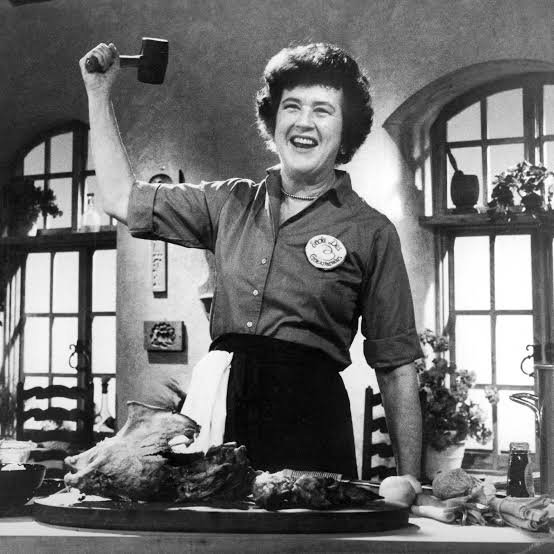
In fact, she worked for the U.S. government during World War II and later lived in France with her husband, Paul Child.
It was in France that she discovered a deep interest in French cooking.
Rather than dismissing it as a hobby she was too old to pursue seriously, Julia began studying at Le Cordon Bleu cooking school in Paris. She collaborated with Simone Beck and Louisette Bertholle on a cookbook that would eventually become Mastering the Art of French Cooking.
Published in 1961, when Julia was 49, the book helped introduce French cooking techniques to a broad American audience.
Her television career followed, making her one of the most recognizable cooking personalities in the United States.
Think about that for a moment.
A woman who discovered a major professional passion in adulthood went on to influence generations of home cooks.
Julia Child’s journey reminds us that discovering something you love is not limited to your early twenties.
Sometimes, you need years of living before you understand what truly excites you.
What we can learn: If you discover a new interest at 35, 45, or 55, don’t immediately dismiss it because you think you should have started earlier.
Learn the skill. Take the class. Practice consistently. Give yourself permission to become a beginner again.
You might be surprised by where your curiosity takes you.
3. Vera Wang: Building a New Career at 40
Lesson: A change in direction can become the beginning of your most meaningful work.
Vera Wang spent years pursuing figure skating before turning toward fashion.

She competed seriously as a young skater but did not make the U.S. Olympic team. She eventually entered the fashion industry, working at Vogue, where she became a fashion editor before moving to Ralph Lauren.
When she was 40, Wang opened her own bridal design business in New York City.
Starting a business at that age came with obvious challenges. She had to establish her own identity in a competitive industry, build a customer base, and turn her design vision into a sustainable business.
But her experience in fashion, combined with her understanding of elegance and personal style, helped her create a distinctive bridal brand.
Over time, Vera Wang became one of the best-known names in wedding fashion, with her designs worn by celebrities and brides around the world.
Her story is particularly meaningful because she did not begin her most famous business in her twenties.
She brought years of experience from one career into another.
What we can learn: Your previous career isn’t necessarily a detour. The skills you developed, the people you met, and the problems you learned to solve may become valuable assets in your next chapter.
You may not be starting from zero.
You may be starting from experience.
4. Grandma Moses: Becoming an Artist in Her Late Seventies
Lesson: Creativity has no expiration date.
Anna Mary Robertson Moses, better known as Grandma Moses, spent much of her life working on a farm and raising a family.
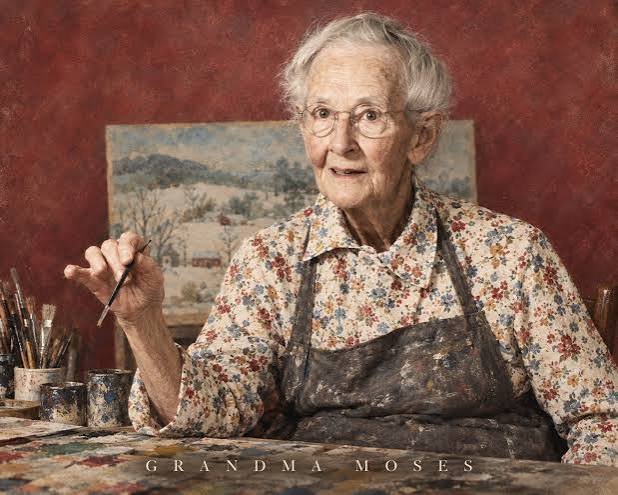
Painting was not the career that defined her early life.
She began painting more seriously in her late seventies, turning toward art partly because arthritis made some of her previous needlework difficult.
Her paintings depicted rural American life, including farms, village scenes, changing seasons, and everyday activities.
Her style was personal, detailed, and rooted in memories of the world she knew.
In 1938, an art collector discovered her work in a drugstore window. Her paintings subsequently attracted wider attention, and she became a nationally recognized artist.
Grandma Moses continued painting into her later years, demonstrating that a new creative chapter could begin even after most people would assume their working years were behind them.
Her journey is especially powerful because she did not need to become someone else to create meaningful art.
She used the experiences she already possessed.
The places she had lived, the seasons she had witnessed, and the life she had experienced became the foundation of her work.
What we can learn: You don’t need to become famous to justify pursuing something you love.
Perhaps you want to write stories, learn photography, paint, cook, or start a small creative project.
Begin because it brings meaning to your life, not because you need to prove something to the world.
There is value in creating something simply because it matters to you.
5. Ray Kroc: Expanding McDonald’s in His Fifties
Lesson: Sometimes, your biggest opportunity appears after decades of experience.
Before McDonald’s became a global fast-food giant, Ray Kroc spent years working as a salesman, including selling milkshake-mixing machines.
In the early 1950s, he encountered a restaurant operated by Richard and Maurice McDonald in San Bernardino, California.
He was impressed by the restaurant’s efficient system for serving food quickly and consistently.
Rather than seeing it as just another customer, Kroc recognized the potential to expand the concept through franchising.
In 1955, when he was 52, he opened the first McDonald’s under the company structure he established. He subsequently helped expand the business across the United States and beyond.
Kroc’s story is sometimes presented as a simple tale of entrepreneurial vision. The fuller history is more complicated: the McDonald brothers had already created the original restaurant system, and their contribution was fundamental to the business.
Still, Kroc’s role demonstrates the power of recognizing an opportunity and applying years of accumulated commercial experience to it.
He had spent decades learning how to sell, negotiate, and understand customers.
Those skills became useful when he encountered a business model he believed could grow.
What we can learn: You don’t need to have founded your first business at 22 to become an entrepreneur.
You might discover a business opportunity after years in technology, healthcare, finance, education, or another field.
Your professional experience may help you identify problems that someone with less experience would overlook.
Sometimes, the next chapter begins when you finally recognize the value of what you already know.
6. Kathryn Joosten: Starting an Acting Career at 42
Lesson: It’s possible to change direction even when your responsibilities make the decision difficult.
Kathryn Joosten did not begin her professional acting career as a young adult.
She worked as a psychiatric nurse and raised two sons before making a major change in her life.
After her marriage ended, she pursued acting at 42, beginning with community theater.
It was not an easy or predictable route to success. Acting is competitive, and changing careers while managing family responsibilities can require considerable courage.
Joosten gradually built her experience and eventually moved into professional television work.
She became widely known for playing Mrs. Landingham on The West Wing and Karen McCluskey on Desperate Housewives. Her performance on Desperate Housewives earned her two Primetime Emmy Awards for Outstanding Guest Actress in a Comedy Series.
Her journey shows that a person’s earlier identity does not have to dictate every future possibility.
She had been a nurse, a mother, and a community theater performer before becoming a familiar face on television.
Each chapter contributed to the person she eventually became.
What we can learn: You are allowed to change your mind about what you want from life.
Perhaps you chose a career because it was practical. Perhaps you stayed in a situation because other people depended on you.
Those decisions may have made sense at the time. They don’t mean you must follow the same path forever.
A new direction can begin with one small commitment: attending a class, applying for a different role, or trying something you once believed was out of reach.
7. Samuel L. Jackson: Finding Major Success in His Forties
Lesson: Slow progress does not mean you lack potential.
Samuel L. Jackson had been involved in theater and acting for years before he became one of Hollywood’s most recognizable performers.
He studied drama and worked in theater and film, building his craft over time. His career did not suddenly appear out of nowhere.
However, wider recognition came later than it does for many actors.
Jackson’s performance in Jungle Fever in 1991 earned significant attention, and his role in Pulp Fiction in 1994 became a defining moment in his career.
He was in his mid-forties when Pulp Fiction brought him major international recognition.
By that point, he had spent decades developing his acting skills and accumulating experience.
The world may have discovered him through a few memorable performances, but those performances were built on years of work.
This is an important distinction.
People often see someone else’s breakthrough without seeing the long period of preparation that came before it.
What we can learn: If you have been working toward a goal for years without receiving the recognition you hoped for, it doesn’t automatically mean your effort has been wasted.
Keep evaluating your approach. Improve your skills. Seek feedback. Look for better opportunities to demonstrate what you can do.
Persistence matters, but so does adapting your strategy.
Your progress may be less visible than someone else’s, yet still be meaningful.
8. Mary Wesley: Becoming a Successful Novelist in Her Seventies
Lesson: A meaningful achievement can arrive much later than you imagined.
Mary Wesley was a British writer who published short stories and children’s books before becoming widely known for her adult novels.
Her first adult novel, Jumping the Queue, was published in 1983, when she was 70.
She subsequently published a series of successful novels, including The Camomile Lawn, which helped establish her reputation with a wider readership.
Her success is a reminder that creative careers don’t always follow the path we expect.
Some writers publish their most celebrated work early. Others need years of experience before they find the confidence, perspective, or opportunity to share their stories.
Wesley’s later success also challenges the assumption that older adults have little left to contribute creatively.
Life continues to provide experiences, observations, relationships, and questions worth exploring.
Those experiences can become valuable material for creative work.
What we can learn: If you have always wanted to write a book, launch a blog, tell your family’s story, or share your knowledge, you do not have to wait until you feel perfectly prepared.
Write the first page.
Publish the first article.
Share the first story.
You cannot develop a body of work without beginning somewhere.
And your first attempt does not need to be your best.
9. Henry Ford: Learning From Business Failure
Lesson: Failure can provide information that helps you make better decisions next time.
Henry Ford is remembered for transforming automobile manufacturing, but his early business journey included serious setbacks.
His first automobile company, the Detroit Automobile Company, was established in 1899 and dissolved in 1901. It struggled to produce vehicles that could be sold successfully.
Ford did not abandon the automobile industry after that experience.
He went on to establish the Henry Ford Company in 1901, but left it the following year after disagreements with investors. The company eventually became Cadillac under new ownership.
In 1903, Ford founded the Ford Motor Company with financial backing from investors.
The company subsequently grew, and the Model T, introduced in 1908, became central to the expansion of affordable automobile ownership in the United States.
Ford’s success was not the result of a single perfect attempt. His early experiences were part of a longer process of experimentation, partnership, and business development.
His history also reminds us that persistence alone is not enough. A successful business needs a workable product, sound decisions, suitable financing, and a market that will support it.
What we can learn: If your first business fails, resist the urge to treat that experience as a final judgment on your abilities.
Instead, ask better questions.
Did you understand your customers? Was your pricing realistic? Did you have enough cash to operate? Were you solving a problem people were willing to pay to fix?
Learning from a setback does not guarantee the next attempt will succeed, but it can make your next decision more informed.
Sometimes, starting again means doing something differently rather than simply trying harder.
10. Grandma Gatewood: Proving That a New Adventure Can Begin at 67
Lesson: Your age does not automatically determine what you are capable of attempting.
Emma Gatewood, popularly known as Grandma Gatewood, became famous for hiking the Appalachian Trail.
In 1955, at 67, she completed the trail alone, becoming the first woman widely documented to accomplish the full hike in a single continuous journey.
Her preparation and equipment were remarkably simple compared with what many modern hikers carry. She became known for her determination and for the way she approached the physical challenges of the trail.
Her journey attracted attention because it challenged conventional expectations about age, adventure, and what an older woman might undertake.
But the achievement was not merely about being stubborn or ignoring difficulty.
A long-distance hike demands endurance, judgment, and the ability to keep going while managing changing conditions. Her accomplishment reflected considerable resilience and practical experience.
Gatewood later completed the Appalachian Trail again, further cementing her place in hiking history.
Her story invites us to think beyond the activities we assume belong only to younger people.
A new adventure might be physically demanding, creatively challenging, or emotionally uncomfortable. The important question is whether it can be approached thoughtfully, with suitable preparation and an honest understanding of our limits.
What we can learn: You don’t need to climb a mountain to prove that your life can change.
Your mountain might be returning to school, learning a new language, rebuilding your finances, or becoming more involved in your community.
Choose a challenge that matters to you, prepare for it, and take the first step.
You may discover that you are capable of more than you previously believed.
What These 10 Stories Teach Us About Starting Again
These people came from different backgrounds and faced different challenges. Some discovered new passions. Others rebuilt careers, developed businesses, or achieved recognition after years of work.
Their stories are not guarantees that persistence will always lead to fame or financial success. Real life is more complicated than that, and circumstances, resources, health, opportunity, and support all matter.
But together, their experiences reveal several important lessons.
1. Your past does not have to define your future
A failed business does not mean you can never become an entrepreneur. A career that no longer suits you does not mean you cannot develop a new skill.
Your past is part of your story, but it does not have to determine every chapter that follows.
2. Experience is an asset
Starting again does not mean losing everything you have learned.
Your previous jobs may have taught you how to communicate, manage people, solve problems, or handle difficult situations. Those abilities can transfer into new opportunities.
3. You don’t need to have everything figured out
Many people delay their goals because they want complete certainty before beginning.
Unfortunately, certainty often comes from experience, and experience comes from taking action.
You can start small, learn along the way, and adjust your plans as you discover what works.
4. Success does not follow one universal timeline
There is no single age at which everyone should have a successful career, a stable business, a meaningful relationship, or a clear sense of purpose.
Comparing your progress with someone else’s can make you overlook your own opportunities.
Focus on building a life that makes sense for your circumstances rather than racing against an imaginary deadline.
5. A new beginning can be small
Starting again doesn’t always require quitting your job, moving to another country, or making a dramatic announcement.
It might mean spending 30 minutes a day learning a skill, reconnecting with someone, improving your health habits, or finally working on a project you have postponed for years.
Small steps can create momentum.
How to Start Again When You Feel It Is Too Late
Reading inspirational stories can make us feel hopeful. But hope becomes more useful when we translate it into action.
If you are standing at a crossroads in your own life, here are five practical steps to consider.
Step 1: Be honest about what you want to change.
Instead of saying, “My life isn’t where it should be,” identify the specific issue. Is it your career, finances, relationships, confidence, or lack of purpose?
A clear problem is easier to work on than a general feeling of dissatisfaction.
Step 2: Decide what a better future would look like.
You don’t need a perfect five-year plan. Choose one meaningful goal for the next three months.
It could be completing a course, updating your resume, testing a business idea, or developing a healthier daily routine.
Step 3: Start with the resources you already have.
Use your existing knowledge, experience, relationships, and available time. You may need additional training or support, but you probably have some useful starting points already.
Step 4: Make progress consistently, not dramatically.
You don’t have to transform your life in a week. Choose a manageable action and repeat it.
Thirty minutes of focused learning each day can add up. A small business experiment can teach you more than months of worrying about whether the idea might work.
Step 5: Give yourself permission to be a beginner.
You may feel uncomfortable when you are learning something new around people who have more experience.
That discomfort is normal. You are not expected to know everything at the beginning.
The goal is not to avoid looking inexperienced. It is to keep learning until you become more capable.
Final Thoughts: Your Next Chapter Has Not Been Written Yet
Perhaps you are 30 and feel that you chose the wrong career.
Perhaps you are 40 and wondering whether you can build something of your own.
Perhaps you are 50 or 60 and thinking about the dreams you postponed while taking care of everyone else.
Or perhaps you are much younger but already feel exhausted by the pressure to have everything figured out.
Wherever you are in life, remember this: you do not need to erase your past to create a different future.
Colonel Sanders kept pursuing a business opportunity after losing his restaurant. Julia Child discovered a passion for cooking in adulthood. Grandma Moses found a new creative direction in her late seventies. Mary Wesley became a successful novelist after 70.
Their lives were different, and their achievements were shaped by circumstances that cannot be perfectly reproduced. But they all challenge the belief that our most meaningful work must happen early.
You may not become a famous artist, a successful entrepreneur, or an award-winning actor. You don’t have to.
Your fresh start could be finding work you enjoy, becoming financially independent, repairing a relationship, discovering a new hobby, or simply waking up with a stronger sense of purpose.
Those achievements matter, too.
Don’t spend so much time regretting the years behind you that you forget to make use of the years ahead.
You cannot change when you started.
But you can choose what you do next.
Perhaps the right question isn’t, “Am I too late to start again?”
Perhaps it is:
“What is one small thing I can do today to make my future a little different from my past?”
Start there. Let the next step follow.
Your story is still being written.
Frequently Asked Questions
1. Is it ever too late to start over in life?
Not necessarily. People can learn new skills, change careers, pursue creative interests, and develop meaningful goals at many stages of life. The best approach depends on your circumstances, resources, health, and responsibilities.
2. How do I start over when I feel like I have wasted years?
Begin by identifying what you want to change rather than judging your entire past. Recognize the skills and experience you have gained, choose one realistic goal, and take a small action toward it.
3. Can you change careers after 40 or 50?
Yes. A career change later in life may require planning, retraining, financial preparation, or a gradual transition. Your existing experience can also be valuable in a new field.
4. What is the biggest lesson from people who succeed later in life?
Their journeys show that achievement does not follow one universal timeline. They also demonstrate the value of persistence, learning, adaptability, and recognizing opportunities when they appear.
5. How can I find the courage to begin again?
You don’t need to feel completely confident before taking action. Start with a small, manageable step. Confidence often develops as you gain experience and see evidence of your own progress.
About InspireViralTimes
At InspireViralTimes, we believe that real-life experiences can remind us of the strength, creativity, and possibility within everyday life. Our goal is to share stories and practical lessons that encourage readers to keep learning, growing, and moving forward.
If this article inspired you, share it with someone who may need a reminder that their story isn’t over.

