Enterprise AI agents now book travel, touch production databases, and act on sensitive data — and they are increasingly built into companies’ core operations. That is exactly why Cisco chose its Cisco Live APJC event in Melbourne to announce a new line of defense for them: Anthropic’s Claude Mythos is joining Cisco AI Defense to red team AI applications and agents, backed by new Splunk Agent Observability features and Cisco IQ integrations. The announcement — carried in the PRNewswire release and detailed in Cisco’s official announcement — was made on November 9, 2026 (November 10 in Melbourne local time), and it frames security, observability, and governance as one continuous trust loop rather than three separate jobs.
“You cannot scale what you cannot secure, govern, or observe,” said Cisco President and Chief Product Officer Jeetu Patel. “By uniting frontier-level AI runtime protections with machine-speed agent quality controls, we are building a continuous trust loop: protecting agents from compromise while ensuring every token spent delivers measurable business value.”
Why AI Agents Need a Red Team
Traditional security testing was built for software that waits for instructions. AI agents do not wait. They plan multi-step work, call tools, and improvise when something unexpected happens — which means their failure modes are harder to predict and harder to reproduce. A prompt injection that works once may not work twice, and a subtle flaw in how an agent handles a tool can sit quietly until an attacker finds it.
That is the gap Cisco’s adaptive red teaming is built to close. Since Cisco launched AI Defense in January 2025, it has helped hundreds of customers identify critical flaws in AI models, applications, and agents before they reach production. Its adaptive red teaming lets security teams quickly build customized, multi-step attacks on target systems to uncover specific risks. The problem, Cisco argues, is that testing agents thoroughly takes adversarial reasoning at the same level as the systems being tested — and that is what Claude Mythos is for.
The stakes are rising on both sides. Frontier AI models can excel at complex security tasks such as crafting red teaming strategies, and that capability cuts both ways: AI is lowering the barrier to entry for attackers just as enterprises work to balance security, governance, and ROI across growing AI portfolios. The same week brought a reminder of how fast an ungoverned gap can be exploited, with the OpenSSH SSHole flaw showing how quickly a newly disclosed vulnerability can draw real-world attention. Meanwhile, research keeps showing that AI agents themselves can find weaknesses humans miss, as with the recent work on AI agents probing 1024-bit RSA.
Claude Mythos Joins Cisco AI Defense
Claude Mythos will augment Cisco’s adaptive red teaming framework with advanced reasoning that plans the tests that matter and translates the results into attack ideas for each system. In practice, that means the red teaming is no longer a fixed checklist: the model generates multi-step, contextual attack paths designed to surface subtle vulnerabilities across complex architectures, then uses what each test finds to plan the next one.
“Enterprises are increasingly building AI agents into their core operations and want to test those agents thoroughly before putting them into production,” said Michael Moore, Cybersecurity Lead at Anthropic. “By bringing Claude Mythos to Cisco AI Defense, Cisco can help security teams red team their agents with advanced reasoning that plans tests and generates attack ideas for each system.”
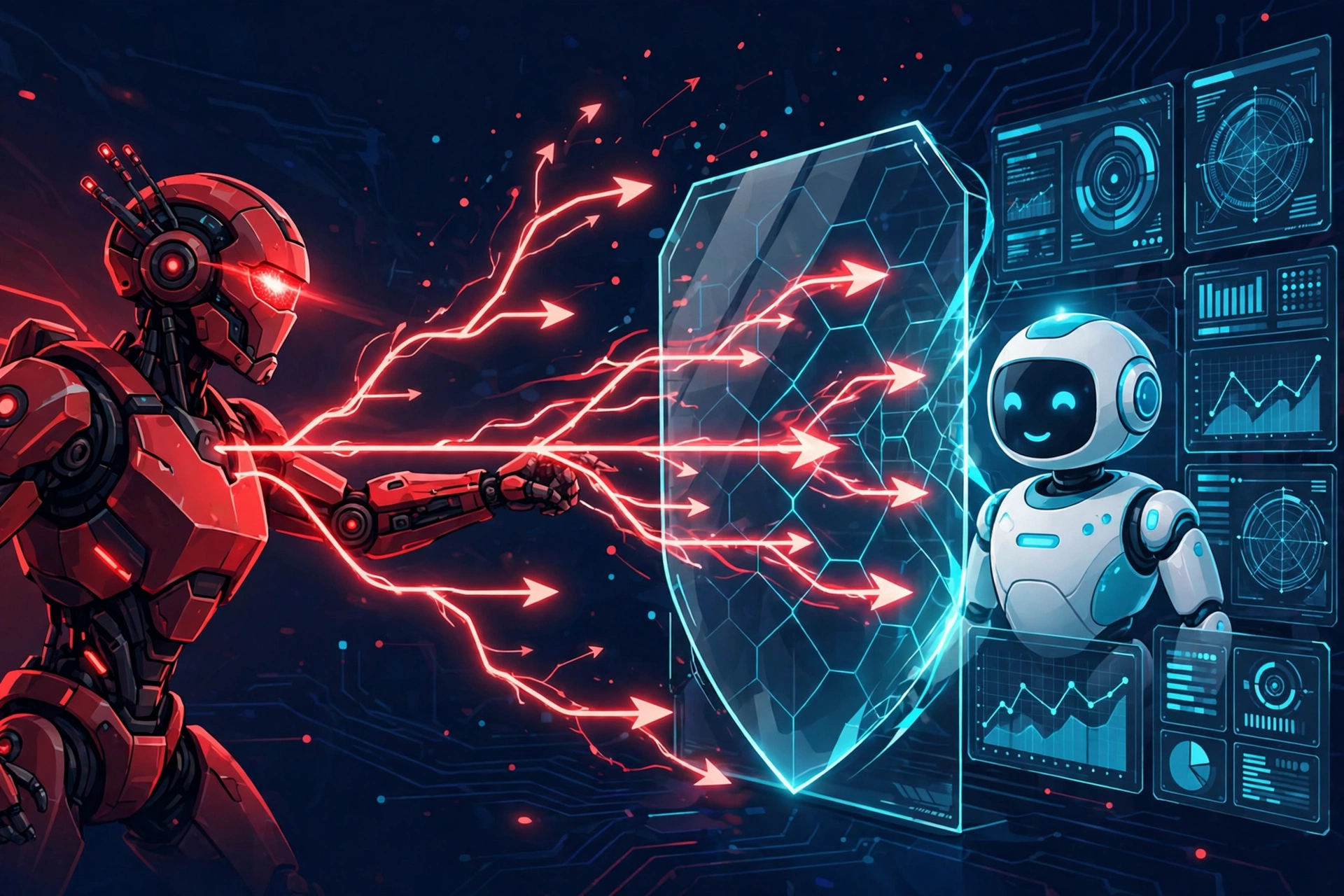
The framework keeps three properties that matter for enterprise use. Unite.ai’s analysis of the controlled red teaming approach adds that customers will not be able to prompt Claude Mythos freely — the model works inside a fixed job with a registered target and human-defined objectives. First, the testing is realistic: it produces adversarial ideation that follows the logic of a real attack, not a generic scan. Second, access stays contained — customers interact only through AI Defense’s structured interface, with no open-ended prompt access to the model. Third, every testing action is recorded for audit, and results carry over to inform follow-up attack loops, so a red team engagement gets smarter instead of starting from scratch each time.
Guardrails That Keep the Red Team in Bounds
Handing a frontier model to a red team is a powerful idea that needs equally strong guardrails, and Cisco says it engineered AI Defense to use Claude Mythos with multi-layered safeguards built in. The controls are worth understanding, because they define what this kind of testing can and cannot do.
- Registered, authorized targets only: The system operates exclusively against targets explicitly registered, owned, and authorized for testing by the enterprise customer. It cannot scan arbitrary internet infrastructure.
- Named operator attribution: Every red teaming engagement requires authentication and is cryptographically tied to a named enterprise operator, so there is no anonymous testing.
- Revocable execution: Engagements run with a fixed job and objectives defined by the human user, with time-bound sessions that can be halted on demand.
- Dual-layer oversight: Product-level controls in AI Defense operate alongside program-level safeguards and monitoring.
Adaptive red teaming with Claude Mythos is coming soon for select enterprises, with broader availability planned for qualified customers. Cisco has not committed to a date for general availability, so security teams should treat it as a near-term capability to plan around rather than one they can deploy today.
Splunk Agent Observability: Linking Agent Cost to Value
Finding risks is only half the problem. Once agents run in production, organizations need unified, real-time visibility into what agents cost, how well they perform, and whether the business value justifies the spend. Cisco is bridging that trust gap with new Splunk Agent Observability enhancements, and the theme is the same: connect the numbers that security and operations teams usually see separately.
The headline feature is Tokenomics, a cost governance capability that ties AI spend to output quality. Using usage data from Amazon Bedrock and Amazon CloudWatch, it pairs each agent’s cost with evaluations that grade the quality and impact of its work, giving organizations a single view of AI ROI. It extends the token-spend attribution Cisco launched at .conf26, which tracks costs across AI agents and coding tools such as Claude Code, Codex, and Cursor. Tokenomics will be available in private preview in December, with general availability in AWS Marketplace early 2027.
Two more capabilities are generally available starting this month:
- Eval-G1 evaluation models: Splunk Agent Observability extends support for turning agentic traces and expert feedback into custom small language models that execute evals and guardrails at up to 98% lower cost than a commercial LLM. These next-generation Eval-G1 models deliver evaluation response times 2.5x faster than traditional LLMs, enabling real-time agent control with high accuracy.
- The Evaluation Tuner: Teams can turn their agentic traces and subject matter expert feedback into fine-tuned evaluator models to enforce quality standards and steer agents at machine speed.
The context for all of this is a shift in how security and operations teams work together. According to a global Splunk research report last month, 81% of ITOps and engineering professionals cite increased cooperation between security and observability teams — a sign that agent security is becoming a shared operational problem rather than a purely security-owned one.

Cisco IQ: From Knowing Exposure to Fixing It
The third piece of the announcement moves from the agent to the infrastructure underneath it. Cisco IQ, which has close to 17,000 customers across more than 22 million devices, now feeds its real-time intelligence directly into enterprise security environments, open agentic protocols, and automated lifecycle workflows — closing the gap between knowing where an organization is exposed and actually fixing it.
The key updates include:
- Cisco Data Fabric integration: Vulnerability, lifecycle, and configuration data from Cisco IQ flows directly into the Splunk Platform via open APIs, letting SecOps teams and AI agents correlate live threat detections with underlying network exposure in Splunk Enterprise Security.
- Model Context Protocol (MCP) and ServiceNow connectors: Structured infrastructure context reaches supported AI agents and IT service management platforms, automatically translating exposure findings into asset-linked ServiceNow problem records to coordinate remediation without manual data reconciliation.
- AI-Powered Resilient Infrastructure Playbook: Surfaces critical lifecycle vulnerabilities, including personalized alerts for known defects and quantum-safe cryptographic readiness, helping teams and certified partners scope and prioritize modernization roadmaps.
“AI is shrinking the time organizations have to respond to threats, and knowing where you’re exposed only matters if you can act on it,” said Liz Centoni, Cisco EVP and Chief Customer Experience Officer. “Bringing Cisco IQ vulnerability insights into Cisco Data Fabric powered by the Splunk Platform gives analysts that context in the middle of an investigation, so they can decide what to do next.”
The urgency is real. As AI-accelerated threats compress the window between vulnerability disclosure and exploitation from weeks to hours, point-in-time audits leave organizations exposed — a point driven home by Japan’s 10-billion-yen cybersecurity package, which pairs AI-powered defense with a dedicated cyber rescue capability.
What This Means for the Agentic Enterprise
Taken together, the three announcements describe a single operating model for the agentic enterprise: test agents with frontier reasoning before they ship, watch what they cost and how well they work while they run, and connect what you learn to the infrastructure that has to be fixed. It is the same direction the rest of the industry is moving — Snowflake’s agentic enterprise push, for example, is built around governed AI agents with shared business context and controls — but Cisco’s version is anchored in security and operations rather than data.
For enterprises, the practical takeaway is to separate what is ready now from what is still arriving. The Eval-G1 evaluation models and the Evaluation Tuner are generally available starting this month, so teams can begin tying agent evaluations to real traces and expert feedback immediately. Tokenomics arrives in private preview in December and in AWS Marketplace in early 2027. Claude Mythos red teaming is coming soon for select enterprises, with no committed date for broader availability. The architecture is coherent — test, observe, and remediate in one loop — but the pieces arrive on different schedules, and any rollout plan should be built around the availability that actually exists.