On November 4, 2026, Broadcom expanded its VMware portfolio, headlined by VMware vSphere Express, a lower-cost standalone virtualization tier for smaller environments, alongside AI deployment, security and disaster-recovery additions for VMware Cloud Foundation (VCF). As TechTarget’s report on vSphere Express notes, the move restores a standalone option that many smaller VMware users had been missing.
The announcement matters because virtualization is still the foundation of most on-premises IT, even as teams experiment with AI workloads and private-cloud platforms. Express is aimed squarely at organizations that need reliable virtual machines, live migration and high availability, without paying for — or managing — a full private-cloud stack.
What vSphere Express Actually Includes
Built on vSphere 9, vSphere Express is available immediately in all regions, for environments of up to 128 processor cores across all environments. It includes the ESXi hypervisor, vMotion live migration, high availability via automated restart of failed VMs, Distributed Switch, vCenter Quick Patch, and TPM 2.0 and vTPM 2.0 support.
That combination covers the essentials: run virtual machines, move them between hosts without downtime, recover automatically when a host fails, patch vCenter more easily, and meet modern hardware security requirements. It is deliberately essential virtualization, not a full private-cloud stack — so teams should not expect the broader networking, storage and automation layers that come with larger VMware platforms.
Why Broadcom Is Bringing Back a Smaller Tier
Since Broadcom’s VMware acquisition, smaller teams often faced a jump to vSphere Foundation or full VCF when they needed a supported, current VMware platform. That step could mean more capability — and more cost and complexity — than a modest environment justified. Express closes that gap by giving smaller environments a right-sized entry point.
Prashanth Shenoy, Broadcom’s chief marketing officer for cloud platform, infrastructure and solutions, framed it as the right product at the right scale, with an upgrade path to vSphere Foundation or VCF when needs grow. That upgrade path is important: a team can start small without feeling locked into a dead end. Broadcom itself did not disclose pricing in its announcement, so do not treat any third-party channel estimates as official — they remain unconfirmed until Broadcom publishes its own pricing.
There is also a trade-off to check before buying, highlighted in The Register on VMware’s return to low-end virtualization: each Express instance is discrete rather than centrally managed together. For a single site or a handful of hosts, that may be fine; for teams managing many locations from one console, it could be a decisive limitation.
AI Infrastructure Quickstart: Faster Day 0 AI Setup
Planned for the next VCF release in Broadcom’s fiscal Q1 2027, AI Infrastructure Quickstart is an automated Day 0 workflow delivered through a vCenter plugin combining vCenter cluster deployment, vSphere Supervisor activation and VMware Kubernetes Service cluster provisioning, so teams can get a private AI environment running in minutes instead of assembling manual steps. Removing that initial friction matters, because AI projects often stall before the first model runs — not because of the model, but because of the infrastructure setup around it.

Multi-tenant model sharing is already in VCF 9.1.1, generally available September 3, 2026, letting several internal units share one centrally deployed stack with per-tenant privacy boundaries. That approach can cut duplication while keeping each team’s models and data separated. The same theme runs through other AI announcements, from the Tencent Hy4 open-source AI model, built for defensive cybersecurity work, to the Nordic nRF71 edge AI chips that push AI inference into battery-powered devices — AI infrastructure is spreading from the data center to the edge, and private platforms need to support both.
Native S3-compatible object storage through vSAN is also planned for the next release, for AI, cloud-native and backup workloads. For AI teams, object storage is a natural fit for large datasets and model artifacts, and building it into the platform avoids bolting on a separate storage system.
Security and Disaster Recovery Coming to VCF
Confidential computing for AMD and Intel platforms is already generally available in VCF 9.1.1, helping protect data in use on supported hardware. Planned for the next release are policy-based virtual private cloud connectivity and infrastructure configuration management and compliance, monitoring component settings against benchmarks including PCI and the VCF Security Baseline and remediating drift. In practice, that means fewer manual checks and faster correction when a setting drifts away from policy.
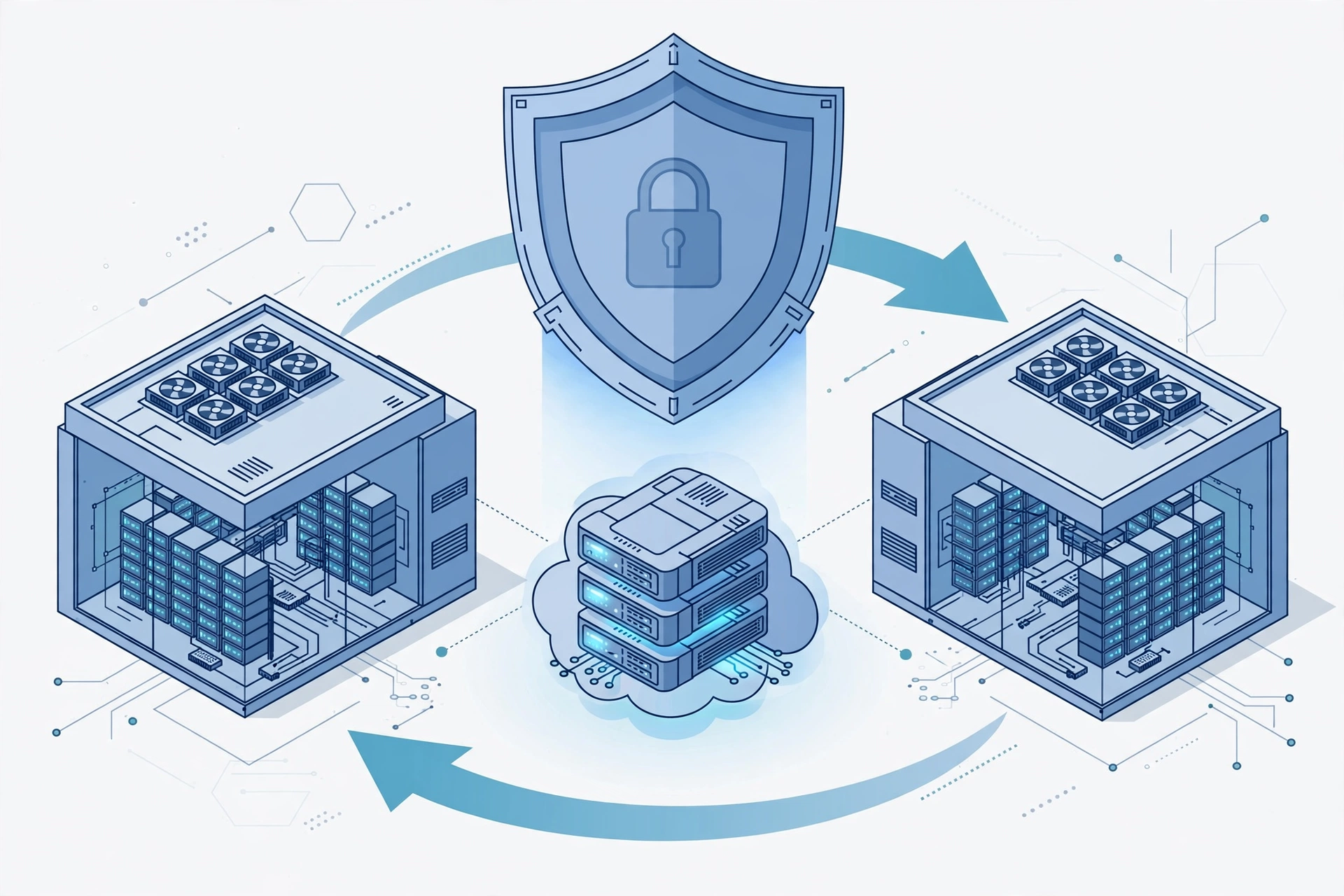
Disaster recovery is planned as a native feature in VCF and vSphere Foundation, orchestrating recovery across thousands of workloads. VMware HyperArmor adds hypervisor-level defenses, and VMware Live Recovery and VMware Compliance and Configuration Management were added to the Advanced Services catalog for VCF on November 4. Security teams weighing these additions should also review adjacent protections, such as the Sophos Firewall v23 and new XGS appliances, which focus on securing AI-era networks at the perimeter.
What Is Already Shipping Versus What Is Still Planned
It is worth keeping the timeline clear. Shipping now: vSphere Express, and the VCF 9.1.1 features including multi-tenant model sharing and confidential computing. Planned for fiscal Q1 2027: AI Infrastructure Quickstart, vSAN native S3 storage, policy-based connectivity, compliance management, and native disaster recovery. Teams should plan budgets and projects around that split, rather than assuming every announced feature is available today.
Context: Broadcom reported more than 2,600 customers had deployed VCF 9 as of September 2026, representing more than 24 million allocated cores. That scale helps explain why Broadcom is investing in both ends of the market — a simpler tier for smaller teams, and deeper AI, security and recovery capabilities for large private-cloud deployments. Other frontier announcements, such as D-Wave Stride quantum optimization, show how quickly adjacent technologies are also moving, but for most IT teams, getting core virtualization and private AI right comes first.
Who Should Choose Express — and Who Should Upgrade
Smaller IT teams needing core compute virtualization without full private-cloud networking and storage should evaluate Express. It fits environments where the priority is stable, supported virtual machines, live migration and high availability, rather than a full self-service cloud. Teams needing centralized multi-site management, full private-cloud features, or more than 128 cores should look at vSphere Foundation or VCF instead — those platforms are built for that scale and management model.
Before deciding, run a practical checklist: count cores across all environments to confirm you stay within 128; check central-management needs, especially if you run multiple sites; confirm patching and TPM requirements against what Express provides; and wait for official pricing before budgeting, since Broadcom has not yet disclosed it. For broader context on where VMware is heading, see Network World’s VCF expansion coverage. Done carefully, that check will tell you quickly whether Express is the right-sized tier — or whether the upgrade path to Foundation or VCF is the better starting point.