
Most AI announcements aimed at factories start with a robot. Anthropic’s does not. On November 12, 2026, the company launched Claude for Manufacturing, a plugin that brings its AI assistant into the paperwork-heavy work that keeps a plant running: pricing a new job, investigating a failed inspection, diagnosing a stopped machine, sourcing a supplier and assembling a production report. It works from the manufacturer’s own records, drafts the work for a person to review and approve, and — Anthropic is explicit about this — it does not operate factory equipment.
That restraint is the point. Manufacturers have watched AI agents move into software teams all year, and the question for the factory floor was never whether AI could write a quote. It was whether it could do so from the plant’s real data, inside the systems the plant already runs, without anyone pretending a chatbot can run a production line. Claude for Manufacturing is Anthropic’s answer: 17 task-specific skills, four connectors to core manufacturing systems, and a hard line between drafting work and operating machines.
What Claude for Manufacturing Actually Does
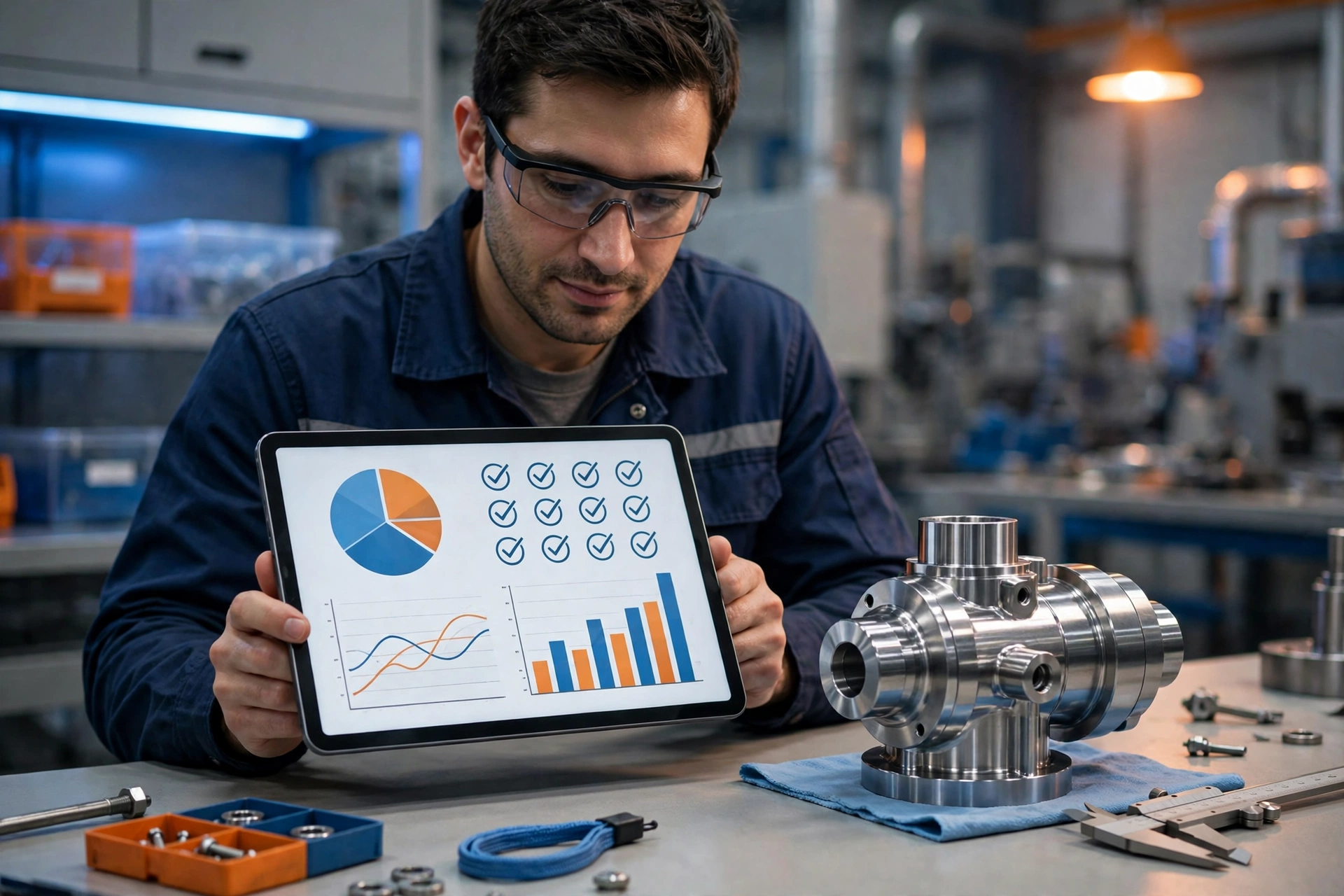
The plugin bundles 17 skills — ready-made Claude setups for specific tasks — spanning six areas of plant work: sales, quality, operations, supply chain, design and setup. The tasks Anthropic names are concrete ones. A sales engineer can get a draft quote for a new job. A quality engineer can get a structured investigation of a failed inspection, assembled from procedures, supplier emails and exported reports. A technician facing a stopped machine can get a list of likely causes to investigate. A buyer can compare supplier options. A supervisor can get a production report pulled together from the plant’s own records.
The key detail is where the work starts. Claude draws on the manufacturer’s own records rather than generic knowledge, so a quote reflects actual orders, inventory, production steps and job costs, and a quality investigation reflects the plant’s own procedures and history. Anthropic cites a 2025 Manufacturing Leadership Council survey in which 79% of manufacturers said they manually enter data — the plugin’s pitch is that the retyping, hunting and assembling that fills a plant worker’s day is exactly the work an AI assistant can take on, while people stay responsible for reviewing and approving what it produces.
Four Connectors to the Systems That Run the Plant

Claude for Manufacturing connects to four systems, and each one feeds a different kind of work. Autodesk Fusion lets Claude generate design variations from an existing model, score them against an engineer’s targets and draft a comparison for design review. Infor supplies purchase-order and stock lookups for buyers and planners. Microsoft 365 is where Claude finds procedures, supplier emails and exported reports sitting in shared folders and inboxes. Oracle NetSuite supplies the actual orders, inventory, production steps and job costs behind a quote draft.
An important boundary sits inside those connectors. The plugin itself does not write to systems of record — the vendors’ systems remain the systems of record, and Claude prepares drafts rather than changing them. The core plugin’s Infor connector is limited to record lookups; a separate Infor plugin can modify records after approval, within the user’s Infor permissions. And for systems without a direct connector, Anthropic says manufacturers can save regular exports to Microsoft 365 so Claude can work from those files. The design keeps the plant’s existing software central instead of asking the plant to move its data somewhere new.
The Line Anthropic Will Not Cross
The clearest sentence in Anthropic’s announcement is also the shortest: Claude for Manufacturing doesn’t operate equipment. A breakdown workflow prepares likely causes for a technician to investigate; it does not restart the machine. A quality skill assembles evidence; it does not pass or fail a part. Every output is a draft for human review and approval.
That line matters because the temptation in industrial AI is to blur it. Anthropic handles equipment operation separately — its Model Hardware Standard, published August 27, 2026, addresses that question on its own terms — and keeps this plugin firmly on the information side of the factory. For plant managers who have seen AI demos that promise the whole factory, the honesty is useful: this product automates the desk work around production, not production itself. The safety case is simpler for it, and so is the buying decision.
Who Gets It and What It Costs to Start
Claude for Manufacturing is available to customers on Anthropic’s Team and Enterprise plans. Installation means setting up the connectors to the systems a plant already uses, with Claude testing compatibility and identifying limitations. Anthropic is running a technical webinar on November 17 at 11:00 a.m. ET to show the plugin at work, and interested manufacturers can contact its sales team for tailored consultations. Anthropic has published no pricing for the plugin itself.
The launch lands on a busy day for Anthropic. The same day, the company opened self-hosted Claude Managed Agents in private beta, letting enterprises run the agent control plane in their own cloud or on-premises. The two launches point in the same direction: Claude is moving from a chat window into the specific, governed workflows where enterprises actually work — and the vendors that fit into existing systems, rather than asking companies to replace them, are the ones getting adopted.
Why Factories, Why Now
Manufacturing is a late but logical stop on AI’s march into vertical work. Software teams were first, because their work already lives in text. Factories were slower, because their work lives in ERP records, CAD models, inboxes and exported spreadsheets — exactly the scattered records this plugin is built to read. The skills approach is also a sign of the market maturing: instead of one general assistant, vendors are packaging ready-made setups for specific jobs, and the competition is shifting to who has the best skills and the deepest connectors.
There is a governance angle, too. As AI agents are already reshaping whole teams, the factories adopting them want the same auditability software teams demanded — drafts that a person approves, systems of record that stay untouched, and a clear record of what the AI touched. The open-source guardrails in NVIDIA’s OpenShell and the governance tooling from other vendors show the same pressure from different directions. Claude for Manufacturing answers it by design: nothing ships without a human saying yes.
What to Watch Next
Three questions will decide how far this goes. First, does the plugin’s skill library grow beyond the opening 17, and do more connectors follow — the four launch partners cover a lot of plants, but not all of them. Second, do manufacturers see real time savings in quoting and quality investigations, or does review and correction eat the gains? The 79% manual-data-entry figure says the opportunity is large; measured results will say whether the product captures it. Third, how do rivals respond — Google’s Gemini 4 Hydrogen, launched the same day, is aimed at coding agents and everyday workflows, while always-on assistants like Databricks Genie show agents becoming permanent coworkers. The factory floor is now part of that race.
Conclusion
Claude for Manufacturing is a modest product by design, and that is its strength. It does not promise a lights-out factory. It promises that the quoting, investigating, diagnosing and reporting that fills a plant team’s day can be drafted by an AI that reads the plant’s own records — and then checked by the people who run the plant. Seventeen skills, four connectors, and a firm line at the machine controls. For manufacturers, that is a product they can actually deploy: available now on Team and Enterprise plans, with a technical webinar on November 17 for teams that want to see it work before they commit.
Sources
- Anthropic’s official announcement: https://claude.com/resources/articles/claude-for-manufacturing
- Manufacturing Dive on the launch: https://www.manufacturingdive.com/news/anthropic-launches-claude-for-manufacturing/874303/
- Unite.AI on Claude for Manufacturing: https://www.unite.ai/anthropic-launches-claude-for-manufacturing-with-17-workflow-skills/

