President Donald Trump has proposed a new federal investment program, sometimes referred to as “Trump Accounts,” intended to help American children accumulate savings over time. Under this plan, the U.S. government would deposit a one-time $1,000 seed contribution into a government-backed investment account for eligible children born between January 1, 2025, and December 31, 2028. Parents, employers, and others could also contribute up to a certain limit each year.
Parents wish the best for their kids, and saving for their future is just one way to set them up for success. But BlackRock CEO Larry Fink warns that for most adults, let alone parents, they’ll be lucky if they have half as much as what their kids may amass if President Donald Trump’s new 401k accounts come to fruition.
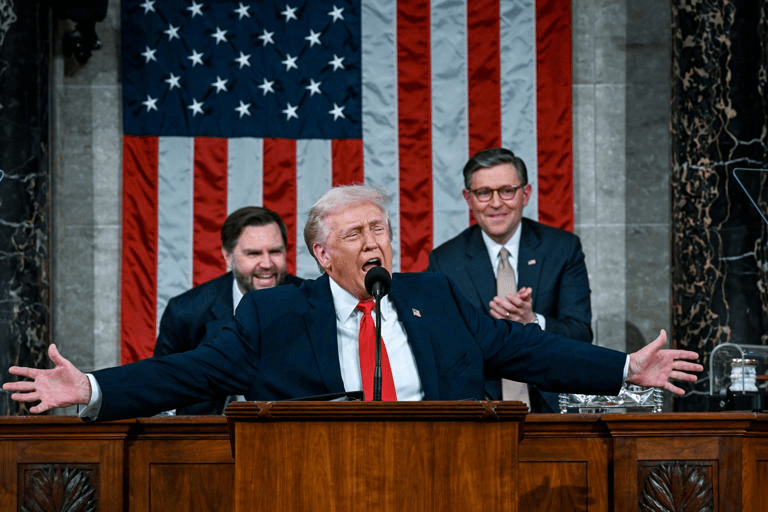
During Trump’s record-breaking, nearly two-hour-long State of the Union address, the president touted all sorts of economic statistics and pointed to areas of economic prosperity, all while increased government spending is causing the country to hemorrhage deeper into the largest national debt in history.
For a president whose signature bill calls for cutting government spending to increase tax breaks, the Trump administration is now offering a $1,000 in seed funding to any U.S. citizen born between Jan. 1, 2025 and Dec. 31, 2028 who opens a government-backed 401k account, dubbed “Trump Accounts.”
These accounts function similarly to individual retirement accounts:
- Contributions grow through investments (often in low-fee index funds) over many years.
- Money in the account would generally be available once the child reaches 18, with potential tax implications depending on how and when funds are withdrawn.
- Families can add up to $5,000 total per year for a child’s account.
Financial leaders have pointed out the potential long-term impact of these accounts. Larry Fink, CEO of asset manager BlackRock, highlighted that if families maximize contributions and benefit from long-term investment growth, a child could theoretically have around $270,000 saved by age 18. That, he notes, is about twice as much as the average American adult currently has saved for retirement.
Fink used these projections to illustrate how powerful compound interest and early investing can be — especially compared with the savings shortfall many adults face today. Recent surveys find many working Americans have saved far less for retirement than they believe they will need, with a large share having under six figures in total savings.
However, experts caution that these accounts are not the same as traditional retirement plans or tax-free college funds, and parents should understand the tax rules and contribution limits before relying on them as part of long-term financial planning.