In a finding that has attracted global attention, researchers report that the Earth’s axis has shifted by roughly 31.5 inches (about 80 cm) over the past two decades — and human activity appears to be largely responsible.
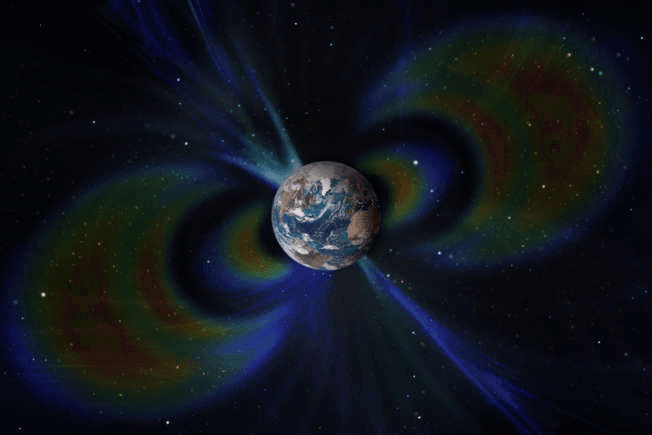
A study published in the peer-reviewed journal Geophysical Research Letters shows that the redistribution of water caused by intense groundwater pumping has caused measurable changes in the Earth’s rotational axis, an effect scientists describe as a tilt of the planet’s rotational pole.
What Happened and Why It Matters
Earth’s spin axis — the imaginary line that runs through the North and South Poles — naturally shifts over time due to seasonal changes in mass distribution, such as shifts in atmospheric pressure and ocean currents. These motions, called polar motion, are monitored with high precision.
However, the new research highlights a previously underestimated driver behind recent changes: large-scale extraction of groundwater. Between 1993 and 2010, scientists estimate that around 2,150 gigatons of groundwater were removed from underground aquifers for agricultural, industrial, and drinking-water use and eventually deposited into the oceans. This shift in where water is located on the planet alters the distribution of mass — and thus changes how the Earth spins.
The study found that once these water movements were included in models, they matched observed shifts in the Earth’s rotational pole. Without accounting for groundwater redistribution, the models significantly underestimated how much the pole moved.
Quantifying the Shift
- About 31.5 inches (80 cm): Estimated displacement of Earth’s axis due to groundwater extraction from 1993 to 2010.
- ~2,150 gigatons of groundwater: Estimated total water volume removed from aquifers in that period.
- ~0.24 inches (0.6 cm): Estimated contribution to global average sea-level rise from that redistributed water.
Researchers emphasize that the Earth’s axial tilt (obliquity) — about 23.44 degrees relative to its orbit around the Sun — remains essentially unchanged; these new measurements relate to small variations in the position of the rotational pole, not dramatic swings in tilt.
Why This Matters
Although a shift of a few feet over decades may sound small in planetary terms, scientists point out that:
- It demonstrates direct evidence of large-scale human influence on Earth’s physical systems at a planetary level.
- Changes in mass distribution — whether from groundwater withdrawal, melting ice sheets, or large reservoir reservoirs — can influence polar motion and sea levels, helping refine climate and geophysical models.
- Monitoring these shifts improves understanding of Earth’s internal dynamics and external forces acting on the planet.
Overall, researchers stress that while these changes are measurable, they do not pose an immediate risk of catastrophic climate effects on their own. Instead, they add to a growing body of evidence showing how interconnected Earth’s systems are — from human water use to sea-level trends and even to the physics of planetary rotation.