
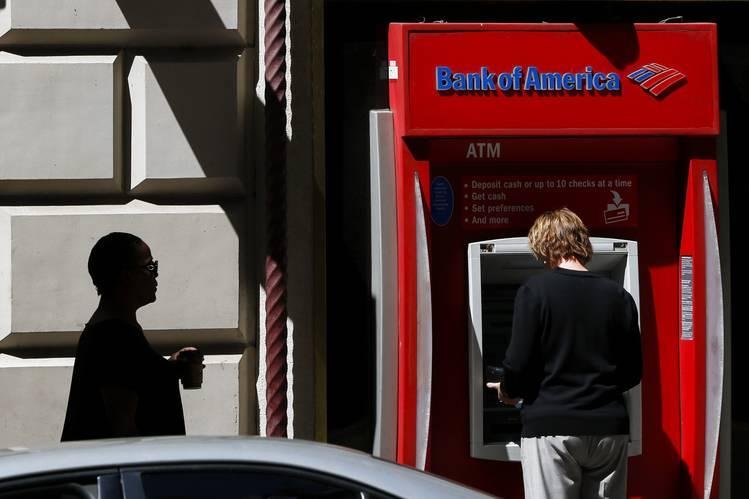
In Lewisville, Texas, a routine stop at an ATM turned into an extraordinary test of honesty. A 37-year-old barber discovered $128,514 in cash sitting on top of a bank machine. What he did next is a reminder that integrity matters most when nobody expects us to show it.
Sometimes, the most inspiring stories begin with an ordinary moment.
A person stops at an ATM. Someone else is finishing an errand. Traffic moves along the road, businesses carry on with their day, and nobody expects anything unusual to happen.
But on August 3, 2026, an ordinary stop at a bank ATM in Lewisville, Texas, presented one man with an extraordinary discovery.
Sitting on top of a Bank of America ATM was a bag containing $128,514 in cash. A smaller bag also contained 19 checks.
For most people, simply seeing that much money would be enough to stop them in their tracks. It is difficult to imagine the thoughts that might cross someone’s mind when faced with a sum that could pay off debts, cover years of expenses, or change a family’s financial situation.
Yet the man who discovered the money, a 37-year-old local barber, made a decision that mattered far more than the amount he had found.
He tried to return it.
He did not seek public attention or turn the discovery into a personal windfall. Instead, he made efforts to identify the rightful owner and eventually handed the money over to the authorities.
By the time police finished counting the cash, they had confirmed something remarkable: every dollar was accounted for.
In a world where good news can sometimes feel hard to find, this story offers a simple but powerful reminder. Character is not measured by what we can take when nobody is watching. It is revealed by what we choose to do when we have the opportunity to do the wrong thing.
An Unexpected Discovery at an ATM
The incident took place at a Bank of America ATM on West Main Street in Lewisville, a city in the Dallas–Fort Worth area of Texas.
According to reporting by CBS Texas and NBC, the man was visiting the ATM with a woman when they noticed the bags left on top of the machine.
Inside was an astonishing amount of cash: $128,514.
The bags also contained information that initially suggested the money might belong to a nearby Chick-fil-A restaurant.
The man did not simply walk away with the discovery. He tried to establish where it belonged.
He took the money to the nearby restaurant, hoping that the staff might be able to identify it. But the manager explained that the cash did not belong to the business.
That could have been the end of a confusing search for an owner. Instead, the man continued trying to do the right thing.
With the restaurant’s involvement, police were contacted so that officers could take custody of the money.
It was a practical decision, but an important one. When someone finds a valuable item and cannot establish its owner, handing it over to the appropriate authorities creates a clear record and helps protect the property until its rightful owner can be identified.
The man had no reason to know exactly how the situation would unfold. He simply knew that the money was not his.
And that was enough.
$128,514—and Not a Dollar Missing
Once police took custody of the bags, they began working to establish the exact amount of money involved.
This was not a case involving a few misplaced banknotes or a lost wallet. The sum was large enough to require careful verification.
According to CBS Texas, officers counted the cash twice and then used an electronic currency counter to confirm the total.
The result matched the amount printed on a bank receipt found inside the bag.
The total was $128,514.
Not a dollar was missing.
For the investigators, the discovery was unusual. Police regularly encounter people who turn in lost wallets, identification cards, and other belongings. Finding someone who voluntarily hands over more than $128,000 is a different matter entirely.
The police investigation also established that the money belonged to Bank of America and had apparently been left behind accidentally by a technician working for Brink’s, the company’s cash-handling vendor.
Investigators found no indication that the money was connected to a crime.
What began as a mysterious bag of cash on an ATM had an explanation. The remaining question was what would happen to the money.
The answer was reassuring: Bank of America subsequently recovered the cash and checks.
The amount had been preserved, and the person who found it had helped ensure that the situation was resolved without the money disappearing.
Why His Decision Deserves Attention
It would be easy to turn this story into a simple comparison between a good person and a bad decision.
But real life is more complicated than that.
People face different financial pressures. Some are struggling with rent, medical expenses, debt, or the everyday cost of raising a family. A sudden discovery of more than $128,000 might provoke a thousand thoughts about what that money could mean.
We do not know what went through this man’s mind, and it would be unfair to invent his private thoughts or circumstances.
What we do know is what he chose to do.
He attempted to identify the owner, sought help when his initial effort did not work, and handed the money over to the authorities.
That sequence of decisions is what makes his actions meaningful.
Honesty is often discussed as though it is a quality that becomes visible only in dramatic situations. Yet it is usually built through much smaller choices: returning something that does not belong to us, telling the truth when a lie would be convenient, or accepting responsibility when nobody else would know the difference.
This man faced a situation in which the temptation to do otherwise might have been considerable. His actions showed respect for someone else’s property, even though the owner was not immediately standing beside him.
That is integrity in practice.
And perhaps the most important part is that he did not need to become a celebrity, deliver a speech, or announce his values to the world. His decision spoke for itself.
The Man Who Did Not Seek the Spotlight
There is another detail that makes this story especially memorable.
The barber chose not to have his identity made public.
News reports identified him by his profession and city, but he did not want his name attached to the story. His decision kept the focus on what happened rather than turning him into a public personality.
Lewisville police expressed a desire to recognize him for his actions. According to reporting by CBS Texas, he indicated that he would attend a private recognition ceremony.
There is something quietly powerful about that.
We live in a time when many good deeds are shared online, photographed, filmed, and turned into stories that travel across social media. Public recognition can encourage others to do good, and there is nothing inherently wrong with celebrating generosity.
But kindness does not need an audience to be real.
A person can help a neighbor without posting about it. Someone can return a lost wallet without expecting a thank-you. A stranger can step forward in an emergency without ever learning the name of the person they helped.
The value of an honest action does not depend on how many people witness it.
In this case, the man did not need to stand in front of a camera to make his decision meaningful. He simply needed to make the decision.
What This Story Teaches Us About Integrity
The story from Lewisville offers lessons that extend far beyond an ATM or a bag of cash.
1. Doing the right thing should not depend on who is watching
It is relatively easy to behave well when other people are paying attention. The more revealing moments occur when we believe our actions may go unnoticed.
Integrity means applying the same principles even when nobody is likely to praise us or hold us accountable.
The barber’s decision reminds us that our values matter most when they guide our choices without an audience.
2. A small decision can prevent a much bigger problem
Finding money is not the same as establishing ownership of it. By seeking the rightful owner and involving the police when necessary, the man helped ensure that the money could be traced and returned.
His actions also avoided the uncertainty and potential legal consequences that could follow from improperly keeping someone else’s property.
The lesson is straightforward: when something valuable is lost, take reasonable steps to return it rather than treating it as an unexpected prize.
3. Honesty still deserves recognition
Stories about dishonesty, scams, theft, and betrayal often attract attention because they involve conflict and strong emotions.
But positive stories matter, too.
They remind us that people continue to make responsible choices in everyday situations. They provide examples of conduct worth encouraging, especially for children and young adults who are learning how to navigate the world.
Celebrating honesty does not mean pretending everyone behaves perfectly. It means recognizing the choices that make communities stronger.
4. You do not need wealth to demonstrate generosity
The man did not give away $128,514 of his own money. He returned money that belonged to someone else.
That distinction matters.
His action was an example of honesty and respect for property rather than a financial donation. Yet it carries a lesson that applies to generosity as well: doing good is not always about how much we possess. It is about how we treat other people and what we are willing to do for them.
You do not need a large bank account, an important job title, or public influence to act with integrity.
Sometimes, the opportunity arrives in the form of something as ordinary as a lost wallet.
Imagine If More People Made the Same Choice
Consider how many everyday situations give us an opportunity to choose honesty.
A cashier accidentally gives someone too much change. A person finds a phone on a park bench. A customer notices that another shopper has dropped a wallet. An employee discovers an error that benefits them financially but could cost someone else money.
None of these situations may attract news coverage.
Most people who make the right choice will never be interviewed about it. Their names will never appear in a headline. There may be no award or public thank-you waiting for them.
But each decision contributes to the kind of community we live in.
When people believe that others will treat them fairly, trust becomes easier. Neighbors feel more comfortable helping one another. Businesses and customers can build better relationships. Families can teach children about responsibility through examples they can actually understand.
Trust is difficult to build and easy to damage. It grows through repeated actions that demonstrate reliability and respect.
One returned wallet may not transform a city. One honest employee may not change an entire industry.
But a community in which people routinely make these choices is a better place to live.
That is why the story of the anonymous barber matters beyond its unusual dollar amount.
It gives us a real example of an individual choosing responsibility when faced with a valuable opportunity.
What Should You Do If You Find a Large Amount of Money?
This story also raises a practical question: what should someone do if they discover cash or valuable property that clearly does not belong to them?
The safest response is to make a reasonable effort to protect the property and notify the appropriate authority.
- Do not assume the money is yours to keep. Laws governing lost property vary by jurisdiction, and the circumstances of the discovery matter.
- Avoid unnecessary handling or moving. If the item appears connected to a bank, business, or potentially suspicious situation, prioritize safety and seek assistance.
- Contact the appropriate authority. Depending on where you find the property, this may be the police, the premises manager, or the business responsible for the location.
- Document the circumstances appropriately. Follow the authority’s instructions and obtain a record of the handover where possible.
- Do not publicize sensitive details unnecessarily. Keeping information about the amount, identifying documents, or the owner’s details private can help protect the rightful owner.
These steps are practical ways to handle a discovery responsibly. They are not a substitute for local legal advice, particularly when substantial sums or potentially suspicious circumstances are involved.
The barber’s response offers a useful example: when the owner was not immediately identifiable, he sought help rather than treating the money as his own.
A Reminder That Good People Are Still Out There
Perhaps the most encouraging part of this story is not the money itself.
It is the reminder that people still make decisions based on principles rather than personal gain.
The barber could have become known for a very different reason. Instead, he became the subject of a story about honesty, simply because he returned something that did not belong to him.
Lewisville police praised his actions, and the bank recovered its money. The outcome was straightforward, but the lesson reaches further.
We cannot know what another person will do when faced with a difficult decision. We cannot eliminate every dishonest act or guarantee that everyone will behave responsibly.
But we can recognize and encourage good choices when we see them.
We can teach children that honesty matters. We can thank people who take responsibility. We can make an effort to act fairly even when it is inconvenient.
And we can remember that doing the right thing does not always require a grand gesture.
Sometimes, it requires nothing more than refusing to take what is not yours.
Final Thoughts: The Real Value Was Never in the Money
A bag containing $128,514 would be enough to make headlines almost anywhere.
But the money is not the most important part of this story.
The more lasting detail is what happened after the discovery.
A man found something valuable. He tried to identify its owner. When he could not return it directly, he involved the police. The cash was verified, and the bank recovered it.
He did not need to reveal his identity to the world for the decision to matter.
His actions offer a lesson that is both simple and demanding: our character is revealed not just by what we say we believe, but by what we choose to do when we have something to gain by ignoring those beliefs.
There will always be opportunities to take shortcuts, overlook a mistake, or convince ourselves that a small dishonest act does not matter.
There will also be opportunities to do the right thing, even when nobody is watching.
The man in Lewisville chose the second path.
And that is what makes his story worth sharing.
Because the world does not become more trustworthy through good intentions alone. It becomes more trustworthy when ordinary people put those intentions into practice.
Sometimes, one honest decision is enough to remind the rest of us what is possible.
If you found $128,514 that did not belong to you, what would you do?
It is a difficult question to imagine answering until the moment arrives. But perhaps the better question is this: what small decision can each of us make today that shows the kind of person we want to be?
That is where integrity begins—not in the size of the temptation, but in the choice we make.
Frequently Asked Questions
Did a man really find more than $128,000 at an ATM?
Yes. News reports published in late September and October 2026 described a 37-year-old barber in Lewisville, Texas, who found $128,514 in cash on a Bank of America ATM on August 3, 2026.
Did he return all the money?
Police counted the cash twice and verified the total with an electronic currency counter. The amount matched the bank receipt inside the bag. Bank of America subsequently recovered the cash and checks.
Where did the money come from?
Investigators determined that the money belonged to Bank of America and believed it had been accidentally left behind by a technician from Brink’s, the company’s cash-handling vendor, while servicing the ATM.
Was the man rewarded for returning the money?
News reports said he did not receive a reward. Bank of America expressed its gratitude, and Lewisville police expressed interest in recognizing him. He preferred to remain publicly anonymous.
What can we learn from this act of kindness?
The story highlights honesty, responsibility, and respect for other people’s property. It shows that an ordinary person can make a meaningful decision without expecting public recognition or a financial reward.
Sources and reporting
This article is based on published reporting about the incident. The sequence of events and outcome should be checked against the original reports before publication.
- CBS Texas — North Texas man finds more than $128,000 on top of a bank’s ATM — and returns every dollar. Published September 29, 2026.
- NBC Bay Area / NBC DFW — Texas man returns more than $128K found outside Bank of America ATM. Published September 30, 2026, updated October 2, 2026.
The story’s factual details have been paraphrased rather than reproduced from the source articles. The article’s reflections and lessons are original editorial commentary.


Wow amazing blog layout How long have you been blogging for you made blogging look easy The overall look of your web site is magnificent as well as the content