
The question keeps resurfacing in every developer Slack channel, Reddit thread, and late-night LinkedIn doomscroll: Will AI replace software developers?
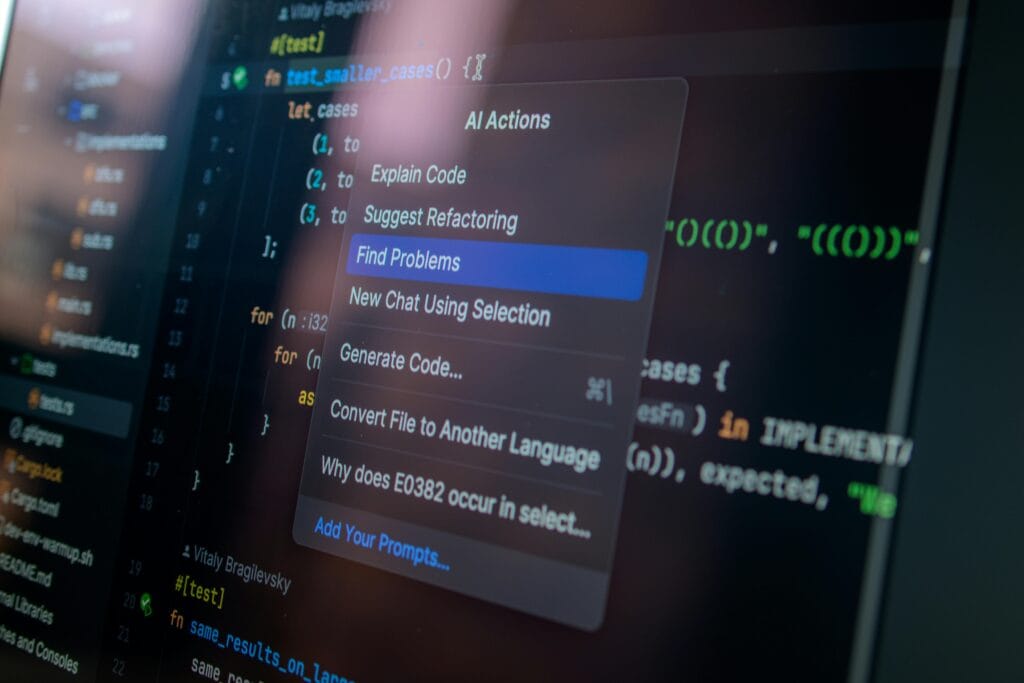
In early 2026, the debate feels more intense than ever. High-profile voices are making bold claims. Boris Cherny (creator of Claude Code) recently stated that “coding is practically solved” and predicted the traditional “software engineer” title might fade into something like “builder” or “product manager.” Meta’s Mark Zuckerberg has forecasted that AI will write most of Meta’s code by mid-2026. Engineers at places like Anthropic and OpenAI have shared that AI already generates 100% of their code in some workflows.
Meanwhile, entry-level hiring has taken a visible hit. Stanford’s Digital Economy studies show employment for software developers aged 22–25 down nearly 20% from 2022 peaks in AI-exposed roles, with junior positions shrinking as senior roles hold steady or even grow slightly.
Yet the picture isn’t one of mass obsolescence — at least not yet. Let’s break down what’s really happening in 2026.
Where We Stand Right Now
AI coding assistants have exploded in adoption:
- GitHub Copilot reached over 20 million cumulative users by mid-2025 and continues growing rapidly, with millions of monthly active users.
- Developer surveys (Stack Overflow 2025) show ~84% of developers now use AI tools in their workflow — up dramatically in just a few years.
Productivity claims vary wildly depending on who you ask:
- Some internal reports and vendor studies show developers completing tasks 40–55% faster on certain greenfield coding exercises.
- More rigorous independent evaluations (like METR’s 2025 RCT on experienced open-source developers) found users were actually ~19% slower when measured on real, complex work — largely due to reviewing, fixing, and wrestling with AI hallucinations and subtle bugs.
In many organizations the net end-to-end delivery speedup hovers around 10% or less, despite individual euphoria about writing boilerplate faster.
The reality in 2026 appears to be:
- AI writes a large fraction of new code (some teams claim 40–90% on greenfield/simple tasks).
- But almost none of the really hard parts are reliably handled without heavy human oversight: architecture decisions, subtle domain logic, cross-system integration, security boundaries, performance edge cases, maintainability over years, regulatory compliance, handling legacy nightmares, and — most critically — knowing when the AI suggestion is dangerously wrong.
Who Is Most at Risk — and Who Is Thriving?
The impact is sharply uneven.
Most vulnerable groups in 2026:
- Pure “code monkeys” doing repetitive CRUD, boilerplate, or simple script work.
- Junior developers trying to break in (many companies now hesitate to hire $90–120k juniors when a senior + AI can cover much of that surface-level output).
- Developers who refuse to adapt and keep treating AI as optional rather than core tooling.
Who is actually becoming more valuable:
- Senior engineers who treat AI as an extremely fast (but unreliable) junior pair programmer.
- People strong in system design, trade-off reasoning, security, performance, and testing strategy.
- “Product-minded” engineers who can translate vague business needs into concrete, evolvable systems.
- Domain experts (fintech compliance, healthcare interoperability, embedded safety-critical systems) where blind AI output is unacceptable.
- Engineers who build and maintain the AI tooling itself, evaluate agent swarms, debug model failures, and create reliable prompt chains / retrieval systems.
In short: AI is crushing certain commodity coding roles and entry-level ramps — but it’s amplifying high-context, high-judgment software engineering.
What History Tells Us
Every automation wave in software has followed roughly the same pattern:
- Tool automates the easiest 60–80% of grunt work.
- Humans shift upward to harder, more valuable problems.
- Total software output explodes → demand for skilled people who can direct the new power grows.
We’re arguably still in phase 1–2. The amount of software the world wants (and needs) keeps expanding faster than AI can fully automate the complex parts. Healthcare, manufacturing, agriculture, climate modeling, autonomous systems — every industry is only scratching the surface of what software could do if humans + AI can build it fast enough.
The Bottom Line for 2026–2028
No, AI will not replace software developers as a whole in the near term. But yes, AI is already replacing (and will continue to replace) certain kinds of software development work — especially low-context, repetitive, or entry-level coding.
The profession isn’t disappearing; it’s bifurcating:
- “AI operator / prompt engineer / vibe coder” roles doing mostly greenfield prototypes and throwaway apps.
- High-leverage software engineers who act as architects, system thinkers, domain translators, quality gatekeepers, and mentors to both humans and AI agents.
The winners in the next few years will almost certainly be those who:
- Master using frontier AI coding agents as core tools (not occasional helpers).
- Double down on the things AI still sucks at: deep context, long-term reasoning, taste, security paranoia, and human coordination.
- Stay relentlessly curious about how the models are evolving (because the gap between “today’s frontier” and “next quarter’s frontier” is still enormous).
The title “software engineer” might evolve or even partially fragment — but the need for humans who can build, understand, and responsibly evolve complex software systems isn’t going away anytime soon.
It’s not AI vs. developers. It’s developers who embrace AI vs. those who don’t.
And right now in February 2026, that gap is widening fast.
What do you think — are you already in the “AI is my 10× junior” camp, or are you still mostly writing code by hand? Drop your thoughts below.


Comments are closed.