Wondering if canceled tariffs will lower prices? Discover why consumers may not see immediate relief, the role of sticky prices, and what businesses plan to do.
Tariffs Gone, Prices Down? Not So Fast
Recent legal rulings on U.S. tariffs have sparked excitement about potential price drops for everyday consumers. The Supreme Court invalidated parts of the broad tariffs imposed under the International Emergency Economic Powers Act (IEEPA). While this might sound like a win for shoppers, economists warn that cheaper prices aren’t guaranteed.
1. Legal Changes Don’t Automatically Lower Prices
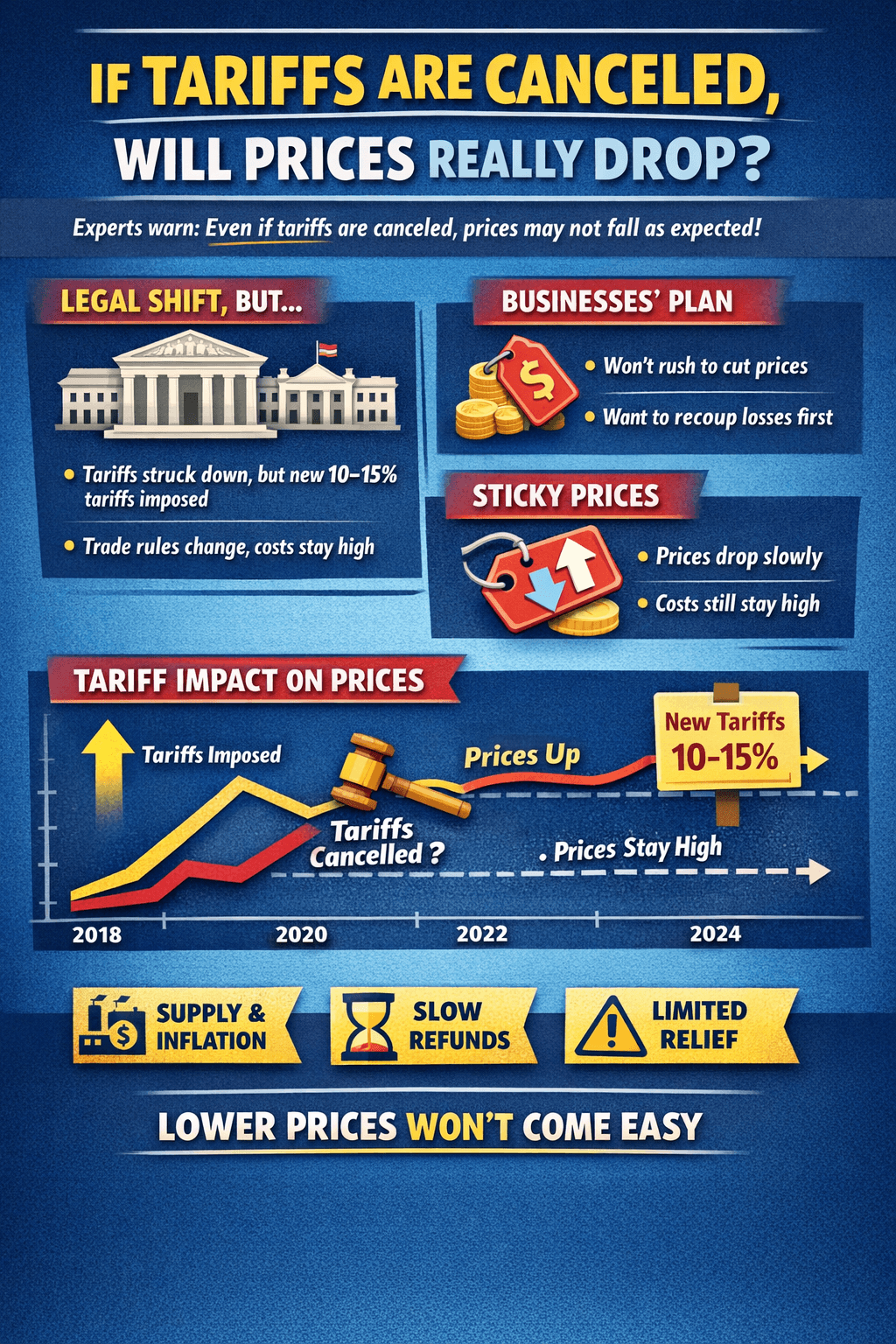
- The Supreme Court struck down some tariffs, but the White House quickly replaced them under different trade authority, keeping import costs high.
- Many goods are still subject to tariffs ranging from 10–15%, meaning price relief is limited.
- Legal changes are often slow to translate into real-world savings.
2. Businesses Aren’t Racing to Reduce Prices
- Retailers and manufacturers say they won’t immediately lower prices, even if tariffs fall.
- Many companies want to recoup costs rather than pass savings to consumers.
- Refunds for previously paid tariffs could take years, adding to the delay.
3. Sticky Prices Keep Costs High
Economists highlight the concept of “sticky prices”:
- Businesses adjust prices upward quickly but downward adjustments lag.
- Even with lower import costs, companies may keep prices high if consumers are willing to pay.
- Studies show price drops are often gradual, not immediate.
4. Other Factors Affecting Prices
Even without tariffs, consumer costs are influenced by:
- Supply chain challenges
- Labor costs
- Inflation trends
- Other trade policies
These factors mean that removing tariffs alone isn’t enough to guarantee significant price drops.
Bottom Line
Cancelling tariffs might slow the rate of price increases, but don’t expect sudden, dramatic savings. Consumers should be aware that:
- Businesses may keep prices elevated to protect profits.
- New tariffs or alternative levies could replace canceled ones.
- Prices are generally sticky downward, so reductions are slow.
If you want to plan your purchases or budget wisely, it’s best to remain realistic about how quickly price changes could reach your wallet.