
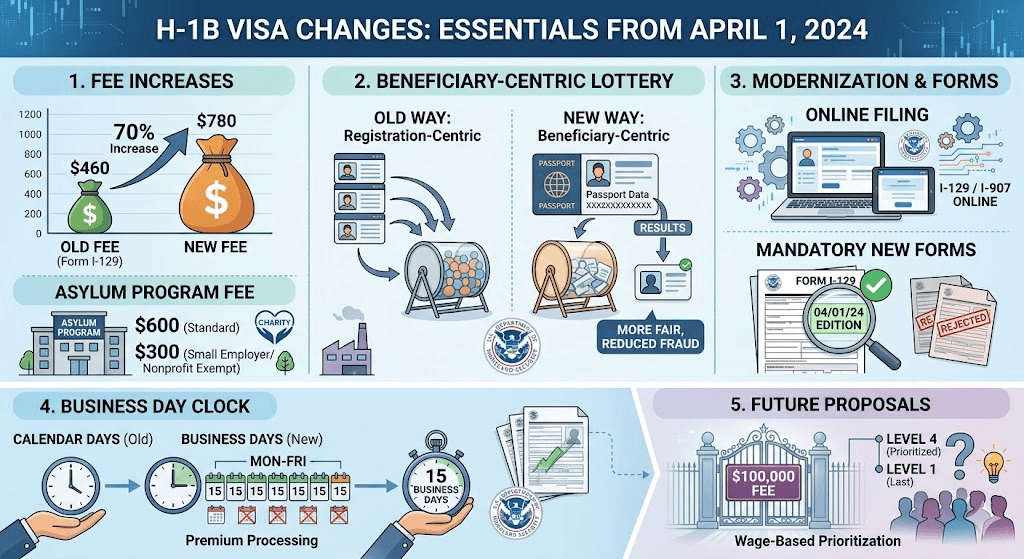
As of April 1, 2024, several significant changes went into effect for the H-1B visa program. These updates, primarily driven by U.S. Citizenship and Immigration Services (USCIS), impact everything from the cost of filing to the way the selection lottery is conducted.
If you are an employer, a prospective employee, or currently on an H-1B, here is the breakdown of what you need to know.
1. Significant Fee Increases
The most immediate change is the cost. USCIS has updated its fee schedule for the first time since 2016 to better cover its operational costs.
- Form I-129 (H-1B Petition): The base filing fee has risen from $460 to $780—a 70% increase.
- Asylum Program Fee: A brand-new $600 fee is now required for most I-129 and I-140 filings. This fee is intended to fund the costs of processing asylum applications.
- Small Employer & Nonprofit Relief: To mitigate the impact on smaller entities, “small employers” (25 or fewer full-time employees) pay a reduced Asylum Program Fee of $300, and nonprofits are exempt from this fee entirely. Small employers and nonprofits also continue to pay the old base fee of $460 for the I-129.
2. New “Beneficiary-Centric” Selection Process
To combat fraud and “gaming” of the system, the H-1B lottery has shifted from a registration-centric model to a beneficiary-centric model.
- The Old Way: If a single individual had five different companies submit registrations for them, they had five chances to be selected. This led to “shill” companies flooding the system.
- The New Way: Each individual is entered into the lottery only once based on their passport or travel document number, regardless of how many employers registered them.
- The Result: If an individual is selected, all employers who submitted a registration for that person are notified, and the individual can choose which employer to proceed with. This levels the playing field for those with a single job offer.
3. Transition to Online Filing
April 1 marks a major step in the modernization of the immigration system. USCIS has launched online filing for H-1B cap petitions (Form I-129) and associated Premium Processing requests (Form I-907). While paper filing is still an option, the agency is encouraging the use of the organizational accounts to streamline the process and reduce errors.
4. Mandatory Use of New Forms
As of April 1, 2024, there is no grace period for using old versions of Form I-129.
- Petitions postmarked on or after April 1 must use the 04/01/24 edition of the form.
- If you submit an older version, USCIS will reject the filing immediately.
5. Premium Processing Timeline Change
The definition of “days” for premium processing has changed. Previously, USCIS guaranteed a response within 15 calendar days. Now, the clock is measured in 15 business days. This effectively extends the wait time by several days due to weekends and federal holidays.
Looking Ahead: The $100,000 Fee and Wage-Based Selection
While the changes above are currently in effect, there are more radical proposals on the horizon that have caused significant discussion:
- The $100,000 Fee Proclamation: A presidential proclamation has proposed a massive $100,000 fee for certain new H-1B petitions where the beneficiary is outside the U.S. While legal challenges are ongoing and clarifications suggest it won’t apply to F-1 students changing status within the U.S., it remains a looming factor for future international recruitment.
- Wage-Based Prioritization: There are ongoing efforts to replace the random lottery with a system that prioritizes applicants based on their salary levels (Level 1–4), favoring higher-paid, more experienced workers over entry-level talent.
Summary Checklist for Employers
- Verify Fees: Ensure you are sending the correct amount, including the new Asylum Program Fee.
- Check Form Dates: Use the 04/01/24 edition for any I-129 filings.
- Account for “Business Days”: Adjust your expectations for Premium Processing results.
- Monitor Legal Updates: Stay tuned for rulings on the $100,000 fee and future lottery structures.