Artificial Intelligence (AI) is transforming the world faster than any technology in modern history. From healthcare and finance to education and entertainment, AI systems are improving efficiency and solving complex problems. Companies like OpenAI, Google, and Microsoft are investing billions to accelerate AI development.
However, while AI offers remarkable opportunities, it also presents serious risks and ethical challenges. Experts warn that without proper regulation and responsible development, AI could create social, political, and economic problems.
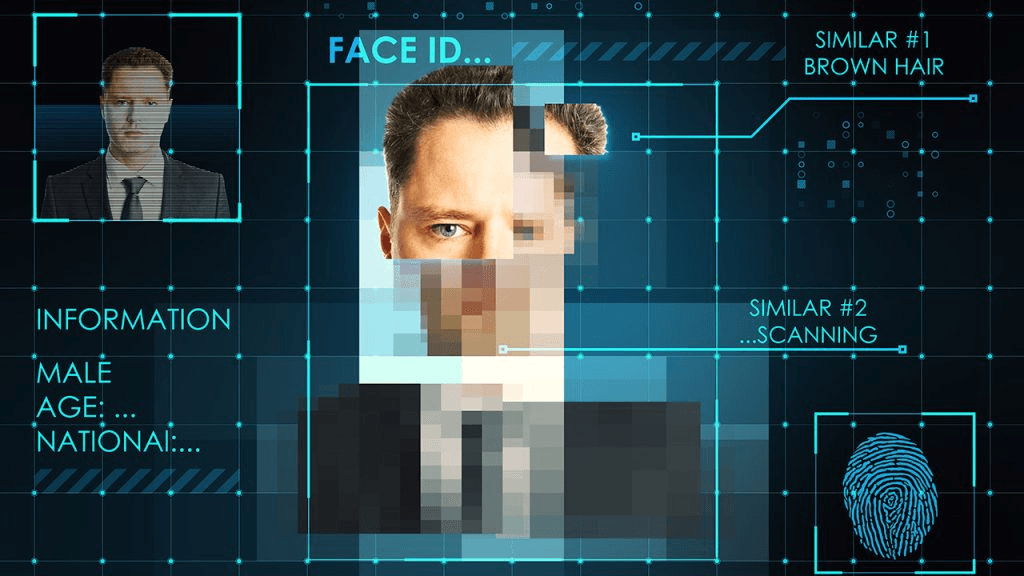
IIn this article, we explore the dark side of AI — including deepfakes, algorithmic bias, privacy threats, and other ethical concerns.
1. Deepfakes: The Rise of AI-Generated Misinformation
One of the most alarming risks of AI is deepfake technology. Deepfakes use advanced machine learning models to create realistic fake videos, images, or audio recordings that appear authentic.
Deepfake technology can make it look like a person said or did something they never actually did.
How Deepfakes Work
Deepfakes typically rely on Generative Adversarial Networks (GANs), a type of AI model where two neural networks compete with each other to generate realistic media.
Deepfake technology represents one of AI’s most insidious developments, blending deep learning algorithms with generative adversarial networks (GANs) to create hyper-realistic synthetic media. At its core, deepfakes involve training neural networks on vast datasets of images, videos, and audio to manipulate or fabricate content, such as swapping faces in videos or synthesizing voices that mimic real individuals. The process typically begins with collecting source material—often publicly available from social media—then using AI to map facial expressions, lip movements, and intonations onto a target. What started as a novelty in entertainment has escalated into a tool for deception, with tools like GANs lowering barriers for even non-experts to produce convincing forgeries.
The risks of deepfakes are multifaceted and severe. They fuel misinformation campaigns, enabling the spread of fabricated political speeches or events that can sway elections and erode public trust. For instance, in recent years, deepfakes have been weaponized in geopolitical conflicts, such as the Russia-Ukraine war, to propagate propaganda. On a personal level, they pose threats like non-consensual pornography, disproportionately affecting women and leading to harassment, defamation, and emotional harm. Cybersecurity experts warn of soaring deepfake-driven scams, including phishing where fraudsters impersonate executives to extract funds or sensitive data. A 2025 study across seven European countries revealed that publics overwhelmingly perceive deepfakes as more risky than beneficial, with older demographics and women expressing greater concern due to vulnerabilities in detection and impact. Ethically, deepfakes challenge the notion of truth, creating a “crisis of knowing” where distinguishing real from fake becomes nearly impossible, amplifying societal divisions.
These systems analyze thousands of images or audio samples of a person and then generate new content that mimics their facial expressions, voice, and behavior.
Why Deepfakes Are Dangerous
Deepfakes can be used for:
- Political manipulation – Fake speeches by world leaders.
- Financial fraud – AI-generated voice scams.
- Celebrity impersonation – Fake videos spreading online.
- Disinformation campaigns – Misleading content during elections.
For example, manipulated videos of public figures like Barack Obama have previously demonstrated how realistic deepfakes can appear.
As deepfake tools become easier to access, experts worry they could seriously undermine trust in digital media.
2. AI Bias: When Algorithms Discriminate
AI systems are only as good as the data used to train them. If the training data contains bias, the AI system may produce biased or unfair outcomes.
This issue is known as algorithmic bias.
AI bias occurs when systems produce discriminatory outcomes due to skewed training data, flawed algorithms, or unaddressed human prejudices embedded in their design. Often inherited from historical datasets that reflect societal inequalities, bias manifests in areas like facial recognition, where systems misidentify people of color at higher rates, or hiring tools that favor certain demographics. In 2026, real-world examples underscore this danger: A major lawsuit against Workday’s AI screening tools alleged age discrimination, disproportionately rejecting applicants over 40 based on biased historical data. Similarly, healthcare AI models have been found to undervalue treatment needs for minority patients by using proxies like health costs, exacerbating disparities.
The ethical concerns here are profound, as biased AI reinforces systemic racism, sexism, and other forms of discrimination under the veil of neutrality. For example, in job interviews, AI tools from platforms like those studied by the University of Melbourne in 2025 showed preferences for “idealized” speech, disadvantaging neurodivergent individuals or non-native speakers. In 2026, experts predict that without rigorous audits, such biases will widen social divides, with 68% of Fortune 500 companies using AI in hiring yet only 41% conducting bias checks. The human-AI interaction loop further amplifies this: Users’ confirmation biases can reinforce model outputs, creating a feedback cycle of prejudice.
Real-World Examples of AI Bias
Several major technology systems have faced criticism for biased decisions:
- Hiring algorithms favoring certain demographics
- Facial recognition systems misidentifying minorities
- Loan approval systems showing discriminatory patterns
Even major companies like Amazon have encountered challenges when experimental AI hiring tools showed bias against female applicants.
Why AI Bias Happens
AI bias often occurs because:
- Historical data reflects past discrimination
- Training datasets are not diverse
- Developers unintentionally introduce bias
- Algorithms optimize for accuracy instead of fairness
If left unchecked, biased AI could reinforce existing inequalities in society.
3. Privacy Concerns: AI Is Watching Everything
Another serious concern is data privacy.

Modern AI systems require enormous amounts of data to function effectively. This data often includes personal information such as:
- Online activity
- Shopping habits
- Location data
- Voice recordings
- Facial images
Tech companies collect massive datasets to train AI systems, raising concerns about how this information is used.
AI’s voracious appetite for data has intensified privacy risks, turning everyday interactions into surveillance opportunities. Systems rely on massive datasets for training, often collected without explicit consent, leading to breaches and misuse. In 2026, shadow AI—ungoverned use of personal tools—has tripled, resulting in 223 monthly data incidents per organization, with sensitive information like source code leaking unchecked. High-profile breaches, such as the Illuminate Education incident affecting millions of students, highlight failures in access controls and monitoring.
Platforms such as Meta Platforms and Google rely heavily on user data to power AI-driven recommendations and targeted advertising.
The Risks of AI Surveillance
AI-powered surveillance technologies can analyze:
- Security camera footage
- Social media behavior
- Biometric data
Governments and organizations may use these tools for security purposes, but critics argue they could also lead to mass surveillance and reduced personal freedoms.
4. Job Displacement and Economic Inequality
Automation powered by AI is expected to reshape the global workforce.
Industries that rely heavily on repetitive tasks are particularly vulnerable to automation.
Jobs most at risk include:
- Data entry clerks
- Customer service agents
- Retail cashiers
- Manufacturing workers
While AI may create new jobs in fields like machine learning and data science, the transition could cause significant economic disruption.
Experts warn that without workforce retraining programs, millions of workers could struggle to adapt.
5. AI in Cybercrime
Cybercriminals are also leveraging AI to launch more sophisticated attacks.
AI can help hackers:
- Generate phishing emails that appear legitimate
- Crack passwords faster
- Create automated malware
- Conduct large-scale scams
For example, AI-generated voice cloning has been used in fraud schemes where scammers imitate executives to trick employees into transferring money.
This emerging threat has made cybersecurity experts increasingly concerned about the misuse of AI.
6. Lack of Regulation and Accountability
One of the biggest challenges with AI is that regulations are struggling to keep up with technological progress.
Many AI systems operate as black boxes, meaning even their creators may not fully understand how they make decisions.
This raises critical questions:
- Who is responsible when AI makes a mistake?
- How can AI systems be audited for fairness?
- Should governments regulate AI development?
Organizations such as European Union have begun introducing AI regulations, but global standards are still evolving.
7. The Ethical Dilemma of Autonomous AI
As AI becomes more advanced, ethical concerns are becoming more complex.
For example:
- Should autonomous vehicles prioritize passenger safety or pedestrian safety?
- Should AI be allowed to make military decisions?
- Should companies deploy AI systems that could replace thousands of workers?
These ethical dilemmas require collaboration between policymakers, technologists, and society.
Even leaders like Elon Musk and Sam Altman have warned that AI must be developed responsibly to prevent unintended consequences.
Artificial Intelligence is one of the most powerful technologies ever created. It has the potential to revolutionize industries, improve healthcare, and solve complex global challenges.
But alongside these benefits come serious risks.
Deepfakes, algorithmic bias, privacy concerns, cybercrime, and job displacement all highlight the darker side of AI.
The future of AI will depend on how responsibly humans develop and regulate this technology. If handled carefully, AI can benefit society enormously — but ignoring its risks could lead to serious consequences.
Broader Ethical Implications and the Path Forward
Beyond individual concerns, AI’s dark side raises existential questions: Who bears responsibility for harms caused by autonomous systems? Deepfakes and bias not only deceive but undermine democracy, while privacy erosions foster a surveillance society. In 2026, trends like mandatory AI labeling and human accountability aim to restore trust, but challenges persist.
To mitigate these risks, stakeholders must prioritize ethical AI frameworks, including diverse datasets, transparency, and international regulations. Bias audits, deepfake detection tools, and privacy-by-design principles are essential. Ultimately, harnessing AI’s benefits requires confronting its dangers head-on, ensuring technology serves humanity without compromising our values.