
Getting enough protein on a vegetarian diet is entirely possible — with a mix of legumes, dairy, soy products, nuts, seeds, and whole grains. These foods not only help build and repair muscles but also contribute to overall health.
1. Lentils
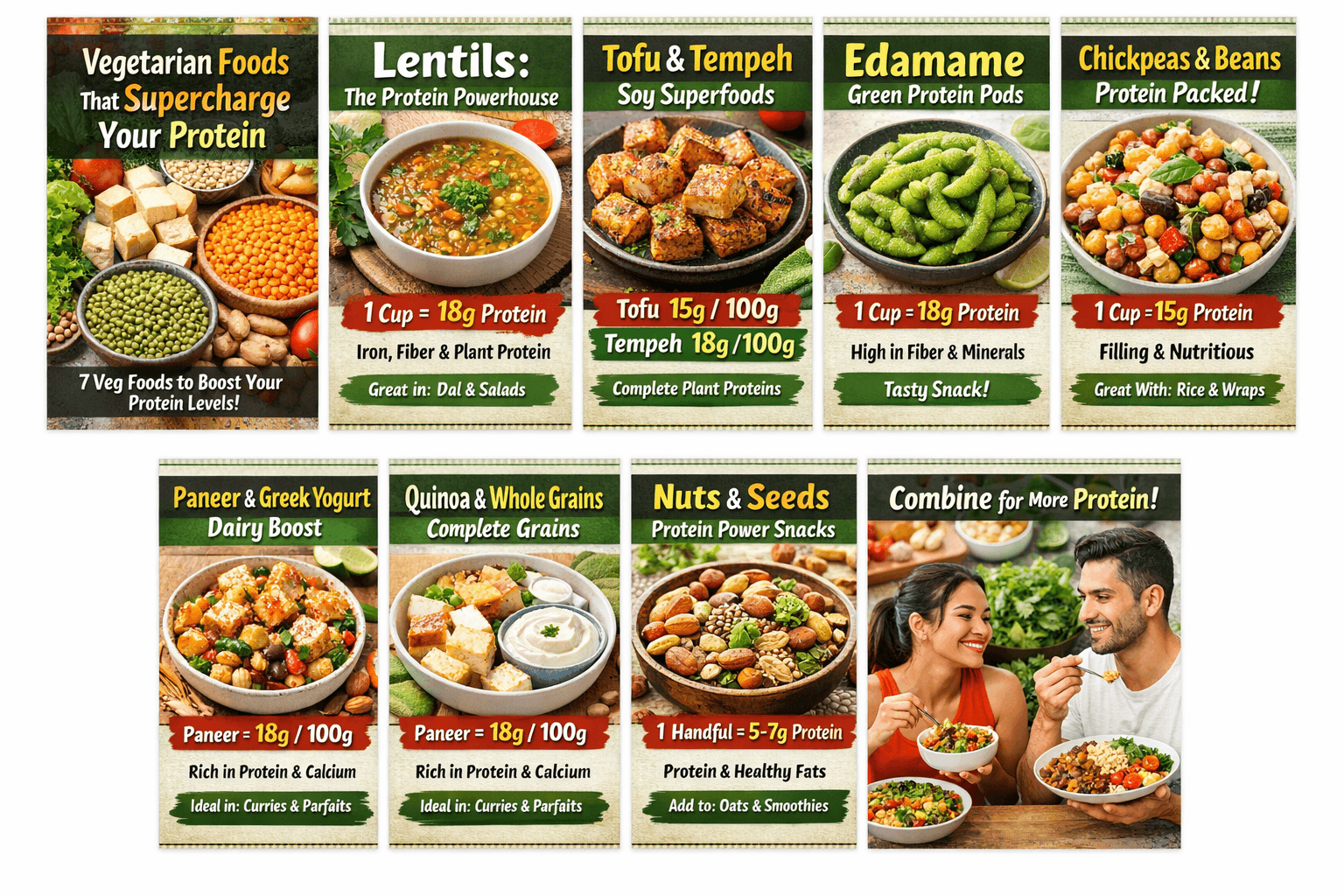
Lentils are a protein-dense legume, offering around 18 grams of protein per cooked cup. They’re also high in fiber, iron, and micronutrients, making them a staple for vegetarian meals like dals, soups, and salads.
💡 Try: Red lentil dal with rice or lentil soup with veggies.
2. Tofu & Tempeh
Both are soy-based foods rich in high-quality protein:
- Tofu: Approx. 15g protein per 100g.
- Tempeh: Even higher protein (~18g per 100g), with probiotics from fermentation.
These versatile ingredients can be grilled, baked, or stir-fried.
3. Edamame (Young Soybeans)
Edamame are whole soybeans that deliver all nine essential amino acids, making them a complete plant protein. One cup cooked can provide about 18+ grams of protein plus fiber and minerals.
💡 Snack tip: Steam with a pinch of salt or toss into salads.
4. Chickpeas & Other Beans
Chickpeas, black beans, kidney beans, and similar legumes supply approx. 6–19g protein per cooked cup, plus fiber and antioxidants. They also fit into many cuisines — from chole to salads and stews.
🍲 Serve with: Rice, wraps, or mixed bean chilis.
5. Greek Yogurt & Dairy (If You Consume Dairy)
For lacto-vegetarians, dairy like Greek yogurt and cottage cheese (paneer) provide high protein alongside calcium and B vitamins without the need for meat.
🧀 Idea: Greek yogurt parfait with fruit or paneer in curries.
6. Quinoa & Whole Grains
Quinoa stands out among grains for its complete amino acid profile, with about 8g protein per cooked cup. Other grains like oats also contribute smaller amounts of protein while adding fiber and micronutrients.
🍚 Use in: Breakfast bowls, pilafs, or as a rice substitute.
7. Nuts & Seeds
Almonds, peanuts, pumpkin seeds, and hemp seeds are compact protein boosters. Though their protein per serving is lower than legumes, they are energy-dense and nutrient-rich — perfect for snacks or toppings.
🥣 Add to: Smoothies, oatmeal, or salads.
Why It Matters
Protein is essential for muscle repair, immune function, enzyme production, and many other body processes. A vegetarian diet can meet daily protein needs — even 100 g or more, if varied and balanced — by combining multiple protein sources throughout the day.
Tips to Maximize Plant Protein
- Mix different plant proteins in meals (e.g. rice + beans) to get a broader amino acid profile.
- Use soy products regularly — they’re among the most protein-rich plant foods.
- Add seeds and nuts where possible to boost protein and healthy fats.


Comments are closed.