Artificial Intelligence (AI) is no longer a futuristic concept—it is now a transformative force shaping industries, education, healthcare, and everyday life. Whether you’re a student, professional, or tech enthusiast, understanding AI is essential in 2026. This ultimate beginner’s guide will break down everything you need to know to start your journey in AI, without overwhelming technical jargon.
What is Artificial Intelligence?
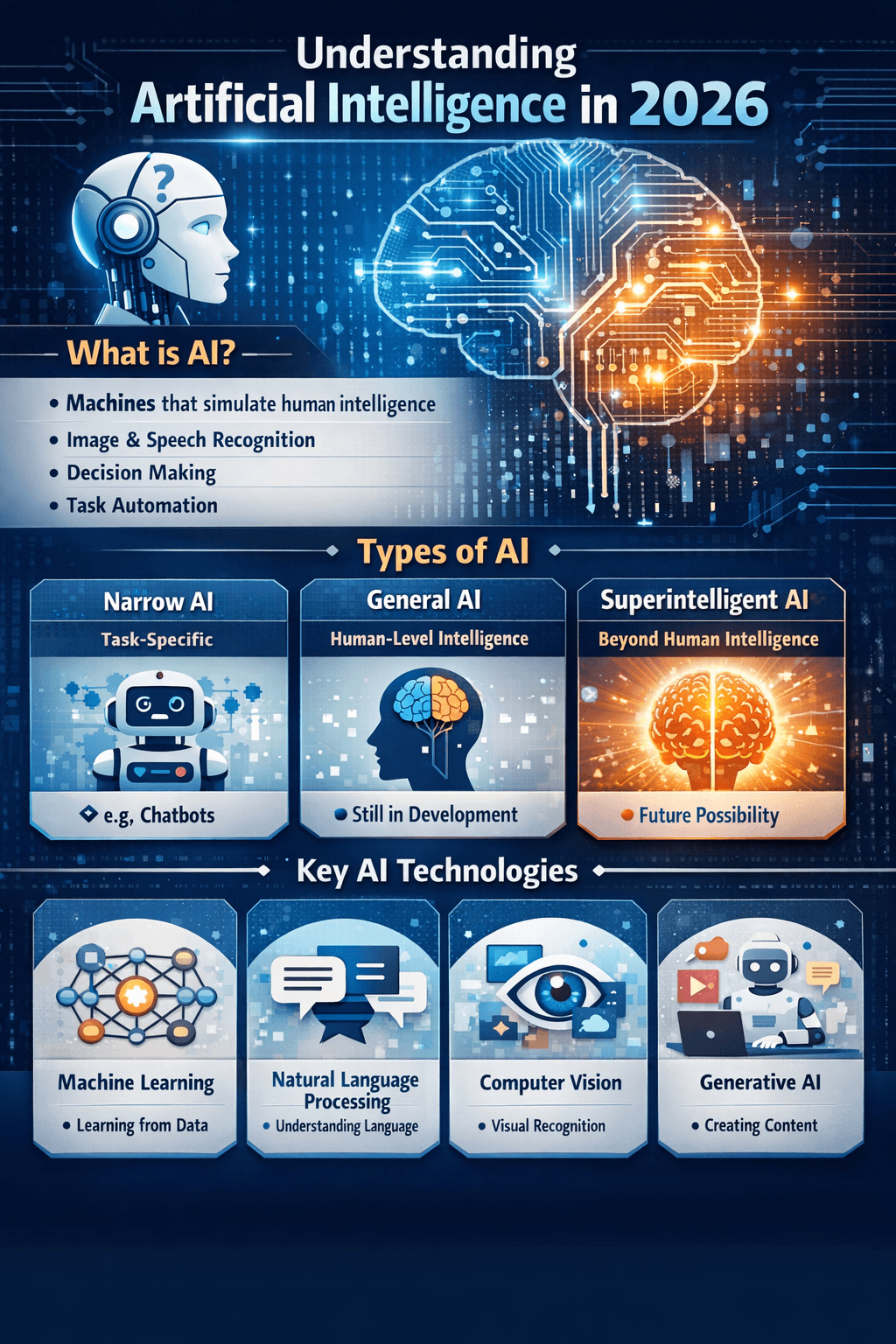
Artificial Intelligence refers to the simulation of human intelligence in machines. These machines are designed to learn from experience, adapt to new inputs, and perform tasks that typically require human intelligence, such as:
- Recognizing speech and images
- Making decisions and predictions
- Automating repetitive tasks
In 2026, AI is integrated seamlessly into our lives, powering everything from personal assistants like Siri and Alexa to advanced healthcare diagnostics and autonomous vehicles.
Types of AI: Beginner-Friendly Breakdown
Understanding the types of AI can help you see where you might apply it:
- Narrow AI (Weak AI)
- Performs a specific task
- Examples: Chatbots, spam filters, recommendation systems
- General AI (Strong AI)
- Hypothetical AI capable of human-level reasoning
- Still largely theoretical but a focus of advanced research
- Superintelligent AI
- AI surpassing human intelligence
- A future possibility that sparks ethical debates
Key AI Technologies in 2026
Several technologies power AI today. Here’s what beginners should know:
- Machine Learning (ML): Enables AI to learn from data and improve over time. Commonly used in predictive analytics.
- Natural Language Processing (NLP): Helps machines understand human language, powering chatbots and translation apps.
- Computer Vision: Allows machines to interpret visual data, from medical imaging to self-driving cars.
- Generative AI: Creates content like text, images, and music using deep learning models.
How AI is Changing Industries
AI’s impact in 2026 spans nearly every sector:
- Healthcare: AI assists in diagnostics, drug discovery, and personalized treatment plans.
- Finance: Fraud detection, automated trading, and credit scoring have become AI-driven.
- Education: Adaptive learning platforms tailor lessons to each student’s pace and style.
- Retail: Personalized recommendations and inventory optimization improve the shopping experience.
- Transportation: Autonomous vehicles and smart traffic management are making travel safer and faster.
Why Learn AI in 2026?
- High Demand Jobs: AI specialists, data scientists, and ML engineers are among the fastest-growing roles globally.
- Innovation Opportunities: AI enables creative solutions for business, healthcare, and environmental challenges.
- Enhanced Problem-Solving Skills: Understanding AI helps you think critically about data, algorithms, and automation.
Beginner-Friendly Steps to Start Learning AI
Here’s a roadmap for beginners:
- Understand the Basics: Learn key AI terms and concepts. Start with online resources like Coursera, Udemy, or free tutorials.
- Learn Python: The most popular programming language for AI. Focus on libraries like TensorFlow and PyTorch.
- Experiment with Projects: Start with small projects like chatbots, image recognition, or basic predictive models.
- Join AI Communities: Platforms like GitHub, Reddit, and AI Discord groups offer support and collaboration.
- Stay Updated: AI is evolving rapidly. Follow news from sources like MIT Technology Review and TechCrunch.
Common Myths About AI
- Myth 1: AI Will Take All Jobs
Reality: AI automates repetitive tasks but creates new roles requiring human creativity and judgment. - Myth 2: AI is Too Complex for Beginners
Reality: With the right resources, anyone can start learning AI step by step. - Myth 3: AI is Only for Tech Experts
Reality: AI is increasingly accessible with no-code platforms and user-friendly tools.
The Future of AI: What to Expect
In 2026, AI will continue to expand in ways we can barely imagine today:
- Smarter AI assistants capable of multi-tasking seamlessly
- AI-driven healthcare breakthroughs with real-time patient monitoring
- Increased AI ethics and governance ensuring responsible use
By understanding AI now, you can not only stay relevant in the job market but also actively participate in shaping the future of technology.
Artificial Intelligence is more than a buzzword; it’s a transformative technology that is changing the world in 2026. As a beginner, starting your AI journey now can unlock career opportunities, creative problem-solving skills, and a deeper understanding of the digital world.
Start small, stay curious, and embrace the AI revolution—your future self will thank you.