
Hey there, fellow dreamers and builders!
Imagine this: It’s Black Friday. Your e-commerce app is exploding with traffic. In the old days, you’d be glued to your dashboard, praying the servers don’t melt. Today? You grab a coffee, watch the metrics climb, and smile—because your entire backend is running on serverless architecture on AWS. No servers to babysit. No surprise bills for idle capacity. Just pure, automatic magic.
Welcome to InspireViralTimes.com—where we turn complex tech into the spark that ignites your next big idea. Today, we’re diving deep into serverless architecture on AWS in plain English (with a few relatable stories and zero jargon overload). Whether you’re a solo founder, a growing startup team, or just curious about the future of cloud, this guide will leave you inspired and ready to build.
Let’s get into it. 🚀
What Exactly Is Serverless Architecture? (Spoiler: There Are Still Servers… Somewhere)
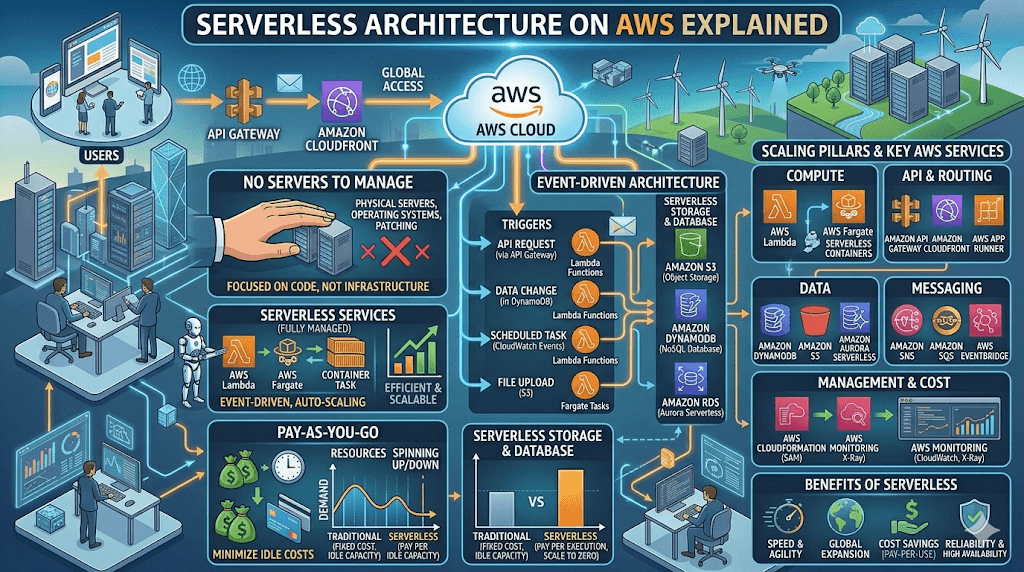
Here’s the truth no one says out loud: “serverless” doesn’t mean no servers. It means you don’t have to manage, patch, or scale them. AWS does.
Think of it like ordering takeout instead of cooking dinner every night. You focus on the recipe (your code and business logic), and the restaurant (AWS) handles the kitchen, ingredients, and cleanup.
At its core, serverless is event-driven, pay-per-use computing. Your code runs only when something happens—an upload, a click, a database change—and you pay for the milliseconds it actually runs.
In 2026, this isn’t futuristic hype. According to recent reports, AWS Lambda usage has grown over 100% year-over-year, powering everything from tiny side projects to billion-transaction empires.
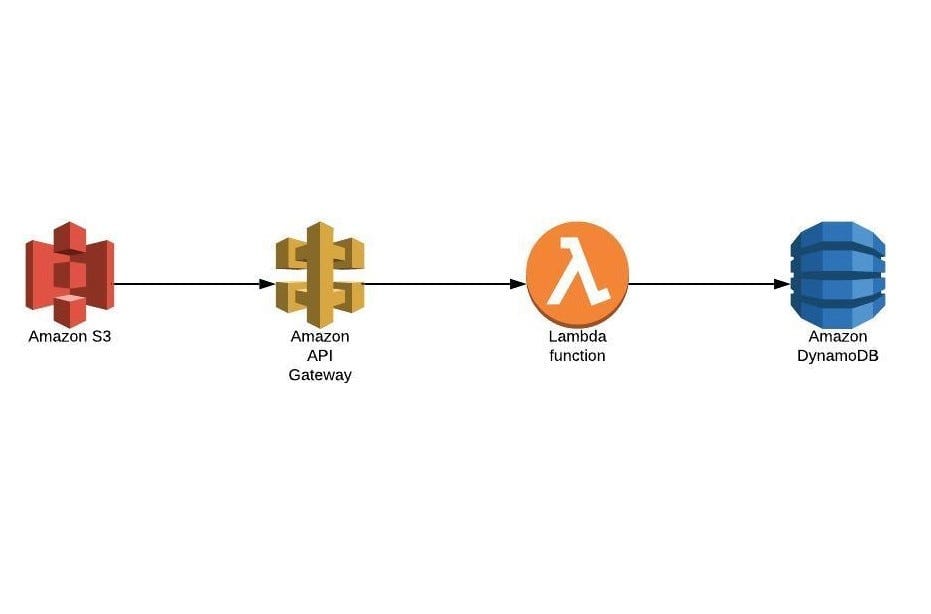
Serverless Web Application using S3, DynamoDB, API Gateway and AWS Lambda | by Shreya Katuwal | Medium
Why AWS Serverless Is Having Its Moment in 2026
AWS didn’t just jump on the bandwagon—they built the wagon. With AWS Lambda leading the charge since 2014, the platform now offers a full ecosystem that feels almost alive: auto-scaling from zero to tens of thousands of executions instantly, edge computing for lightning-fast global apps, and seamless AI integrations.
You get:
- Millisecond billing (no more paying for idle servers).
- Zero-ops infrastructure (AWS handles patching, security, and capacity).
- Built-in scalability (your app grows with demand, not with your weekend stress levels).
It’s the reason companies like Coca-Cola process billions of transactions monthly and iRobot keeps smart homes humming without a server room in sight.
The Dream Team: Key AWS Serverless Services You’ll Actually Use
Let’s meet the all-stars (no coding degree required to understand them):
- AWS Lambda – The brain. Runs your code in response to events. Supports Python, Node.js, Java, Go, and more. In 2026, it even has Durable Functions for stateful workflows and managed instances for heavier workloads.
- Amazon API Gateway – The doorman. Creates secure, scalable APIs that trigger your Lambda functions. Bonus: response streaming is now built-in for smoother real-time experiences.
- Amazon DynamoDB – The lightning-fast database. NoSQL magic that scales automatically and never needs provisioning.
- Amazon S3 – The storage hero. Upload files, trigger Lambdas, and let AWS handle the rest.
- AWS Step Functions – The conductor. Orchestrates complex workflows (think multi-step approvals or AI pipelines) with beautiful visual diagrams.
- Amazon EventBridge – The event bus that connects everything without glue code.
Put them together and you’ve got a complete backend that feels like it runs itself.
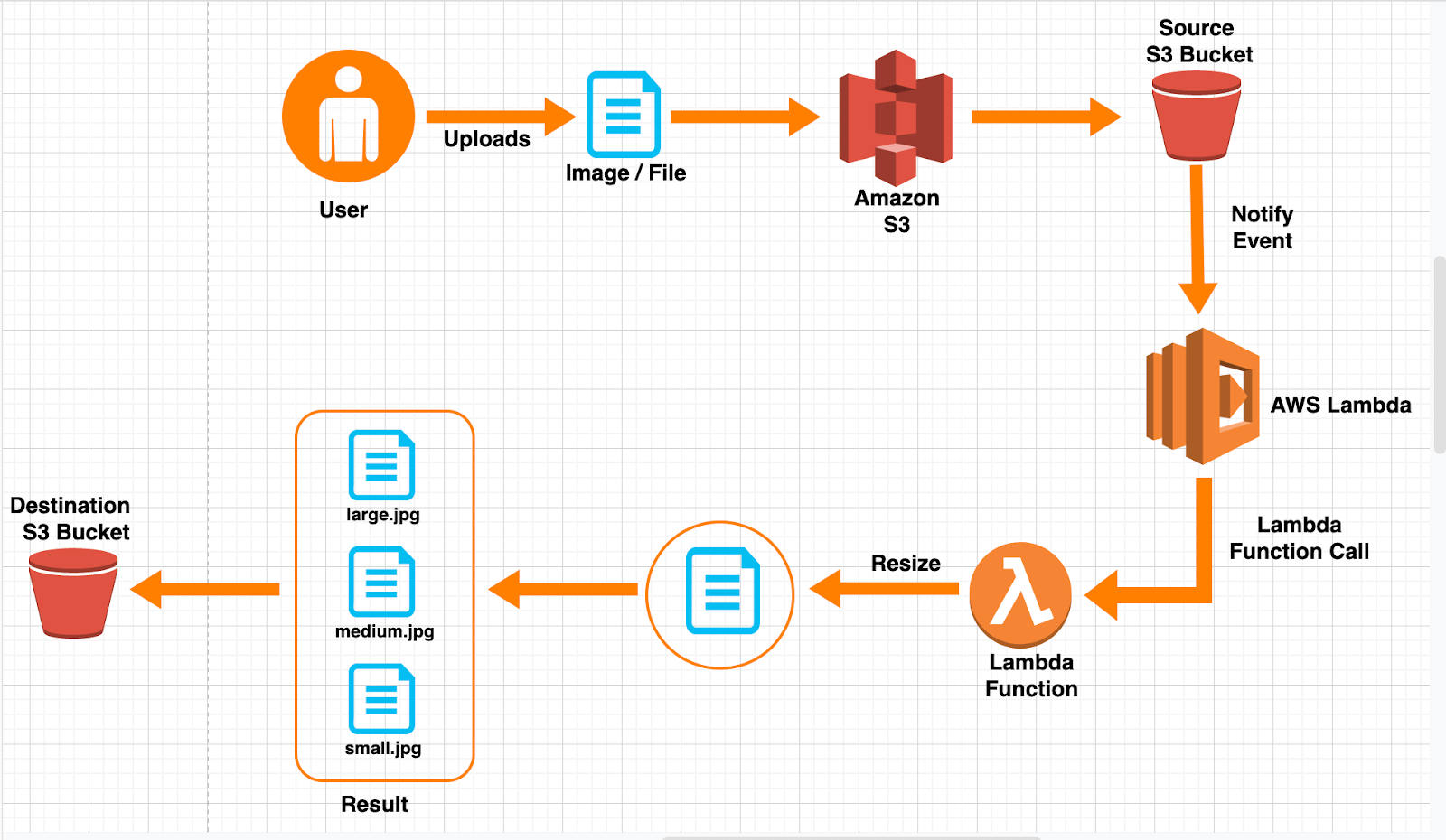
What is AWS Lambda? & AWS Lambda Use Case
(See the image above? That’s a real-world image-resizing pipeline: user uploads → S3 triggers Lambda → resized versions saved. Zero servers touched.)
Real-World Wins: Who’s Actually Doing This?
- Coca-Cola: Billions of transactions with zero manual scaling.
- Thomson Reuters: Processes 4,000 events per second for analytics.
- iRobot: Powers connected vacuums and smart-home magic.
- Autodesk: Built an internal tool in just one month using pure serverless.
Even game studios use it to process in-game screenshots automatically—uploading, analyzing for content, and delivering clean images to communities.
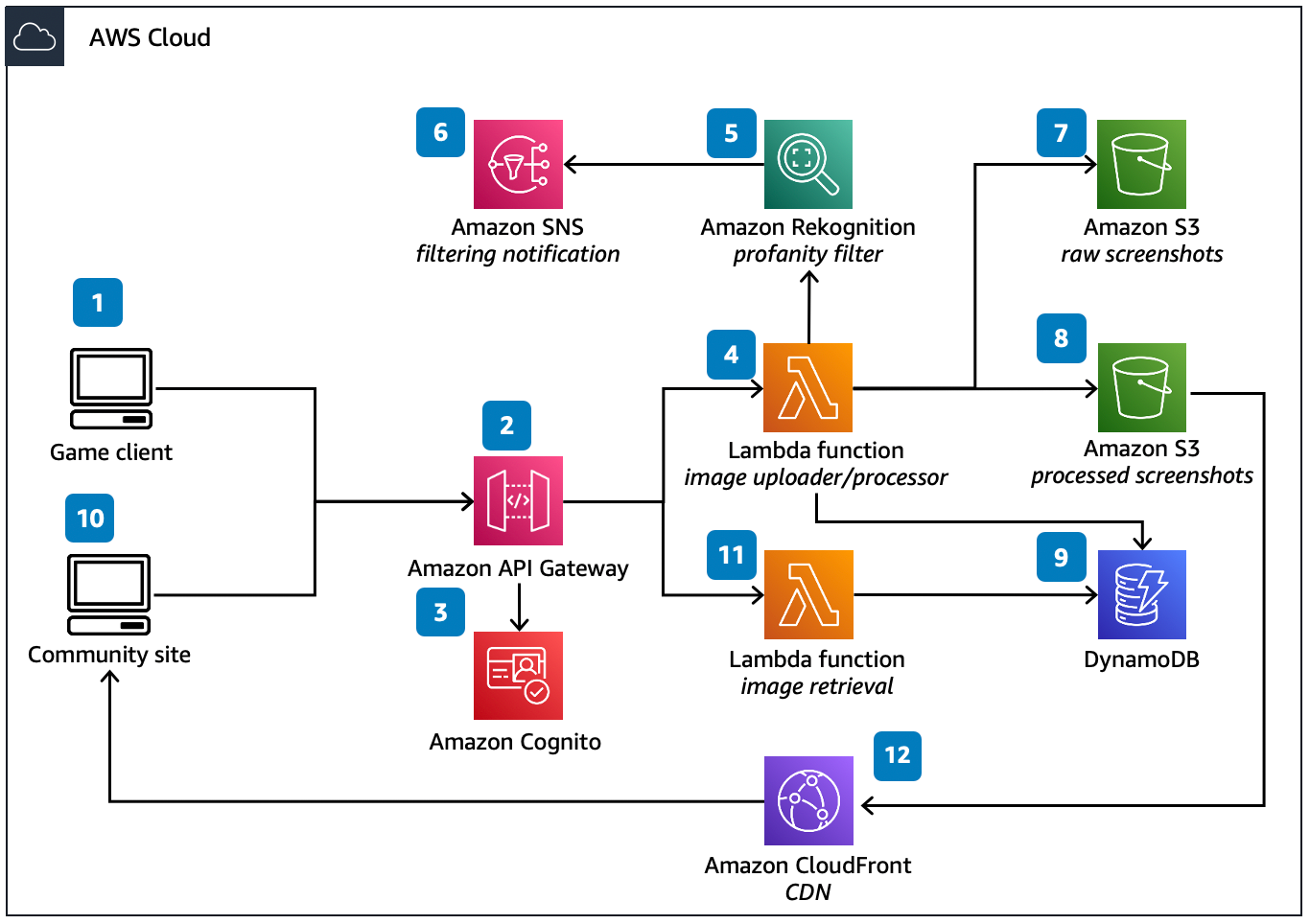
Serverless In-Game Screenshot Processor Pipeline for Game Studios – Serverless In-Game Screenshot Processor Pipeline for Game Studios
The Honest Truth: Challenges (and How to Crush Them)
No tech is perfect. Here’s what to watch for—and how pros handle it:
- Cold starts: Your function might take a second to “wake up.” Fix: Use Provisioned Concurrency or keep warm with scheduled pings.
- Debugging feels different: No server logs to SSH into. Fix: CloudWatch + X-Ray for crystal-clear tracing.
- Vendor lock-in worries: Fix: Use the Serverless Framework or AWS SAM so you can migrate if needed.
- Database connection limits: Fix: Reuse connections outside the handler and go serverless with DynamoDB.
Pro tip from someone who’s been there: Start small. One Lambda + API Gateway beats a massive refactor every time.
Best Practices to Build Like a Pro
- Initialize everything (SDK clients, DB connections) outside your handler so it reuses across invocations.
- Keep functions tiny and single-purpose (the “one thing well” rule).
- Use Infrastructure as Code—AWS SAM or CDK makes deployments feel like magic.
- Monitor everything. Set alarms before your users notice.
- Security first: Least-privilege IAM roles, input validation, and secrets in AWS Secrets Manager.
Ready to Dive In? Your 10-Minute Getting-Started Guide
- Sign up for an AWS Free Tier account (yes, it’s generous).
- Install the AWS SAM CLI (or Serverless Framework).
- Create a simple “Hello World” Lambda:Python
def lambda_handler(event, context): return { 'statusCode': 200, 'body': 'Hello from serverless on InspireViralTimes!' } - Hook it to API Gateway and deploy.
- Watch it scale automatically.
That’s it. Your first serverless API is live.
(Pro move: Follow AWS’s official “Serverless Application Model” tutorials—they’re beginner-friendly and up-to-date for 2026.)
The Future Is Serverless—and It’s Beautiful
In 2026, serverless isn’t just cheaper and faster. It’s freeing. It lets you focus on what actually matters: solving real problems, delighting users, and shipping ideas at the speed of thought.
No more weekend server emergencies. No more “but we need more capacity” meetings. Just you, your code, and a cloud that feels like a superpower.
So what are you waiting for?
Drop a comment below: Have you tried serverless yet? What’s your biggest “aha” moment or burning question?
Share this post if it sparked something—and tag a friend who’s still managing servers the old way.
At InspireViralTimes.com, we believe the best ideas go viral when they’re built smart. Go build something amazing.
We’ll be cheering you on.
— The InspireViralTimes Team 💡
P.S. Bookmark this page. Your future self (and your wallet) will thank you.


Comments are closed.