
Introductions
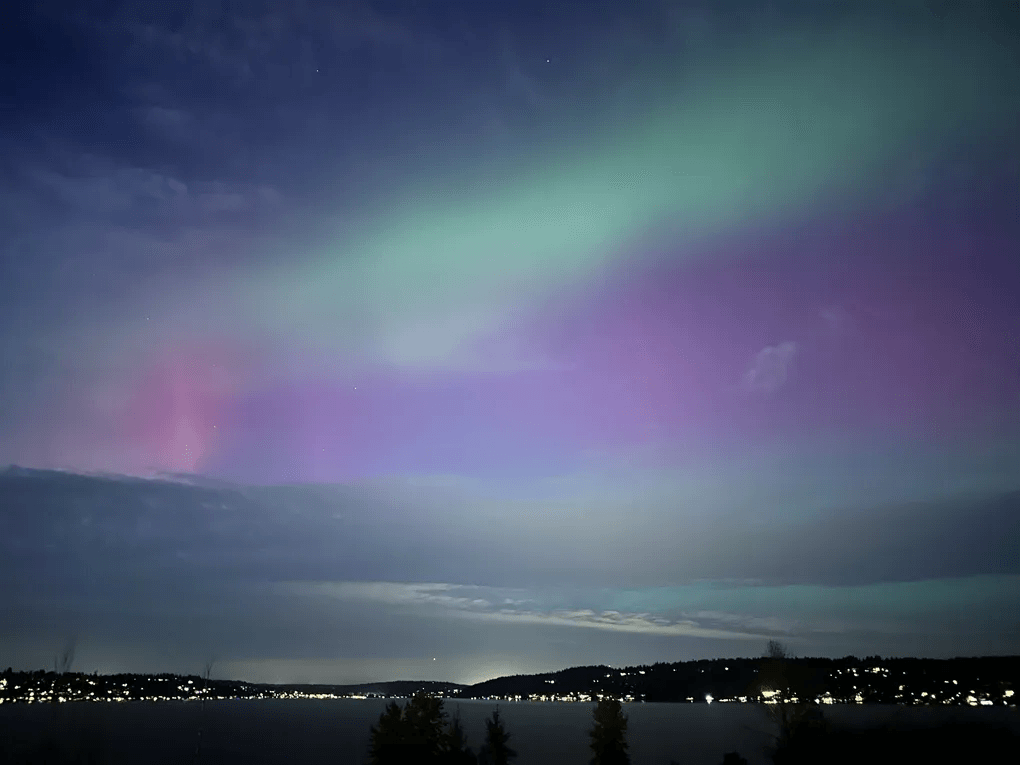
Last night, something magical happened. The usual inky blackness of the Pacific Northwest sky was set ablaze with color. From the San Juan Islands to the crest of the Cascades, and most remarkably, from within the city limits of Seattle itself, the aurora borealis—the Northern Lights—put on a breathtaking, unexpected display.
If you missed it, or if you’re still buzzing from the experience, you’re not alone. Social media erupted with awe-struck photos and exclamations of disbelief. This wasn’t a faint, green smudge on the horizon; for many, it was a vibrant, dancing curtain of pink, purple, and green, a sight typically reserved for Arctic latitudes.
What Caused This Rare Spectacle?
So, how did this celestial phenomenon grace our often-cloudy skies? The answer lies 93 million miles away, on the surface of our sun.
A powerful geomagnetic storm, triggered by a coronal mass ejection (CME), slammed into Earth’s magnetic field. Think of it as the sun hurling a massive bubble of superheated plasma and magnetic fields directly at us. When these charged particles interact with our planet’s magnetosphere, they are funneled toward the poles, colliding with gases like oxygen and nitrogen in our upper atmosphere. This collision releases energy in the form of light—the very light we see as the aurora.
The stronger the solar storm, the further south the aurora’s “oval” expands. The event that lit up Seattle skies was classified as a G4-level storm—one step below the most extreme rating of G5. This intensity is what pushed the lights so far south, making them visible across much of the northern United States, including our light-polluted urban centers.
Chasing the Glow in the Emerald City
The Seattle Times article and countless local reports captured the essence of the chase. It was a community-wide event. People scrambled to find dark sky pockets:
- Discovery Park became a popular vantage point, with photographers and families alike staring north over the Puget Sound.
- Alki Beach offered a stunning backdrop, with the shimmering lights juxtaposed against the silhouette of the Olympic Mountains.
- Even from backyards in Ballard or West Seattle, residents were rewarded with vivid hues visible to the naked eye—a rarity so close to the city.
The real-time reports, the shared tips on “look north now!”, and the collective gasp of a city looking up created a sense of shared wonder that feels all too rare these days.
A Reminder of Nature’s Grandeur
Beyond the stunning photographs and the scientific explanation, nights like these serve a deeper purpose. They pull us out of our daily routines and remind us of our place in a vast, dynamic universe. The same solar wind that can disrupt our satellites gifted us with one of the most beautiful shows on Earth.
It’s a humbling and exhilarating experience. It connects us to the explorers of old who saw these lights as omens or spirits, and to everyone around the world who looked up last night to see the same cosmic dance.
Will We See Them Again?
Solar activity operates on an 11-year cycle, and we are currently approaching the solar maximum, expected in 2025. This means the sun is more active, with more sunspots and solar flares. While there are no guarantees, the chances of another major auroral display reaching our latitude are higher in the coming months.
So, what can you do?
- Follow Aurora Forecasts: Websites like the NOAA Space Weather Prediction Center and apps like Aurora Forecast can give you a heads-up.
- Find Dark Skies: If an alert is issued, try to get away from city lights. The darker your sky, the more vivid the lights will be.
- Be Patient and Let Your Eyes Adjust: It can take up to 20 minutes for your eyes to fully adapt to the dark.
- Use Your Camera: Even if your eyes struggle to see the color, a modern smartphone on a steady surface with a long-exposure setting can often capture the greens and pinks that are faint to the naked eye.
Last night was a gift—a brilliant reminder that magic exists just beyond our atmosphere. Keep looking up, Seattle. The sky might just surprise you again.
Have you seen the Northern Lights before? Share your photos and stories from last night in the comments below!


📊 Build your weekend slip with Football prediction—model-driven picks, live odds context, and injury form overlays so you can compare edges game by game before you stake.
Fly, bet, and win big in Aviator game India. Start now and feel the rush of real cash gaming!
Pide çeşitlerinin hepsini denemek istedim çünkü hepsi çok güzel görünüyordu. Özellikle kuşbaşılı pide favorim oldu, eti ve peyniri çok uyumluydu.
Interesting read! The focus on data-driven optimization, like tracking RTP in slots, is smart. Makes sense why platforms like queen ph download apk are gaining traction with players seeking transparency. Good article!
Zalv8, quick punt on this one. Seemed legit, nothing dodgy. Usual array of games and slots. Might be worth a look if you can’t find anything else: zalv8
Bahis, çeşitli kullanıcı dostu para yatırma ve çekme yöntemleri sunan bir bahis şirketidir
I appreciate you sharing this blog post. Thanks Again. Cool.
Hi there to all, for the reason that I am genuinely keen of reading this website’s post to be updated on a regular basis. It carries pleasant stuff.
Another login link for BHT Club? Guess it doesn’t hurt to have options! Give it a shot if the main one is down: bhtclubgamelogin1
Checking out Taib29bet. Looks like they’ve got a good variety of games. Hoping for some solid bonuses too! Ready for some good fun with real wins only at: taib29bet
buy weed products online discreet shipping
Yo, just tried out f168doiqua! Honestly, the interface is pretty slick. Easy to navigate, even for a noob like me. Gameplay was smooth, no annoying lag. Def gonna be coming back for more. Check it out! f168doiqua
🤠 Lasso, ride, befriend in Cowboy Safari—tame wild animals and grow a floating zoo; full run with zero buck-offs? screenshot or it didn’t happen.
🚗 Slip the net in Escape Drive—drift past roadblocks, chain nitro, and route cleaner lines each attempt; beat my longest escape timer—receipts only.
⚽ Play free with quick loads on Football Bros — try Soccer Bros today, with football bros unblocked games so you can jump in anywhere, anytime.
9jl is always there for a quick game! Never disappoints when I just wanna unwind. Check it out at 9jl!
For the reason that the admin of this site is working, no uncertainty very quickly it will be renowned, due to its quality contents. lüleburgaz nakliye
🚗 Slip the net in Escape Drive—drift past roadblocks, chain nitro, and route cleaner lines each attempt; beat my longest escape timer—receipts only.
🚗 Slip the net in Escape Drive—drift past roadblocks, chain nitro, and route cleaner lines each attempt; beat my longest escape timer—receipts only.