
The rise of Artificial Intelligence has sparked one of the most fascinating debates of the modern era: Can machines ever surpass human intelligence? From AI-powered chatbots to self-driving cars, technology is advancing at a breathtaking pace. But the real question many people ask is — who will ultimately win in the battle between AI and human intelligence?
While AI is becoming increasingly powerful, the comparison between machine intelligence and human cognition is complex. Each has unique strengths, limitations, and roles in shaping the future.
IIn March 2026, the debate rages louder than ever: Will artificial intelligence ultimately surpass human intelligence, or will humans retain an irreplaceable edge? With frontier models now acing benchmarks once thought impossible for machines and experts like Elon Musk and Dario Amodei eyeing AGI as soon as this year or next, the question feels less hypothetical and more urgent. Yet the real story isn’t a simple victory for one side—it’s a profound shift in how intelligence is defined, deployed, and combined.
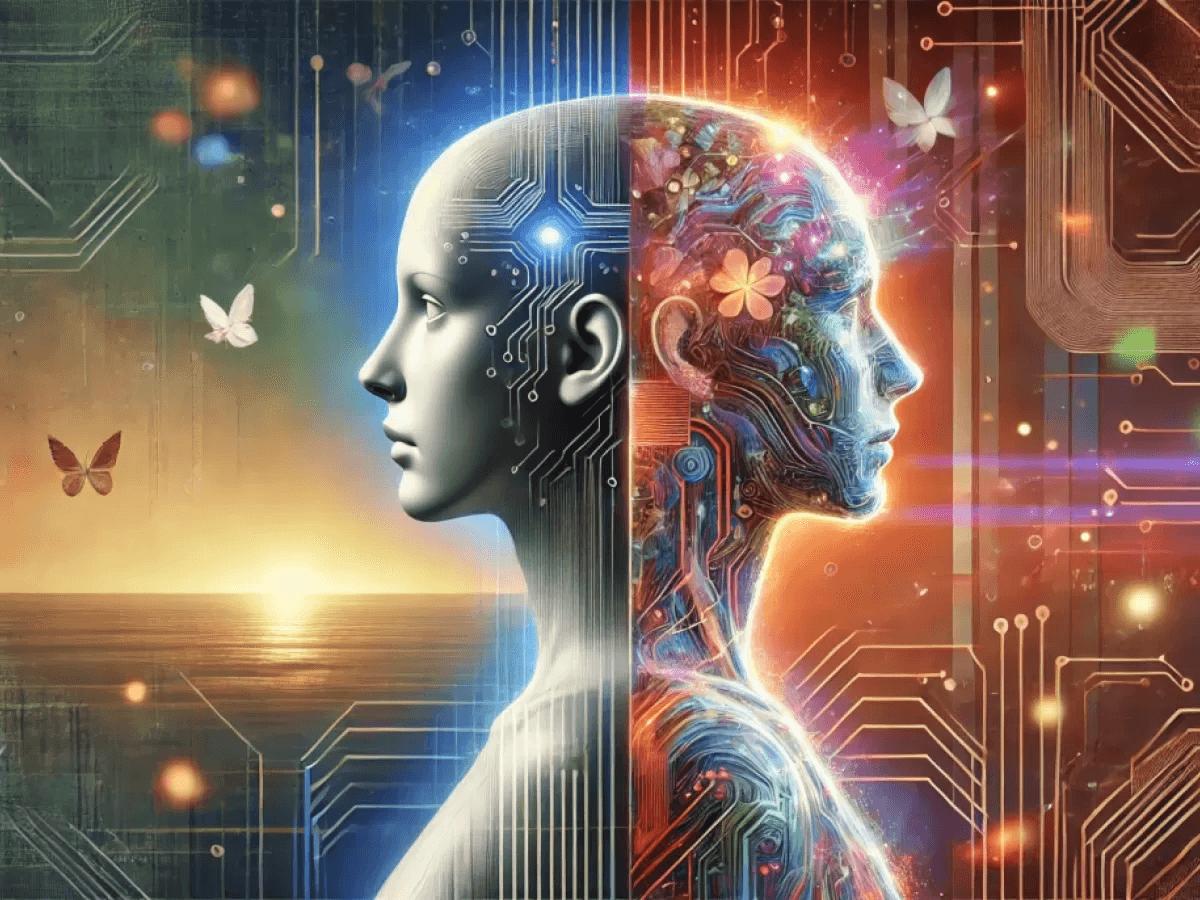
Understanding Artificial Intelligence
Artificial Intelligence refers to machines or software designed to perform tasks that normally require human intelligence. These tasks include learning, reasoning, problem-solving, and language understanding.
Today’s AI systems—such as ChatGPT developed by OpenAI—are capable of generating text, answering questions, writing code, and assisting businesses in countless ways.
Major technology companies investing heavily in AI include:
- Microsoft
- Amazon
- Meta Platforms
These companies believe AI will become one of the most transformative technologies of the 21st century.
What Makes Human Intelligence Unique?
Human intelligence has evolved over millions of years and includes abilities that machines still struggle to replicate.
Key characteristics of human intelligence include:
1. Creativity
Humans can create art, music, literature, and new ideas from imagination. While AI can generate content, true creativity often comes from emotional experiences and cultural understanding.
2. Emotional Intelligence
Humans understand emotions, empathy, and social relationships. Emotional awareness helps people make decisions that machines cannot easily replicate.
3. Moral Judgment
Humans make ethical decisions based on values, experiences, and social norms. Machines rely on programmed rules and data patterns.
4. Adaptability
Humans can quickly adapt to new situations using common sense and intuition.
Where AI Is Already Better Than Humans
Although humans possess unique abilities, AI outperforms people in several areas.
1. Speed and Data Processing
AI systems can analyze massive datasets in seconds, something impossible for humans.
2. Accuracy in Repetitive Tasks
Machines can perform repetitive operations with minimal errors, making them ideal for industries such as manufacturing and finance.
3. Pattern Recognition
AI excels at identifying patterns in complex datasets. For example, AI systems can detect diseases in medical images faster than many doctors.
Companies like IBM have developed AI systems capable of analyzing medical data to support healthcare professionals.
4. Continuous Operation
Unlike humans, AI systems do not need sleep, breaks, or vacations.
What AI Still Cannot Do
Despite impressive progress, AI still faces significant limitations.
Lack of True Understanding
AI processes patterns in data but does not truly “understand” information the way humans do.
Limited Common Sense
Machines struggle with everyday reasoning that humans perform naturally.
Dependence on Data
AI systems require massive datasets for training, whereas humans can learn from very little information.
What Tech Leaders Say About the Future
Several technology leaders have shared strong opinions about the future of AI and human intelligence.
Elon Musk has warned that AI could eventually surpass human intelligence and must be developed responsibly.
Meanwhile, Sam Altman, CEO of OpenAI, believes AI will augment human capabilities rather than replace humanity entirely.
The goal of many researchers is to develop Artificial General Intelligence (AGI)—AI systems capable of performing any intellectual task that humans can do.
Collaboration: The Real Future
Instead of a competition between humans and machines, many experts believe the future will involve collaboration between AI and humans.
Examples already exist:
- Doctors using AI for faster diagnosis
- Writers using AI tools for research and drafting
- Businesses using AI to analyze market trends
- Engineers using AI to design advanced technologies
This partnership allows humans to focus on creativity and strategic thinking while AI handles complex data processing.
Who Will Win?
The answer may surprise many people: there may not be a winner at all.
AI and human intelligence serve different purposes.
- AI excels at speed, data analysis, and automation.
- Humans excel at creativity, emotions, ethics, and innovation.
Rather than replacing humans, AI is more likely to become a powerful tool that enhances human potential.
Final Thoughts
The debate about AI vs human intelligence will continue for decades as technology evolves. While AI is rapidly becoming more capable, human intelligence remains uniquely powerful.
The future will likely be defined not by competition but by cooperation between humans and intelligent machines.
If developed responsibly, AI could help humanity solve some of the world’s biggest challenges—making the real winner humanity itself.
The Strengths: Where Each Side Dominates
AI and human intelligence aren’t direct competitors in the same arena—they excel in fundamentally different ways.
AI crushes tasks involving speed, scale, and precision. In 2026, top models process vast datasets in seconds, spot patterns no human could detect, and perform at superhuman levels in domains like protein folding, complex mathematics, and even multi-step coding projects. Verbal reasoning and knowledge recall often hit genius-level equivalents (estimated IQ 155+ in crystallized intelligence), far beyond the average human’s 100. Narrow but extreme efficiency lets AI handle repetitive, data-heavy work without fatigue.
Humans, however, shine in contextual depth, emotional nuance, creativity born from lived experience, and ethical judgment. We adapt fluidly to ambiguity, draw on embodied intuition, form genuine intentions, and navigate social dynamics with empathy. Human intelligence is collective and cultural—built through shared stories, emotions, and physical interaction—something current AI still lacks. Even as models improve dramatically on reasoning tests, they remain derivative: trained on human data, corrected by humans, and without true self-awareness or intrinsic motivation.
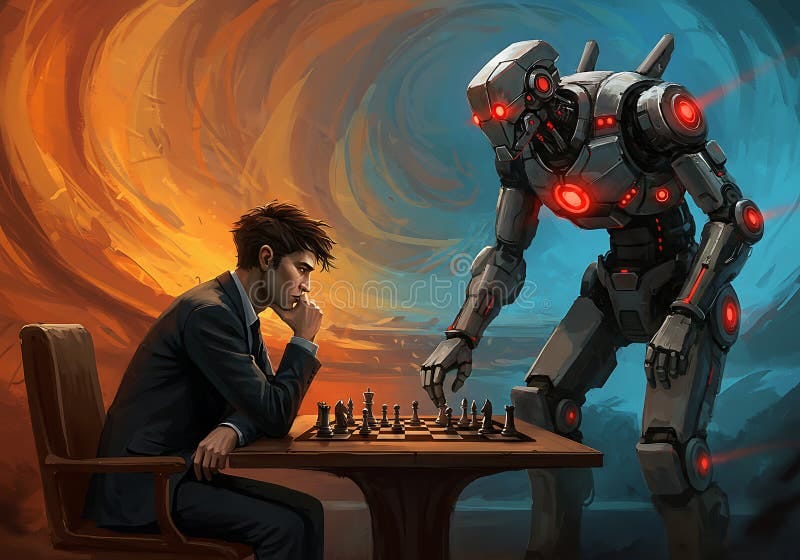
The Scoreboard in 2026: Benchmarks Tell a Partial Story
Recent evaluations show AI pulling ahead in many measurable areas:
- Advanced models frequently outperform average (and even expert) humans on standardized tests for reasoning, coding, and knowledge recall.
- In specialized benchmarks, AI agents now handle multi-day tasks autonomously in software engineering and data analysis.
- Hallucinations have dropped significantly, making outputs more reliable.
Yet these wins are uneven. AI struggles with common-sense reasoning in novel, real-world scenarios, long-term planning without oversight, and truly original innovation untethered from training data. Many experts argue direct comparisons miss the point: human intelligence isn’t isolated performance—it’s social, embodied, and adaptive in ways silicon can’t replicate yet.
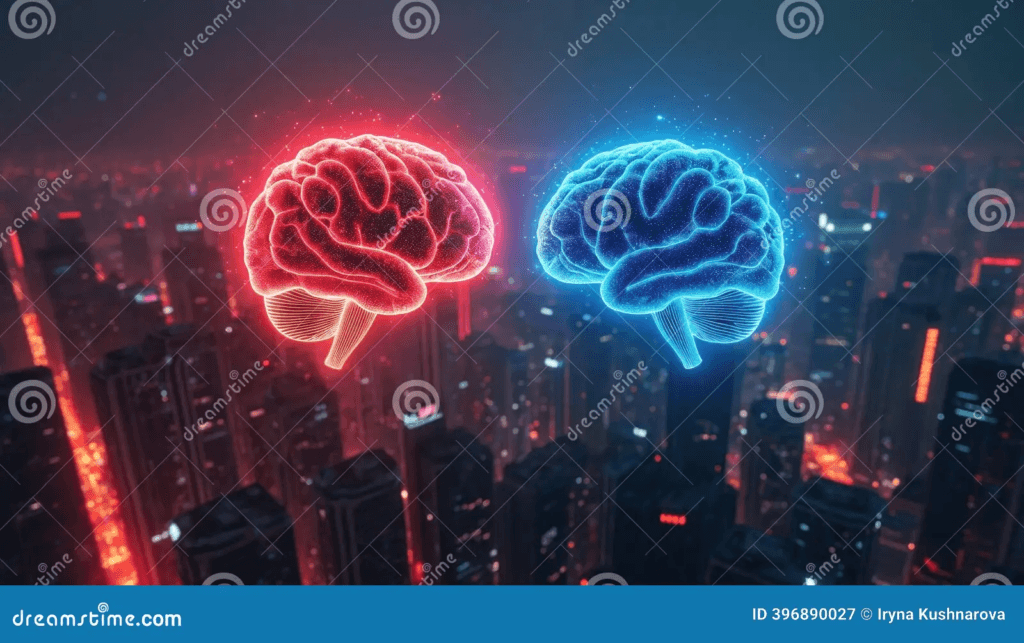
The Emerging Consensus: It’s Not “AI vs. Humans”
The most repeated insight across discussions in 2026? The framing is outdated.
- “Not AI vs humans. Humans with AI vs humans without it.”
- Winners aren’t fully automated systems or unaugmented people—they’re AI-augmented humans who leverage tools for 10x–1000x amplification.
- AI provides leverage: compressing time, removing friction, scaling ideas. Humans supply direction, taste, judgment, and accountability.
Organizations thriving now track not just model performance but AI-assisted productivity: percentage of revenue-critical tasks handled with human-in-the-loop oversight, time from insight to action, and governance over AI workflows. The future belongs to adaptable collaborators, not rivals in a zero-sum contest.
Looking Ahead: Collaboration or Conquest?
Timelines for AGI—human-level or beyond—range wildly, from late 2026 (optimistic insiders) to 2030+ (cautious forecasts). If progress continues exponentially, machines could dominate most cognitive tasks within years. But even then, the “win” might not mean replacement.
The human edge in creativity under uncertainty, moral reasoning, and collective achievement suggests symbiosis over supremacy. AI could handle the drudgery, freeing us for higher pursuits—or, if misaligned, pose existential risks. Either way, 2026 marks the year the debate evolves from “who wins?” to “how do we win together?”
The real question isn’t which intelligence prevails—it’s whether we’ll use this moment to augment humanity or let division define it. The tools are here. The choice is ours.