IIntroduction
The year is 2026, and the landscape of sports and music has been irrevocably altered. The traditional passive consumption of content through screens is being replaced by an immersive, participatory experience driven by the rise of “Superfandom.” This phenomenon, characterized by an intensely dedicated and interconnected fanbase, is not just changing how we experience entertainment, but also rewriting the rules of engagement and monetization for artists, athletes, teams, and industry professionals.
In 2026, fandom is no longer passive. It’s no longer about casually watching a game or streaming a playlist. We’ve entered the era of “superfandom”—a cultural and economic force where the most dedicated fans are reshaping how sports and music are created, consumed, and monetized.
This shift is not subtle. It’s structural. Entire industries are reorganizing around one core insight:
The future belongs to fans who don’t just watch—but participate, spend, and belong.
IIn this deep dive, we explore how superfandom is transforming these two powerhouse industries, moving far beyond the boundaries of traditional fan interaction.
What Is “Superfandom”?
Superfans are not just enthusiastic followers—they are highly engaged, emotionally invested, and financially active participants in a fandom ecosystem.
In 2026:
- Around 20% of fans are considered superfans, yet they generate a disproportionate share of revenue
- They spend 2x more on music and live events than average fans
- Their identity is deeply tied to what they support—89% say fandom is central to who they are
This isn’t just loyalty. It’s identity economics.
The Death of Passive Consumption
For over a decade, streaming platforms dominated entertainment. But in 2026, the model has evolved:
- Streaming is now the entry point, not the end goal
- The real money lies in experiences, exclusivity, and community
This shift is often called the move from the “streaming economy” to the “fandom economy.”
Key Transformation:
| Old Model | New Model |
|---|---|
| Views & streams | Engagement & identity |
| Mass audience | Core superfans |
| Access-based | Experience-based |
How Superfandom Is Transforming Music
1. Music Is Now a Gateway, Not the Product
Artists are no longer just selling songs—they’re building multi-layered fan ecosystems:
- VIP memberships
- Exclusive content drops
- Fan-only events
- AI-powered remix experiences
Platforms are even launching premium tiers targeting superfans with perks like lossless audio and concert benefits
2. The Rise of the “Experience Economy”
Superfans don’t just listen—they show up.
- 79% of fans say live music creates a sense of community digital platforms can’t match
- 46% prioritize spending on live experiences—even during economic pressure
This explains:
- Sold-out tours within minutes
- Surge in micro-festivals (intimate, community-driven events)
- Fans traveling across countries for concerts
3. Identity-Driven Fandom
Superfans express identity through:
- Fashion (concert outfits, fandom aesthetics)
- Tattoos and symbols tied to artists
- Online communities and fan-created content
In fact:
- 29% of fans dress to reflect fandom identity
- Some queue overnight or even skip work for events
This is fandom as lifestyle—not hobby.
4. Fan-to-Fan Economies Are Emerging
Superfans are no longer just consumers—they’re creators and entrepreneurs:
- Hosting fan events
- Selling fan-made merchandise
- Building niche communities
Some fan-led events generate tens of thousands in revenue
This signals a shift toward a decentralized creator economy powered by fandoms.
How Superfandom Is Reshaping Sports
1. Sports Are Becoming Immersive Experiences
Sports teams are adopting strategies once exclusive to entertainment:
- VIP lounges and premium seating
- Behind-the-scenes access
- Personalized digital experiences
Superfans are willing to pay 3–5x more for exclusive access
2. Data + AI = Hyper-Personalized Fans
Sports organizations now use:
- AI-driven recommendations
- Personalized highlights
- Real-time in-stadium engagement
From a Reddit discussion on fan tech trends:
“Community > reach… one hundred listeners who care beats ten thousand who forget you.”
This insight applies directly to sports:
Retention beats reach. Loyalty beats scale.
3. Globalization of Fandom
Sports fandom is no longer local:
- Fans travel internationally for games
- Leagues attract global audiences
- Women’s sports and niche leagues are booming
Superfans are turning sports into borderless cultural events.
4. Sports + Entertainment Are Merging
The line between sports and music is blurring:
- Halftime shows are global spectacles
- Athletes build personal brands like artists
- Events are designed for social media virality
Sports are no longer just competitions—they are content ecosystems.
The Psychology Behind Superfandom
Why is this happening now?
1. Search for Belonging
- 70% of fans feel a strong sense of community at live events
2. Identity in a Digital World
Fandom provides:
- Tribe
- Meaning
- Shared language
3. Escape + Emotional Investment
Superfans experience:
- Joy
- Euphoria
- Emotional connection
This emotional intensity drives both engagement and spending.
The Business Impact: A Multi-Billion Dollar Shift
Superfandom is not just cultural—it’s economic:
- $4+ billion potential annual revenue boost from superfan monetization
- Billions already generated in music alone
- Premium experiences driving consistent revenue growth across industries
Companies are now optimizing for:
- Revenue per fan, not total users
- Lifetime value, not clicks
The Dark Side of Superfandom
This transformation isn’t without risks:
1. Financial Pressure
Fans may overspend to maintain identity or status.
2. Toxic Fan Behavior
Extreme loyalty can lead to:
- Online harassment
- Rivalry escalation
3. Exclusivity Gaps
Premium experiences risk alienating casual fans.
The Future: What Comes Next?
By the end of this decade, expect:
🔹 1. AI-Powered Fan Worlds
- Personalized content ecosystems
- Virtual fan clubs and digital twins
🔹 2. Tokenized Fandom
- Ownership-based fan communities
- Blockchain-driven memberships
🔹 3. Creator-Led Micro-Communities
- Smaller, tighter, high-value fan groups
🔹 4. “Always-On” Experiences
- Live + digital + social blended into one continuous experience
Final Takeaway
Superfandom represents a fundamental shift:
From audience to community
From consumption to participation
From content to identity
In 2026, the biggest stars, teams, and brands are not those with the most viewers—but those with the strongest emotional connection to their superfans.
Because in this new era:
The screen is just the beginning.
The End of the Passive Spectator
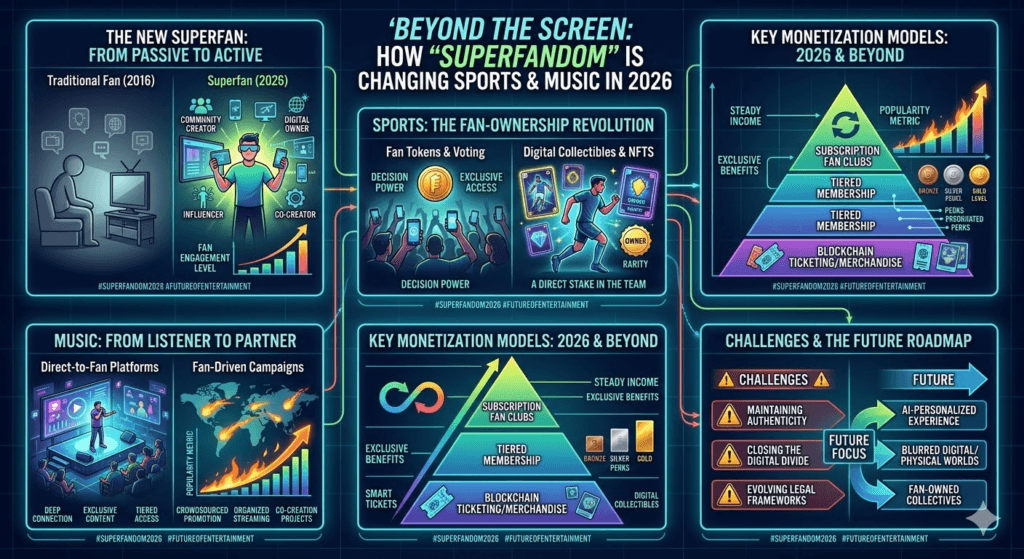
Forget simply watching a game on TV or listening to an album on a streaming service. Today’s fan craves connection, influence, and a sense of belonging to a community that shares their passion. This desire for active participation is at the core of superfandom.
Sports: From Cheering in the Stands to Owning a Piece of the Team
The world of sports has witnessed a massive shift, with superfans now exerting influence far beyond the traditional realms of supporting their teams.
- Digital Collectibles and Fan Tokens: The advent of blockchain technology has empowered fans like never before. Fans can now purchase unique digital assets and fan tokens, granting them voting rights on certain team decisions, access to exclusive content, and even a small stake in the team’s success. This creates a sense of ownership and deepens the fan’s connection to the organization.
- Fan-Created Content and Communities: Social media platforms and online communities have become hotbeds of fan-generated content, analysis, and commentary. These passionate groups often rival traditional sports media outlets in their influence and reach, shaping narratives and fostering a strong sense of camaraderie among supporters.
- Virtual Reality and Augmented Reality Experiences: VR and AR technologies are bringing fans closer to the action than ever before. From virtual stadium tours and immersive training sessions to augmented reality overlays during games, these experiences are transforming how fans interact with their favorite sports and athletes.
Music: From Passive Listening to Collaborative Creation
The music industry is also undergoing a profound transformation, with superfans playing an increasingly crucial role in an artist’s success.
- Direct-to-Fan Engagement Platforms: Artists are leveraging platforms like Patreon, Discord, and specialized fan clubs to build direct relationships with their most dedicated followers. These platforms offer exclusive content, early access to tickets and merchandise, and opportunities for direct interaction, fostering a strong sense of loyalty and community.
- Fan-Driven Marketing and Promotion: Superfandom has turned fans into powerful marketing engines. Crowdsourced promotion, viral challenges, and organized streaming campaigns can catapult an artist’s career to new heights, often bypassing traditional industry gatekeepers.
- Collaborative Creation and Co-Creation: The lines between artist and fan are blurring. Through remix contests, collaborative songwriting sessions, and even fan-funded projects, artists are inviting their superfans to be part of the creative process, fostering a deeper sense of connection and investment.
The Rise of Fan-Centric Monetization Models
This shift towards superfandom is also driving the development of new, fan-centric monetization models.
- Subscription-Based Fan Clubs: Many artists and sports teams are moving towards subscription-based models, offering exclusive perks and content to their most dedicated fans in exchange for a recurring fee. This provides a stable and predictable revenue stream while deepening fan engagement.
- Tiered Membership Programs: These programs offer varying levels of access and benefits based on the fan’s level of commitment, allowing them to choose an engagement level that suits their needs and budget.
- Blockchain-Based Ticketing and Merchandise: Blockchain technology is being used to create secure and transparent systems for ticketing and merchandise, reducing fraud and ensuring that profits benefit artists and teams directly.
Challenges and Opportunities
While superfandom presents exciting opportunities, it also poses challenges that need to be addressed.
- Authenticity and Engagement: Maintaining a genuine connection with a large and demanding fanbase can be challenging for artists and athletes. Striking the right balance between authenticity and commercialization is crucial.
- The Digital Divide: Ensuring that fan-centric experiences are accessible to all, regardless of technological literacy or economic status, is essential for promoting inclusivity and avoiding elitism.
- Evolving Legal and Ethical Considerations: The rise of new technologies like NFTs and fan tokens raises complex legal and ethical questions regarding ownership, intellectual property rights, and consumer protection.
Looking Ahead: The Future of Superfandom
As we look to the future, the influence of superfandom will only continue to grow. We can expect to see:
- Greater Integration of AI: Artificial intelligence will play a bigger role in personalizing fan experiences, curating content, and even facilitating direct interaction between artists/athletes and their superfans.
- The Evolution of Virtual Communities: Online fan communities will become increasingly sophisticated, blurring the lines between the digital and physical worlds and creating new opportunities for collaboration and connection.
- The Emergence of Fan-Owned Leagues and Organizations: As fans gain more power and influence, we may see the emergence of fan-owned sports leagues and music collectives, driven by principles of transparency, democracy, and community engagement.
In conclusion, superfandom is not just a trend; it’s a fundamental shift in how we engage with and experience entertainment. By embracing this phenomenon and leveraging the power of technology to connect with their most dedicated fans, artists, athletes, and industry professionals can unlock new opportunities for growth, innovation, and long-term success. The era of the passive spectator is over. The age of the superfan has just begun.