In productivity circles and on social media, a new wellness idea is gaining traction: “micro-recovery.” Instead of relying on long rest periods, people take frequent short recovery moments—such as 10-minute naps, meditation breaks, breathing exercises, or short walks—to recharge throughout the day.
Supporters claim micro-recovery boosts focus, reduces burnout, and keeps energy levels steady. But can these quick resets actually replace a full night’s sleep?
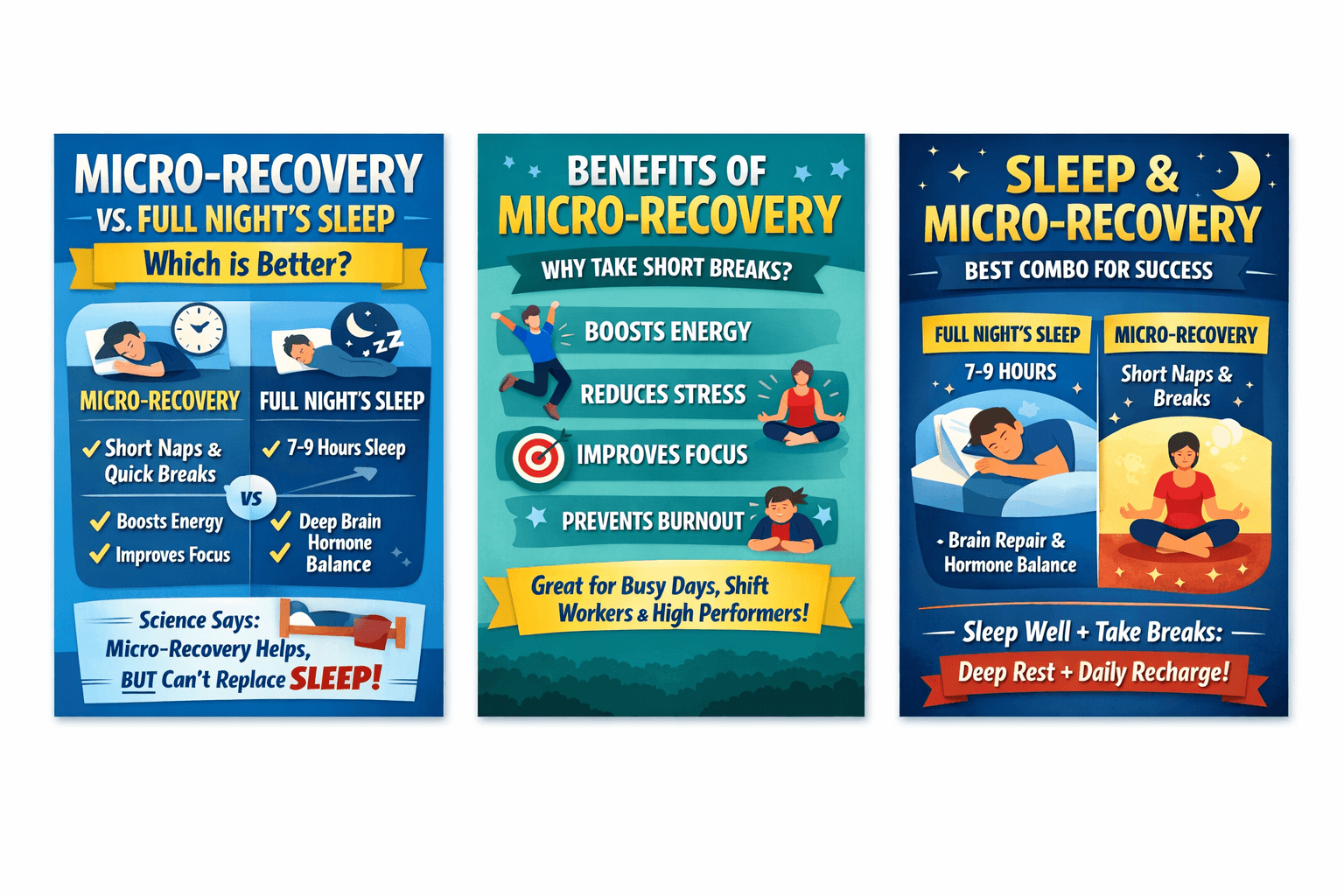
Science offers a clear answer: micro-recovery can help—but it cannot replace proper sleep. Let’s break down what research really says.
What Is the Micro-Recovery Trend?
Micro-recovery refers to brief rest or recovery periods scattered throughout the day rather than relying solely on long rest periods like a full night’s sleep.
Examples include:
- 5–20 minute naps (“power naps”)
- Short meditation sessions
- Stretching or movement breaks
- Digital detox breaks
- Deep breathing exercises
The idea is simple: instead of waiting until exhaustion hits, you recover in small doses before fatigue builds up.
This approach is especially popular among entrepreneurs, athletes, and high-performance professionals who want to maintain peak productivity.
The Science Behind Micro-Recovery
Research shows that short breaks and naps can improve mood, attention, and performance—at least temporarily.
Studies on daytime naps have found that brief naps can help restore cognitive performance and attention after sleep deprivation by rebalancing brain networks involved in focus and vigilance.
In other words, a quick nap can help your brain recover from temporary fatigue and sharpen focus.
Micro-break research shows similar effects. Short breaks during work:
- Reduce stress and mental fatigue
- Improve mood and emotional resilience
- Increase energy and focus during tasks
This is why many productivity experts recommend “ultradian rhythm” breaks every 60–90 minutes.
However, there is a crucial limitation.
Why Micro-Recovery Cannot Replace Sleep
While micro-recovery improves short-term alertness, it does not replicate the biological functions of a full night’s sleep.
Sleep performs complex processes that short naps cannot fully provide, including:
1. Brain Detox and Memory Processing
During deep sleep, the brain clears metabolic waste and consolidates memories.
Short naps rarely provide enough slow-wave sleep or REM sleep to complete these processes.
2. Hormonal Regulation
Full sleep cycles regulate:
- Cortisol (stress hormone)
- Growth hormone
- Metabolic hormones controlling appetite
Skipping proper sleep disrupts these systems.
3. Cognitive Performance
Research comparing naps with full sleep found that short naps cannot fully restore cognitive performance lost from sleep deprivation.
Even participants who napped still showed more errors and poorer attention than those who slept overnight.
When Micro-Recovery Works Best
Micro-recovery is most effective as a supplement to sleep—not a replacement.
It works well for:
1. Busy Workdays
Short breaks prevent mental fatigue and improve productivity.
2. Shift Workers
Naps can temporarily reduce sleep deprivation effects.
3. Athletes and High Performers
Brief recovery periods between training sessions improve energy and focus.
4. Burnout Prevention
Micro-breaks reduce stress and emotional exhaustion during long work hours.
How to Use Micro-Recovery Effectively
If you want to use this trend wisely, science suggests these guidelines:
Take 10–20 Minute Power Naps
Short naps boost alertness without causing grogginess.
Schedule Regular Breaks
Try a 5-minute break every hour or a longer break every 90 minutes.
Move Your Body
Walking or stretching during breaks improves circulation and mood.
Avoid Late-Day Naps
Long or late naps can disrupt nighttime sleep.
The Real Winner: Sleep + Micro-Recovery
The best strategy isn’t choosing between them.
Instead, combine both:
Full Night’s Sleep
- 7–9 hours for most adults
- Supports brain repair and hormonal balance
Micro-Recovery
- Improves energy and productivity during the day
- Prevents burnout and mental fatigue
Think of micro-recovery like “snacks for your brain,” while sleep is the full meal.
You can’t live on snacks alone—but they can help you stay energized between meals.
Final Verdict
The micro-recovery trend isn’t a replacement for sleep—it’s a performance tool.
Science suggests that short naps and breaks can boost mood, attention, and productivity during the day. But when it comes to deep biological restoration, nothing replaces a full night’s sleep.
In the future of productivity and wellness, the smartest approach may be simple:
Sleep well at night—and recover in small moments throughout the day.
The “micro-recovery” trend has gained traction in wellness, productivity, and burnout-prevention circles. It involves taking short, intentional pauses—often 30 seconds to 5-10 minutes—throughout the day for quick resets like deep breathing, stretching, stepping outside, or brief mindfulness. Proponents claim these “micro-recoveries” recharge your nervous system, sustain energy, reduce stress, and help you feel alert without needing extended downtime.
The question arises: In our always-on culture, could strategically sprinkling these mini-rests throughout the day outperform (or even replace) a solid 7-9 hours of consolidated nighttime sleep? Let’s examine what science actually says.
What Micro-Recovery Really Involves
Micro-recovery focuses on real-time replenishment during waking hours. It’s proactive: instead of waiting until you’re exhausted, you insert brief breaks to prevent depletion buildup. Common practices include:
- Slow, deep breathing (e.g., 4-second inhales)
- Quick stretches or movement
- Stepping away from screens
- Brief moments of calm before responding to stress
Research supports these short interruptions. A systematic review and meta-analysis of micro-breaks (≤10 minutes) found small but significant benefits: they boost vigor (energy/motivation) and reduce fatigue, with effects around d=0.35-0.36. Performance gains appear more for less cognitively demanding tasks, and longer micro-breaks within that window tend to help more. These pauses help restore mental resources, prevent strain accumulation, and support sustained focus—especially useful in high-demand jobs or study sessions.
Micro-recovery aligns with ultradian rhythms: the brain focuses best in ~90-minute cycles before efficiency drops. Brief resets counteract that natural fatigue.
The Irreplaceable Role of a Full Night’s Sleep
While micro-recoveries aid daytime functioning, they don’t replicate sleep’s deeper processes. Consolidated nighttime sleep (ideally 7-9 hours for adults) enables critical functions:
- Memory consolidation and learning (especially slow-wave and REM stages)
- Hormonal regulation (growth hormone release for tissue repair)
- Metabolic recovery (insulin sensitivity, glucose processing)
- Immune function and inflammation control
- Clearance of brain waste via the glymphatic system
Studies consistently show partial or chronic sleep restriction impairs these, even with compensatory strategies. Weekend “catch-up” sleep often fails to fully reverse metabolic issues like reduced insulin sensitivity or weight gain from recurrent short nights. Extending sleep by even ~55 minutes in one night boosts physical and cognitive performance more effectively than baseline.
Naps offer partial benefits—short ones (10-20 minutes) improve alertness, vigilance, and working memory after deprivation—but they’re countermeasures, not equivalents. Polyphasic schedules (multiple short naps replacing monophasic sleep) lack evidence of benefits and associate with sleep deficiency, fragmentation, circadian disruption, and poorer outcomes.
Microsleeps (seconds-long unintended lapses) accumulate in deprivation but don’t restore like proper sleep; frequent ones signal underlying shortfalls.
Can Micro-Recovery Substitute for Full Sleep?
No—science doesn’t support it. Micro-recoveries excel at managing daytime energy and preventing burnout buildup, but they can’t deliver sleep’s unique restorative depth. Attempting to replace consolidated sleep with fragmented rests or naps risks cumulative deficits in cognition, mood, immunity, and long-term health.
The most effective approach combines both:
- Prioritize consistent, high-quality nighttime sleep as your foundation.
- Use micro-recoveries to sustain performance and resilience during the day.
If you’re chronically short on sleep, micro-strategies might offer temporary relief, but they’re bandaids—not cures. Addressing root causes (e.g., better sleep hygiene, boundaries) yields far superior results.
In short: Micro-recovery is a smart tool for feeling energized all day, but it’s not better than a full night’s sleep—it’s complementary. Protect your nights, sprinkle in those mini-resets, and your brain and body will thank you.