In 2026, the most coveted status symbols aren’t flashy watches, limited-edition sneakers, or even the latest AI gadget. They’re subtler, rarer, and far more exclusive: a silent phone, a clean notification tray, hours of unbroken focus, and the ability to say, “I’m not on that app anymore.”
Digital minimalism — the intentional choice to use technology only when it genuinely adds value, while ruthlessly eliminating the rest — has evolved from a self-help trend into the ultimate quiet luxury of our hyper-connected era.
In the early days of the internet, status symbols were easy to spot: luxury cars, designer clothing, and expensive gadgets. But in 2026, something unexpected has taken their place. The newest symbol of success isn’t about having more technology—it’s about using less of it.
Welcome to the era of digital minimalism, where limiting screen time, reducing social media use, and living intentionally with technology has become a powerful sign of wealth, discipline, and personal control.
For many professionals, entrepreneurs, and creators, the ultimate luxury today is not constant connectivity—it’s the freedom to disconnect.
What Is Digital Minimalism?
Digital minimalism is a lifestyle philosophy that focuses on using technology intentionally rather than habitually. Instead of allowing apps, notifications, and algorithms to dominate their time, digital minimalists carefully choose the tools that truly add value to their lives.
The concept gained widespread popularity after the release of the influential book Digital Minimalism by computer science professor Cal Newport.
The philosophy is simple:
- Use technology only when it serves a clear purpose
- Eliminate digital distractions
- Prioritize real-world experiences over online engagement
In 2026, this approach has moved beyond productivity advice and evolved into a cultural status marker.
The Shift: From Always-On to Intentionally Offline
Just a few years ago, being constantly reachable signaled importance. A flood of notifications, rapid story replies, and 24/7 availability screamed “I’m in demand.” In 2026, the script has flipped.
Being unreachable without apology is now the real flex. Executives, creators, and high-performers who can disappear for entire evenings or weekends — without career damage — project something powerful: control. They aren’t slaves to algorithms or group chats. Their attention belongs to them.
This mirrors the “quiet luxury” wave in fashion (think The Row’s logo-free cashmere over loud Gucci prints). In the digital realm, absence becomes presence. A minimalist phone setup, a dumb phone (or “feature phone” revival among Gen Z), or simply admitting “I don’t have Instagram” signals sophistication and self-mastery.
Recent cultural signals confirm this:
- Gen Z’s embrace of dumb phones as part of the “Analog 2026” movement isn’t just nostalgia — it’s a status declaration: “I don’t need the infinite scroll to feel relevant.”
- High-profile figures casually announce digital detoxes, framing offline time as restorative luxury rather than deprivation.
- Being offline during major events or unreachable for stretches has become a subtle brag in elite circles.
In a world drowning in AI-generated content, endless feeds, and notification overload, the person who can opt out without FOMO demonstrates rare privilege: mental sovereignty.
Why 2026 Made This Inevitable
Several forces converged to crown digital minimalism king:
- Attention exhaustion peaked. Constant connectivity delivered burnout, anxiety, and fragmented focus. Studies and personal accounts show excessive screen time harms well-being; those who escape it visibly thrive.
- AI made noise unbearable. With generative tools flooding every platform, the baseline became overwhelming. Curating a low-noise digital life stands out as disciplined and elite.
- Productivity culture evolved. Cal Newport’s ideas (from Digital Minimalism to Slow Productivity) gained mainstream traction. Deep, focused work — not performative busyness — became the marker of serious accomplishment. A clean digital environment enables that.
- Scarcity of attention became currency. Everyone has access to infinite information; few have the discipline to ignore most of it. Choosing quality over quantity mirrors how the ultra-wealthy prefer understated elegance.
The result? Digital minimalism stopped being “nice to have” and became a visible marker of high status — like owning land in an age of urbanization.
What Digital Minimalism Looks Like as a Status Symbol in 2026
It’s not about going Amish. It’s strategic restraint:
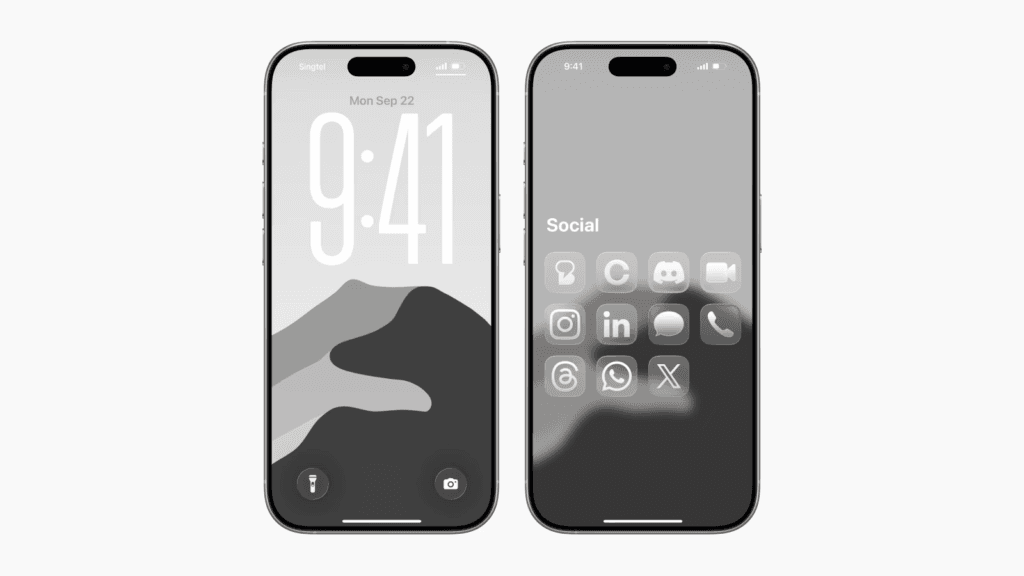
- Using a single-purpose device (e.g., Light Phone or Mudita for calls/texts only) while keeping a smartphone locked away for specific windows.
- Maintaining near-zero social media presence — or using it surgically via desktop only.
- Having “office hours” for messaging and email, with auto-replies that politely enforce boundaries.
- Prioritizing analog experiences: physical books, face-to-face conversations, hobbies without a screen involved.
- A home setup with no always-on smart devices in living spaces — tech lives in designated zones.
People who pull this off radiate calm confidence. Their conversations feel present. Their work output is deeper. They aren’t performing availability; they’re performing self-possession.
The Ultimate Irony
In an era where technology promised liberation, true freedom now comes from limiting it. The biggest status symbol of 2026 isn’t having the most followers, the fastest processor, or the most apps — it’s having the discipline to need almost none of them.
Digital minimalism isn’t deprivation. It’s the quiet declaration that your time, focus, and peace are non-negotiable.
Why Digital Minimalism Became a Status Symbol
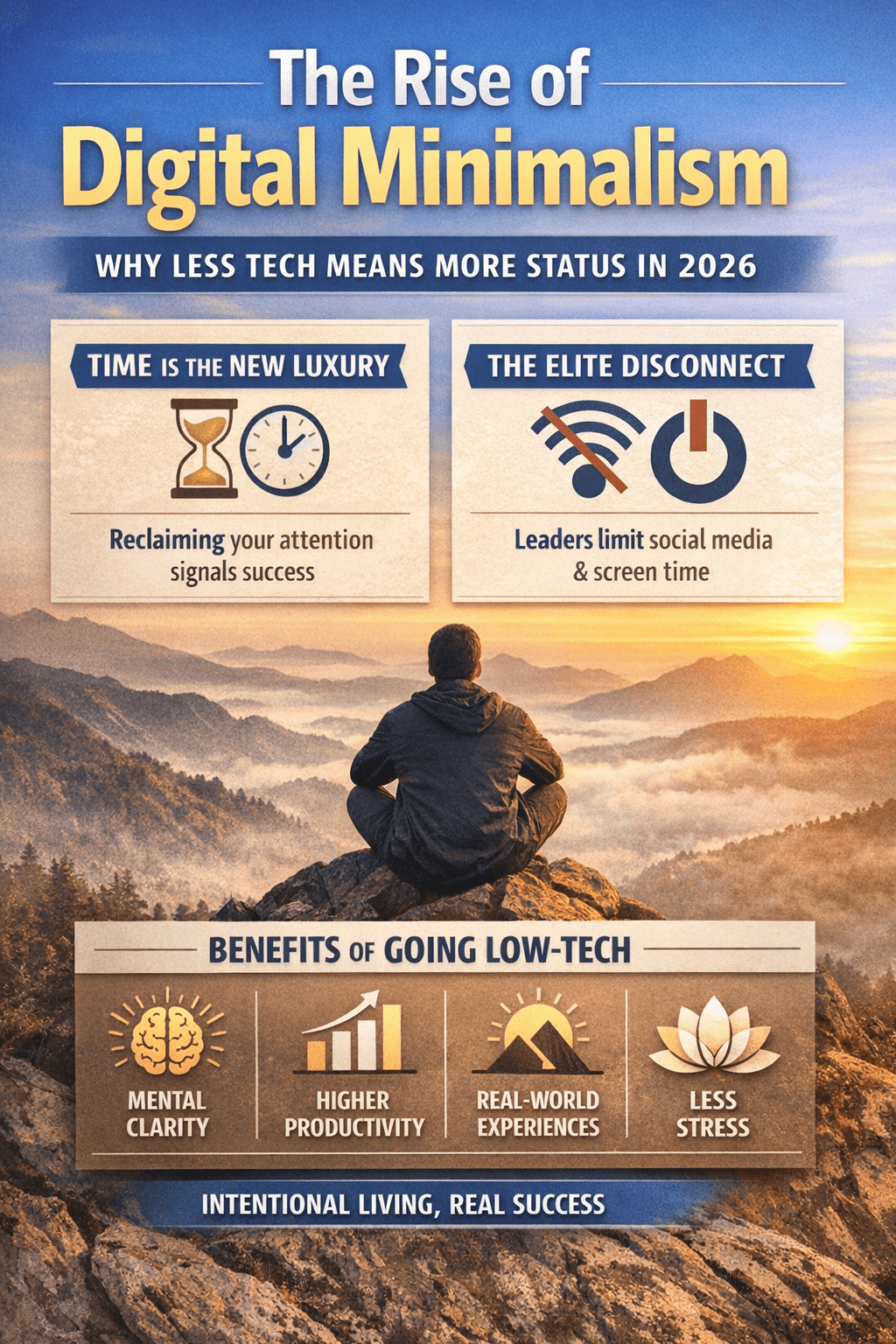
1. Time Is the New Luxury
In the modern attention economy, everyone is competing for your focus. Social media feeds, endless notifications, and algorithm-driven content are designed to keep people engaged for as long as possible.
Those who successfully reclaim their time demonstrate something powerful: control over their attention.
Having the ability to say no to constant notifications signals discipline, independence, and confidence—traits traditionally associated with high status.
2. The Rich Are Quietly Disconnecting
Across industries, many successful leaders are adopting strict digital habits. Instead of being constantly online, they:
- Limit social media use
- Turn off notifications
- Use simpler devices
- Schedule offline thinking time
Even major tech executives have spoken openly about limiting screen time for themselves and their families. Ironically, the people building digital platforms are often the most cautious about using them.
3. Scarcity Creates Prestige
In a world where everyone is online all the time, being unavailable has become rare.
When someone replies slowly, checks email only at specific times, or avoids social media completely, it creates an impression of scarcity and importance.
This scarcity effect mirrors traditional luxury signals. Just as rare watches or limited-edition fashion pieces signify exclusivity, limited digital availability now signals value.
4. Mental Clarity Is the Ultimate Advantage
Constant digital stimulation has created widespread problems like distraction, burnout, and reduced focus.
People who practice digital minimalism often report:
- Better concentration
- Higher productivity
- Improved mental health
- More creativity
In high-performance environments—business, technology, and entrepreneurship—this mental clarity is a powerful competitive advantage.
The Rise of the “Low-Tech Lifestyle”
In 2026, digital minimalism isn’t just about deleting apps. Many people are redesigning their relationship with technology entirely.
Popular trends include:
Single-purpose devices
People are switching from multifunction smartphones to devices designed for specific tasks, such as e-readers or minimalist phones.
Notification-free living
Many professionals now disable almost all notifications except critical ones.
Offline hobbies returning
Reading physical books, journaling, gardening, and outdoor activities are experiencing a massive resurgence.
Tech-free mornings and evenings
Many digital minimalists begin and end their day without screens.
Social Media Is Losing Its Prestige
A decade ago, having thousands of followers on platforms like Instagram or TikTok was seen as impressive.
Today, perceptions are shifting.
In some circles—especially among entrepreneurs, creatives, and executives—not being active on social media has become even more impressive. It suggests confidence, independence, and a focus on real-world influence rather than digital validation.
Digital Minimalism and Productivity
Many successful founders and creators credit digital minimalism with helping them accomplish more meaningful work.
By reducing digital noise, they can focus deeply on:
- Strategic thinking
- Creative work
- Building businesses
- Developing new ideas
This concept overlaps with the idea of “deep work,” another principle popularized by Cal Newport, emphasizing uninterrupted concentration for high-value tasks.
The Paradox of the Digital Age
The greatest irony of modern technology is that the people who understand it best often use it the least.
Silicon Valley engineers, tech founders, and digital experts know how persuasive algorithms work. They know how apps are designed to maximize engagement and capture attention.
As a result, many of them deliberately limit their exposure.
For them, digital minimalism isn’t about rejecting technology—it’s about mastering it instead of being controlled by it.
How to Practice Digital Minimalism
If you want to adopt this lifestyle, start with small changes:
- Turn off non-essential notifications
- Limit social media usage to specific times
- Remove apps that waste your attention
- Schedule daily offline time
- Replace scrolling with meaningful activities
Over time, these habits can dramatically improve focus, creativity, and well-being.
The Future of Digital Status
In previous decades, status came from owning the newest technology.
In 2026, the trend is reversing.
The people who appear most successful are often those who:
- Control their time
- Protect their attention
- Use technology intentionally
In a hyperconnected world, the true luxury is not constant access—it’s intentional disconnection.
And that’s why digital minimalism has quietly become the most powerful status symbol of the modern era.