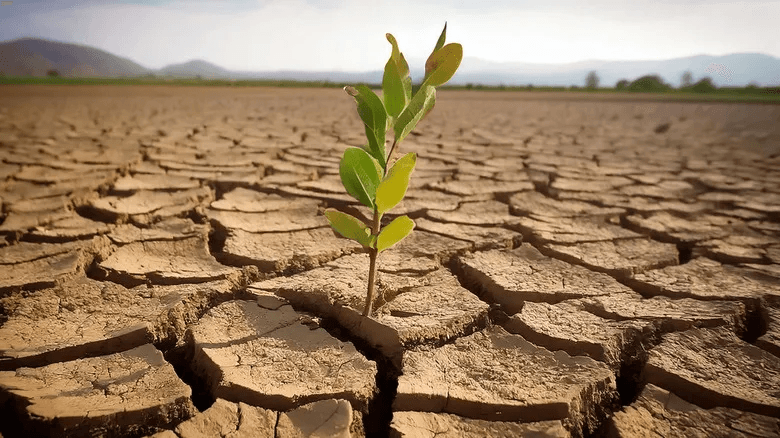
Over the past 60 years, scientists in China have been working on a project that could change how we approach the ongoing risks of desertification throughout the world. The idea is to take sandy, desert areas and then transform them into places where fertile soil can finally exist again. The benefit is two-fold. Not only would it create more fertile soil in those areas, but it would also increase the strength of the soil against erosion.
When you think about deserts, the first thing to spring to mind is likely the most iconic sandy place on our planet, the Sahara Desert. While humanity may have actually helped slow the desertification of the Sahara and places like it, it’s clear that the problem hasn’t been solved, as arid areas continue to erode and become drier. That’s why the Chinese are taking action, particularly in the Tengger and Kubuqi Deserts in the north of the country.
Finding ways to improve soil quality and slow erosion has been a key goal for Chinese scientists over the past several decades. In fact, a study published in the journal Soil Biology and Biochemistry in 2020 actually looked at a process that scientists have been using for over 60 years now. That process relies heavily on what researchers refer to as induced biological soil crusts (IBSCs), which basically act as barriers to protect soil and slow erosion, not only by trapping nutrients within, but also by holding everything together even in some of the harshest of winds.
Cyanobacteria, an ancient glue

There are three primary types of IBSCs used by scientists, lichen, moss, and cyanobacteria. And in this particular study, researchers have been using cyanobacteria alongside the other IBSCs to try to understand how the process can work, and how effective it is at slowing or even stopping desertification and erosion. The key to the process is what they call a soil “seed” which helps to form an artificial crust over the sand. Not only does this lay the groundwork for plants to actually grow in the sandy regions, it also helps to hold the sand together, by effectively gluing it down.
Cyanobacteria is estimated to be at least 3.5 billion years old, and may have once been responsible for turning Earth’s oceans green. However, what makes this bacteria so important to the researchers is its ability to provide much-needed resources like nitrogen to the soil around it. This allows the soil to soak up important resources it wouldn’t otherwise have ready access to naturally.
Beyond providing the soil with the needed resources to be considered “fertile,” the cyanobacteria has provided a good stopping point for erosion by dampening the effect of wind storms in the areas in which the process has been utilized. The glue-like layer that the cyanobacteria form helps to keep sand in place long enough for the roots of the plants to take hold, which in turn helps to hold the sand and surrounding dirt in place even better.
How cyanobacteria helps stop erosion

However, desertification goes much further than just these deserts, especially as the fight against climate change continues. And with more desert-like areas spreading, scientists have been looking for ways to not only give plants in those affected areas a new lease on life, but also a way to stop the continued erosion of those areas entirely.
By turning the soil into something more fertile, the researchers also helps to stop the sand from being picked up by dust storms. This not only protects the plants from the harsh effects of those storms but also helps to limit further erosion in the areas where the cyanobacteria have been spread. It’s a joint effort by the plants and the bacteria, which seems to be working.
Over time, the crust that the researchers placed has gradually evolved, changing from a simple cover of microbes and bacteria to one that is made up of lichens and patches of moss. This provids a stronger surface against dust storms. What is also extraordinary, is that the researchers found when comparing areas where cyanobacteria had been added to the microbial layers, the crust growth was expedited by years. A process that used to take decades to properly take hold could now be achieved in a matter of just two to three years.