Here’s what you’ll learn when you read this story:
- A lost portion of a 1631 shipwreck washed ashore in southern England.
- Portions of the Dutch merchant ship known as The Fame were first excavated in 2013, but the hull of the ship was missing.
- Once over 130 feet long, The Fame likely carried salt to Europe from the Caribbean.
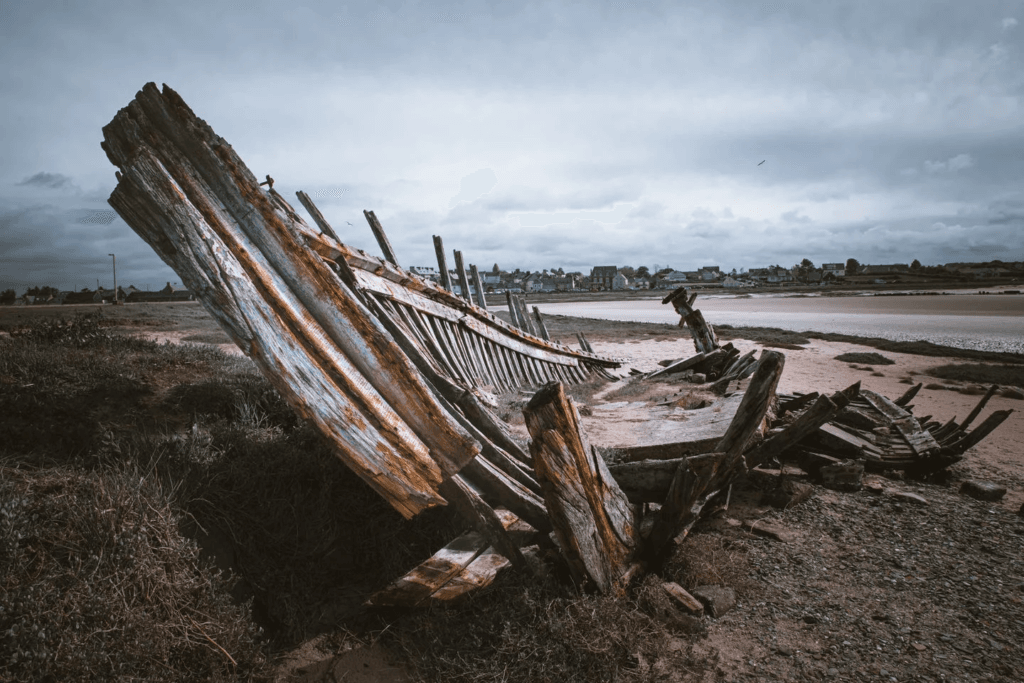
For nearly 400 years, the hull of a wrecked Dutch merchant ship sat buried in the sand at the bottom of the Swash Channel in southern England. At long last, though, a recent storm jarred pieces of the famed shipwreck loose, and they washed ashore on a beach in Studland, England. There, they served as the final pieces to the puzzle that was the 1631 sinking of The Fame.
Originally over 130 feet long, The Fame likely carried salt to Europe from the Caribbean and toted more than 40 guns along for the ride, likely to defend itself from pirates. But the ship ground to a halt on a notorious sandbank, breaking its back while dragging its anchor. Historical records show that all 45 crew members abandoned ship safely while locals scurried to loot the wreck. Then, it was lost to the sea.
While bits of the ship’s wreckage first reappeared in the 1990s, it wasn’t until 2013 that maritime archaeologists from Bournemouth University found most of The Fame, following a decade-long excavation of the Swash Channel—a key shipping approach to Poole Harbour. But there were still pieces of the ship missing somewhere out there in the water, and it would take another 13 years for those pieces to wash ashore.
“It’s really exciting to find this piece of historical ship,” Tom Cousins, a Bournemouth maritime archaeologist, said in a statement. “During our excavation of the Swash Channel wreck in 2013, there were pieces of the ship missing and we do believe a section of the hull has now been revealed at Studland.”
Decorative wooden carvings along the body of the ship helped identify the wreck during its discovery in 2013. Created in the Dutch tradition, the carvings feature the head of a man (likely a Dutch or Roman solider), which the team retrieved during the initial excavation. It was accompanied by a 25-foot-long rudder and other artifacts, all of which are now on display in the Poole Museum.
The new discovery that washed up on the beach is about six feet wide and 20 feet long, and comprises at least 15 timber frames connected with wooden treenails to five outer hull planks. The frames appear eroded, but the hull planks remain in excellent condition. An additional layer of planking would have secured the inside of the vessel, but it was no longer attached, suggesting that the remains had been buried in sand since the 1630s and only intermittently exposed over the ensuing 400 years. That could explain why inner planks are missing and frames are eroded, but the outer hull survived in pristine condition.
“I’m always astounded by the history we find at Studland, but this has been a real treasure,” Tracey Churcher, the general manager for the National Trust in Purbeck, said in a statement. “The wooden tree nails are still in place and holding after 400 years—what a testament to the craftsmanship at the time.”
The wrecked timbers will remain in the English sand until the Bournemouth team gets approval from Historic England to excavate. The team plans to put the wood through dendrochronology testing to identify when and where the timbers used to build the ship were grown, hopefully confirming their match to previously analyzed sections of the Swash Channel wreck.