
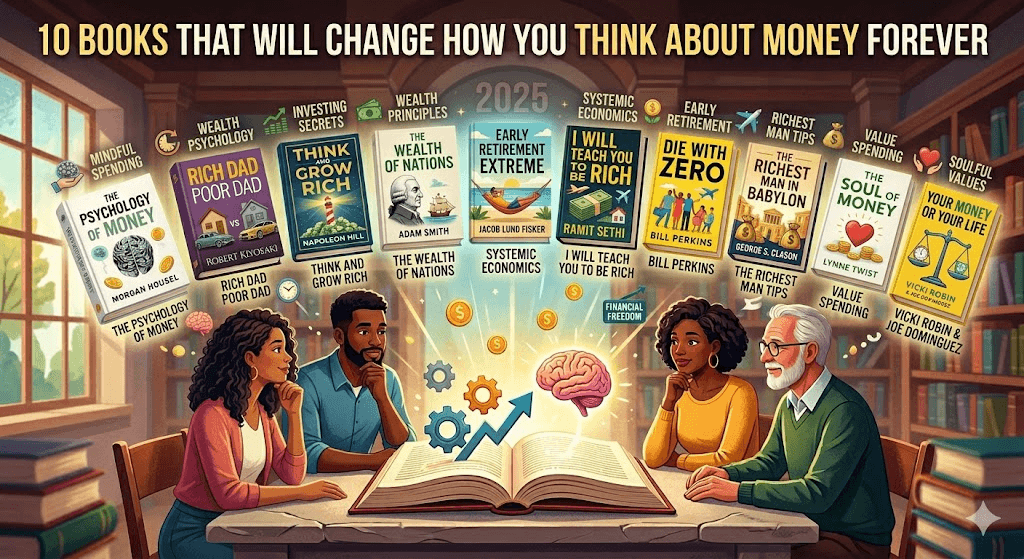
Money is more than numbers in a bank account.
It affects freedom, stress, opportunities, relationships, and even the way we think about success.
Most people spend years trying to earn more money without ever learning how money actually works.
That’s where the right books can completely transform your mindset.
The books below are not just about getting rich. They teach psychology, investing, habits, financial freedom, decision-making, and long-term wealth building. Whether you are a student, freelancer, creator, entrepreneur, or someone trying to escape paycheck-to-paycheck living, these books can genuinely change your financial future.
Here are the 10 best money books that can completely reshape the way you think about wealth forever.
1. Rich Dad Poor Dad
Why This Book Changes Everything
This is the book that introduced millions of people to financial education.
Robert Kiyosaki explains the difference between:
- Working for money
- Making money work for you
The biggest lesson from this book is understanding:
- Assets vs liabilities
- Cash flow
- Financial independence
- Why schools rarely teach money skills
It challenges the traditional “go to school, get a job, work for 40 years” mindset.
Best Quote
“The poor and the middle class work for money. The rich have money work for them.”
Who Should Read It?
Anyone who wants a completely new perspective on wealth and financial freedom.
2. The Psychology of Money
Why This Book Is So Powerful
This book proves that financial success is less about intelligence and more about behavior.
Morgan Housel explains:
- Why emotions control financial decisions
- Why patience matters more than timing
- How compounding creates massive wealth
- Why simple investing often beats complicated strategies
Unlike technical finance books, this one feels deeply human.
Key Lesson
Being good with money is not about being a genius.
It’s about consistency and emotional control.
Perfect For
Beginners, investors, creators, and anyone struggling with money habits.
3. Think and Grow Rich
Why People Still Read It Decades Later
This classic book focuses on mindset, ambition, and success psychology.
Napoleon Hill studied successful people and identified common principles such as:
- Desire
- Persistence
- Faith
- Goal-setting
- Self-discipline
Some ideas may feel old-school today, but the mindset lessons remain timeless.
Main Takeaway
Your beliefs about money often shape your financial reality.
Best For
Entrepreneurs, dreamers, and ambitious individuals.
4. The Millionaire Next Door
The Book That Destroys Fake Wealth Culture
Most real millionaires do not look rich.
This book reveals that many wealthy people:
- Drive normal cars
- Live below their means
- Avoid unnecessary luxury
- Invest consistently
Meanwhile, many people who appear wealthy are drowning in debt.
Biggest Lesson
Wealth is what you keep, not what you spend.
Why It Matters Today
Social media often glorifies flashy lifestyles. This book teaches real financial discipline.
5. Atomic Habits
Why a Habit Book Belongs on a Money List
Money success is often habit success.
Small daily decisions shape long-term financial outcomes.
James Clear explains:
- How habits are built
- Why systems beat motivation
- How tiny improvements compound over time
Financial Lesson
Saving money, investing regularly, learning skills, and building income streams all depend on consistent habits.
Ideal Readers
Anyone trying to improve discipline and productivity.
6. Your Money or Your Life
The Book That Makes You Rethink Spending
This book asks a powerful question:
How much of your life energy are you trading for money?
It teaches readers to:
- Track spending consciously
- Reduce financial stress
- Align money with personal values
- Escape consumerism
Why It’s Life-Changing
You begin seeing money as time and energy — not just currency.
Best For
People feeling trapped by endless work and spending cycles.
7. The Intelligent Investor
The Greatest Investing Book Ever Written
This legendary investing book influenced Warren Buffett and countless long-term investors.
Benjamin Graham teaches:
- Value investing
- Risk management
- Emotional discipline
- Long-term thinking
Important Note
This book is more advanced than others on this list, but the lessons are priceless.
Main Idea
Successful investing is about patience, logic, and avoiding emotional decisions.
8. I Will Teach You to Be Rich
Surprisingly Practical and Modern
Unlike traditional finance books, Ramit Sethi focuses on realistic systems.
The book covers:
- Budgeting without guilt
- Credit cards
- Saving automatically
- Investing basics
- Spending on what truly matters
Why Readers Love It
It feels modern, actionable, and easy to apply immediately.
Best For
Young professionals, freelancers, and beginners.
9. The Richest Man in Babylon
Ancient Wisdom That Still Works Today
This classic uses simple stories set in ancient Babylon to explain timeless money principles.
Key lessons include:
- Save at least 10% of your income
- Control expenses
- Invest wisely
- Make money grow
Why It Endures
The advice is simple, memorable, and incredibly effective.
Best For
Anyone starting their financial journey.
10. Money: Master the Game
A Deep Dive Into Financial Freedom
Tony Robbins combines interviews and strategies from top investors and financial experts.
The book explains:
- Investing strategies
- Retirement planning
- Wealth protection
- Financial independence
Why It Stands Out
It simplifies complicated financial concepts into understandable action steps.
Best For
Readers ready to take wealth-building seriously.
What These Books Have in Common
Even though these books are different, they all teach the same core truths:
- Wealth is built slowly
- Mindset matters
- Consistency beats shortcuts
- Financial education is essential
- Discipline creates freedom
- Investing early changes everything
Most people search for a secret formula to become rich.
These books teach something far more important:
how to think differently about money.
Final Thoughts
Reading one great money book can change your habits.
Reading several can change your entire future.
You do not need to master Wall Street or become a finance expert overnight.
Start small:
- Read consistently
- Apply one lesson at a time
- Improve your financial habits slowly
Because in the long run, the way you think about money often matters more than how much money you currently have.
If you truly want financial freedom, these books are among the best places to begin.
Bonus Tip for Readers
Don’t just read these books passively.
Take notes. Highlight ideas. Apply one principle immediately after finishing each book.
Knowledge becomes valuable only when it changes behavior.
For more trending insights on money, AI, digital careers, and modern success strategies, keep following InspireViralTimes.com.